






Don't miss a gem
Ian Bone and Rod Beattie connect jewellery designers with traceable stones from Central Queensland
For October’s birthstone, The Jewels Club follows Queensland boulder opal from the remote mining fields to the cutting bench, guided by the first-hand knowledge of Capricorn Gems
Colour with the country still attached. On a jeweller’s bench, Queensland boulder opal still carries the landscape from which it came.
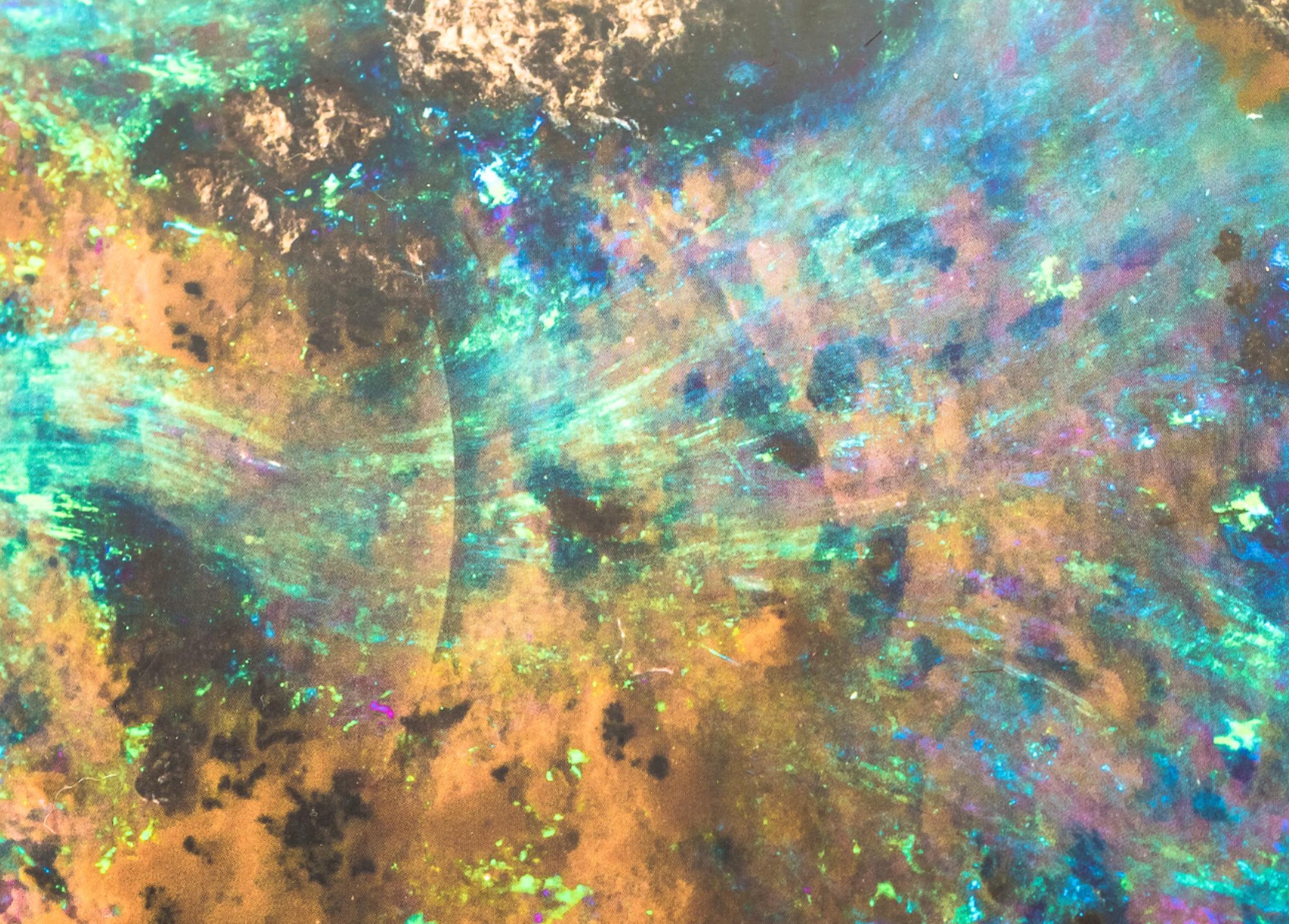
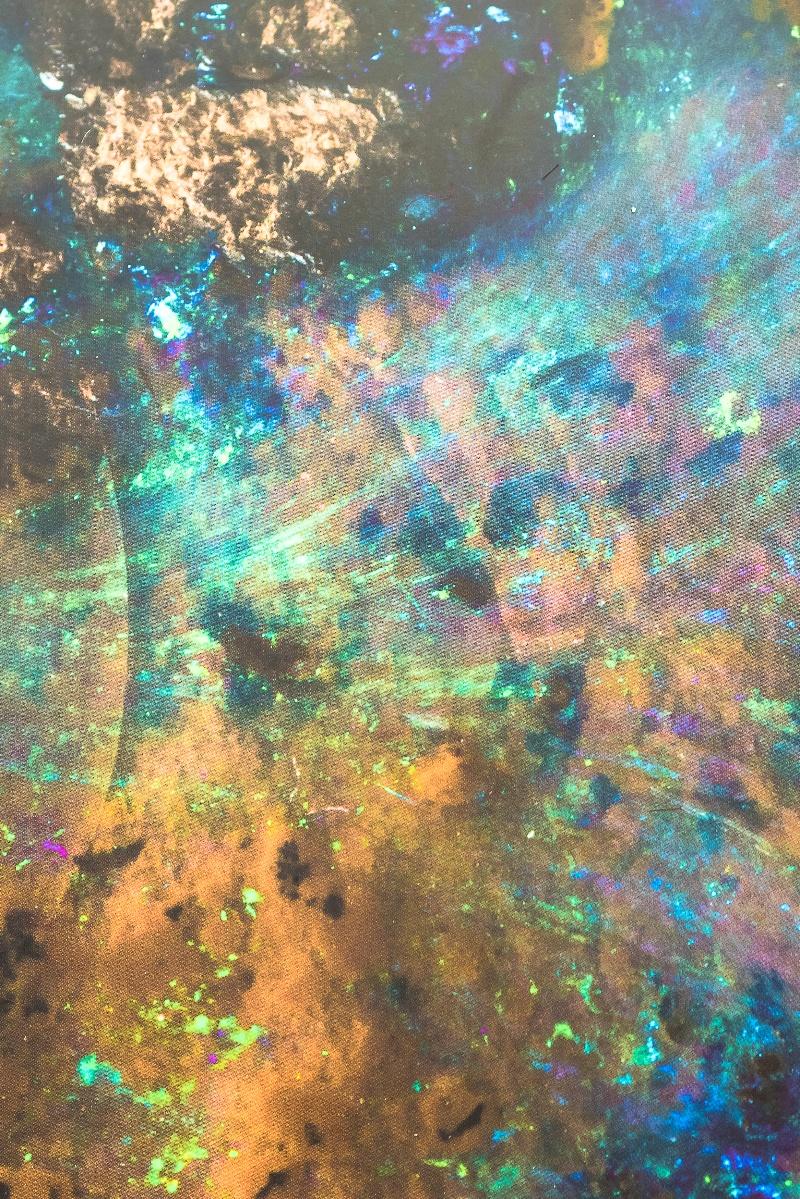
Dark ironstone remains beneath ribbons, pools and flashes of colour. Blue can open into green. Red may appear for a moment before disappearing again. Brown rock interrupts the opal rather than hiding behind it.
That contrast is not an imperfection. It is the identity of the stone.
Following a recent conversation with The Jewels Club founder Andrew Martyniuk, Capricorn Gems’ Ian Bone shared an extensive archive of field, mining, rough material and polished stone photography. Viewed together, the images reveal the full character of boulder opal. Its story begins long before a cutter decides on a shape.
Capricorn Gems specialises in four gemstones from Central Queensland: sapphire, zircon, chrysoprase and boulder opal. For October, our attention turns to the last of these and to the people who understand the country in which it forms.
Boulder opal is found attached to its natural ironstone host rock. Unlike an assembled opal doublet or triplet, the opal and its backing formed together in the ground.
The Queensland opal fields extend through a vast belt of deeply weathered sedimentary rock known as the Winton Formation. This opal-bearing country runs for around 1,000 kilometres through the west of the state.
Here, precious opal may appear in narrow seams, veins and irregular cavities within ironstone boulders. The dark host rock can create a powerful background for its colour, but it also determines how the material must be cut.
A cutter cannot approach every piece with a standard oval or calibrated size in mind. The position of the colour, the shape of the seam and the stability of the surrounding ironstone all influence the finished stone.
The result is often asymmetric and unmistakably individual. Queensland boulder opal records the decisions made by both geology and the cutter.
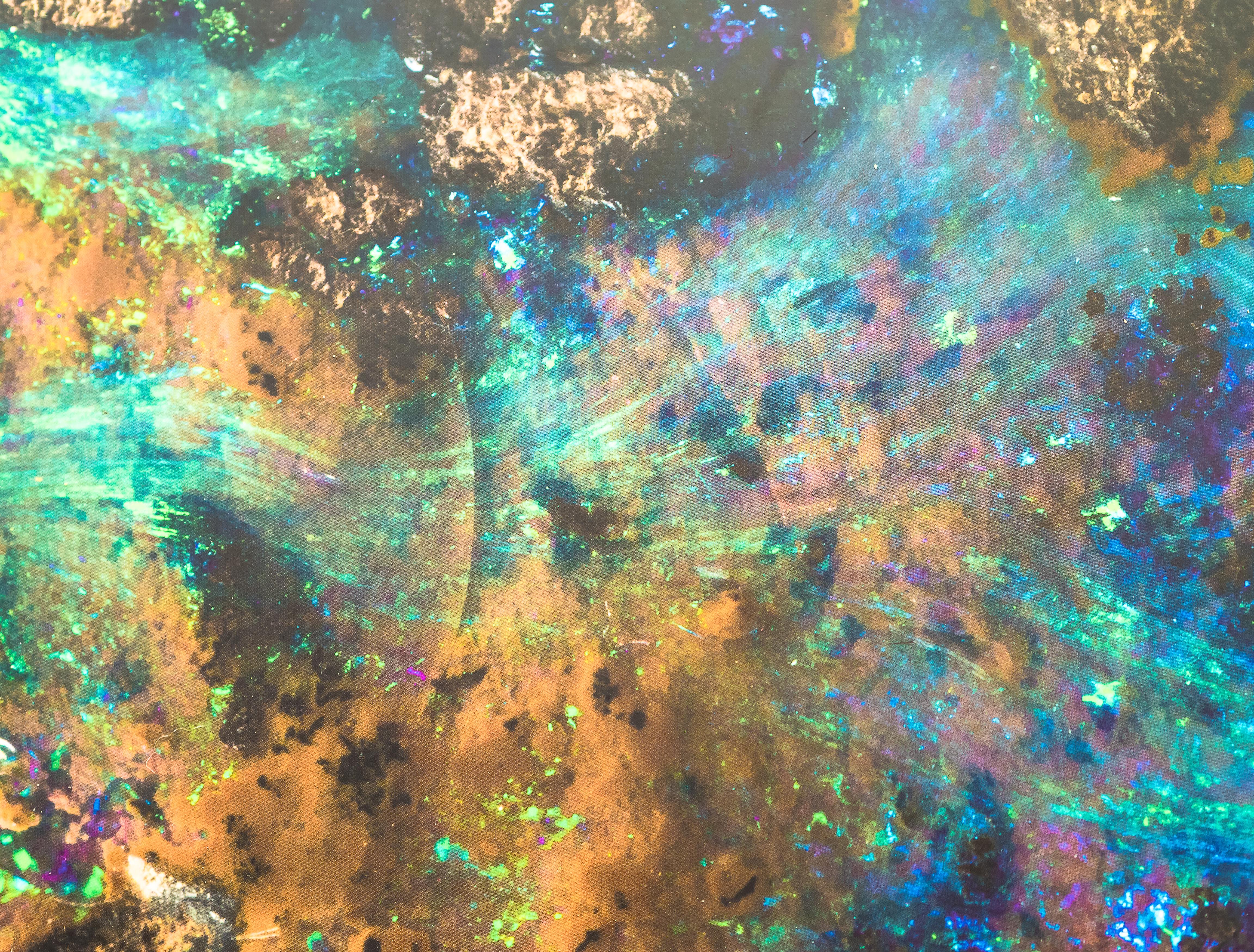
A close view of Queensland boulder opal reveals shifting blue, green, violet and gold play-of-colour within its natural ironstone host. Image courtesy of Capricorn Gems
Capricorn Gems describes far western Queensland as one of the harshest environments in which opal is produced.
The distances are considerable. Temperatures can be unforgiving, and mining communities operate far from the conveniences of larger towns. The company describes the region’s graziers and miners as people with “a special grit and determination not afraid of adversity and remoteness”.
Ian’s photographs make those conditions visible. Excavators work through ochre-coloured ground beneath an enormous sky. Rough ironstone reveals little of what may be concealed inside it. Polished stones on dop sticks provide the eventual answer, each showing a different balance of rock and colour.
Much of Queensland’s boulder opal is recovered through open-cut mining. Machinery removes layers of ground so that miners can search the opal-bearing level for ironstone boulders and seams.
Finding the right material remains an exercise in judgement. An unremarkable exterior may contain valuable colour, while promising rough can yield very little once opened.
That uncertainty is part of the stone’s character. Boulder opal resists uniformity at every stage.
Capricorn Gems’ guide to Queensland boulder opal brings together the landscape, people and material behind the gemstone.
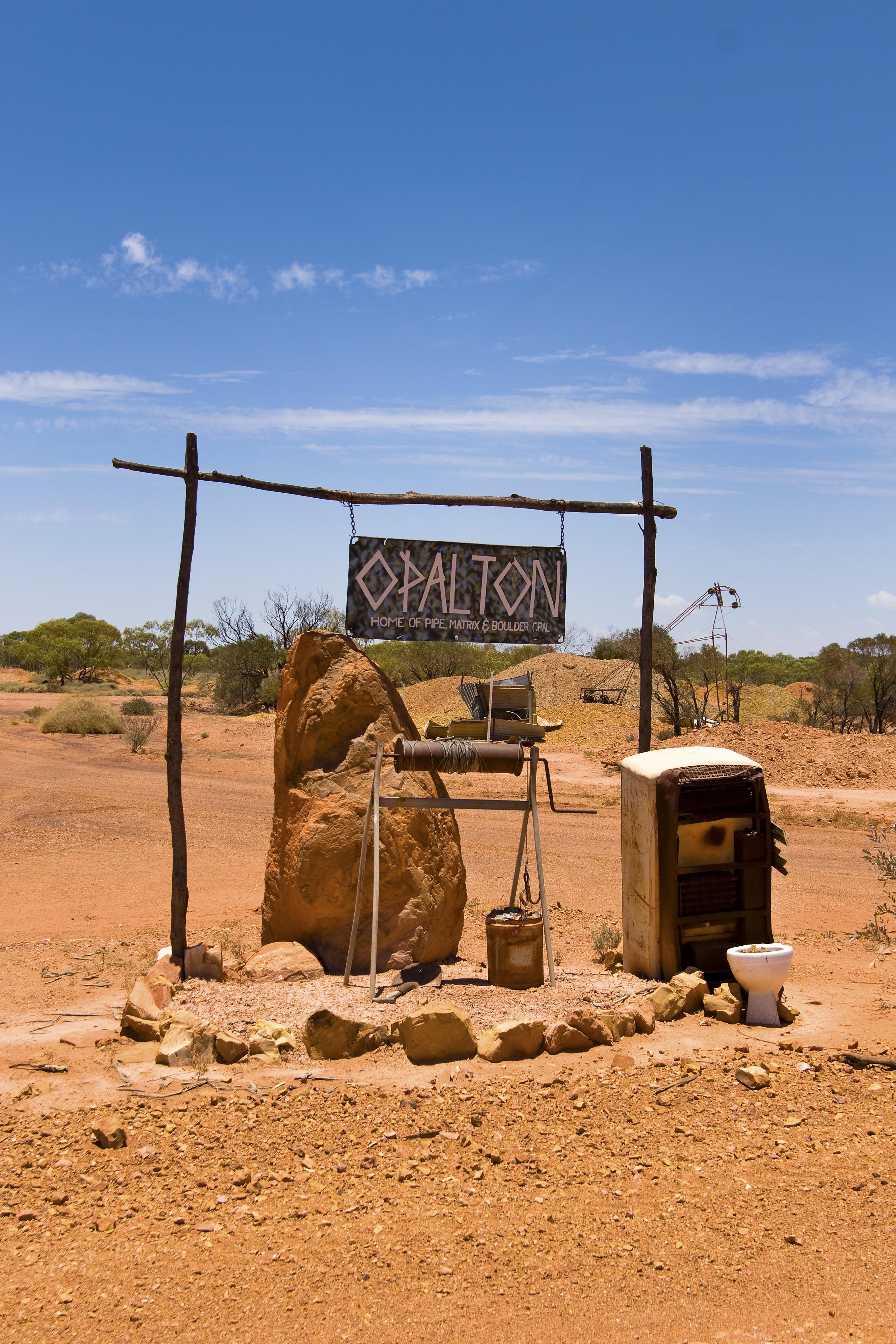
The remote opal country around Opalton in far western Queensland, where distance, heat and difficult terrain shape everyday mining life. Image courtesy of Capricorn Gems
Opal does not depend on pigment alone for its colour.
Precious opal is formed from tiny silica spheres arranged in an ordered internal structure. When light enters the stone, it is diffracted and separated into spectral colours.
The size and arrangement of those spheres influence the colours that become visible. Smaller spheres tend to produce blue and violet, while larger spheres can produce green, orange and red.
As the stone, wearer or light source moves, the viewing angle changes. Different colours appear, disappear and return elsewhere across the surface. This is the phenomenon known as play-of-colour.
Brightness, pattern and the range of colours all affect desirability. Red is generally the rarest colour to see in opal, particularly when it appears alongside a broader spectrum.
In boulder opal, the ironstone beneath the colour can increase contrast. The result may be a concentrated flash, a fine ribbon, a broad patch of blue and green or a pattern that resembles an aerial landscape.
No photograph can capture every face of the stone. One customer quoted by Capricorn Gems put it neatly:
“I’m guessing no pictures could ever do these types of opals justice.”
The Gemological Institute of America’s guide to play-of-colour explains the optical structure behind the effect.
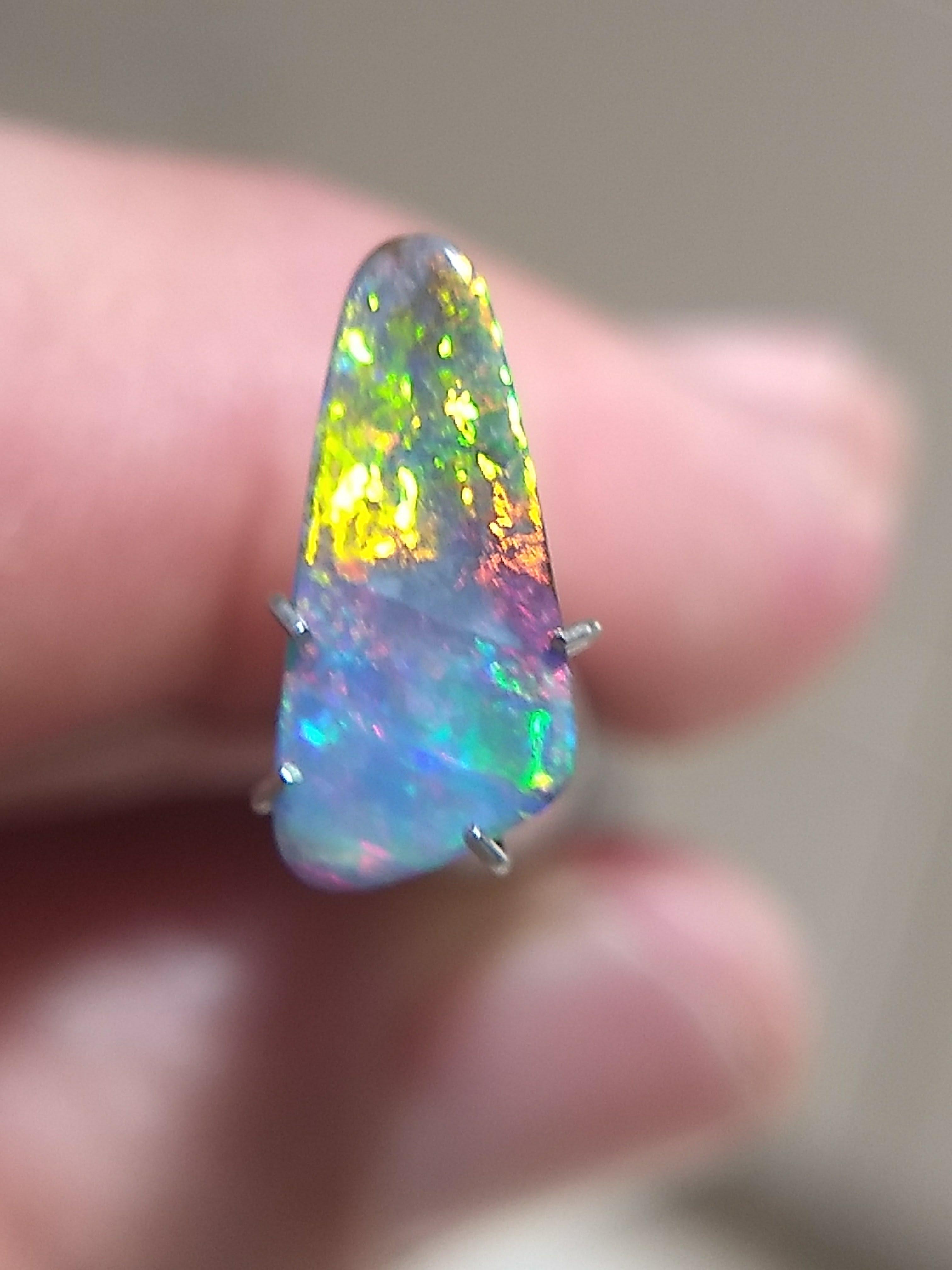
Opal’s play-of-colour shifts with the light and viewing angle, revealing flashes of green, yellow, blue and pink.
Capricorn Gems’ position within the supply chain is unusually focused.
Ian Bone and business partner Rod Beattie come from Central Queensland. Their knowledge of the region was not acquired through occasional buying trips. It grew from personal connections with the miners, cutters and communities involved in producing the gemstones.
The business works with miners in the region and brings their material to an international network of jewellery designers and retailers. It sells exclusively to the trade rather than directly to the public.
Rod undertakes much of the opal cutting himself. His experience allows the business to retain a close relationship with the material beyond the point of purchase.
That matters with boulder opal. Cutting is not simply the final stage of preparation. It decides how much of the colour is retained, how the ironstone contributes to the composition and whether the finished stone feels balanced.
Ian leads the marketing and sale of the stones, helping designers understand what is available and supplying further images or comparisons when required.
The company’s purpose is stated plainly on its website:
“Our business is to help your business grow and prosper.”
It is a simple line, but it explains Capricorn Gems’ trade-only model. The aim is to support jewellers, not compete with them for the final customer.
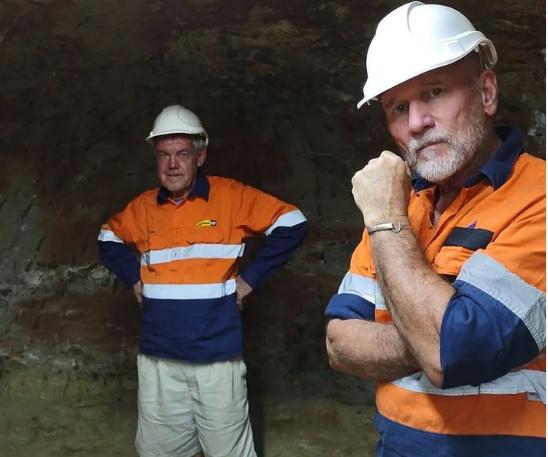
Rod Beattie and Ian Bone of Capricorn Gems underground at a mine in Rubyvale, Central Queensland. Image courtesy of Capricorn Gems
Capricorn Gems says every Central Queensland gemstone it offers can be traced to its producing mine. Ian and Rod know the locations, mining methods and people involved in extracting and preparing the material.
Their ethical position is deliberately grounded in relationships and direct knowledge rather than broad marketing language.
Capricorn describes its approach as being “based on our personal experiences and intimate knowledge”. It also states: “We don’t prescribe what our interpretation of ‘ethical’ might mean.”
That distinction is important.
The company sets out its own sourcing and cutting practices, then gives designer-makers the information needed to decide whether those practices meet their standards. It does not ask customers to accept a vague label without examining what sits behind it.
Mining practices and land rehabilitation are regulated by the Queensland Government. Capricorn Gems also emphasises its personal knowledge of the miners, production methods and cutting conditions connected to its stones.
This creates a form of traceability built around specificity. The region is known. The miners are known. The cutter is known. The movement of the material can be explained.
Capricorn Gems’ ethical position sets out this approach in Ian and Rod’s own words.
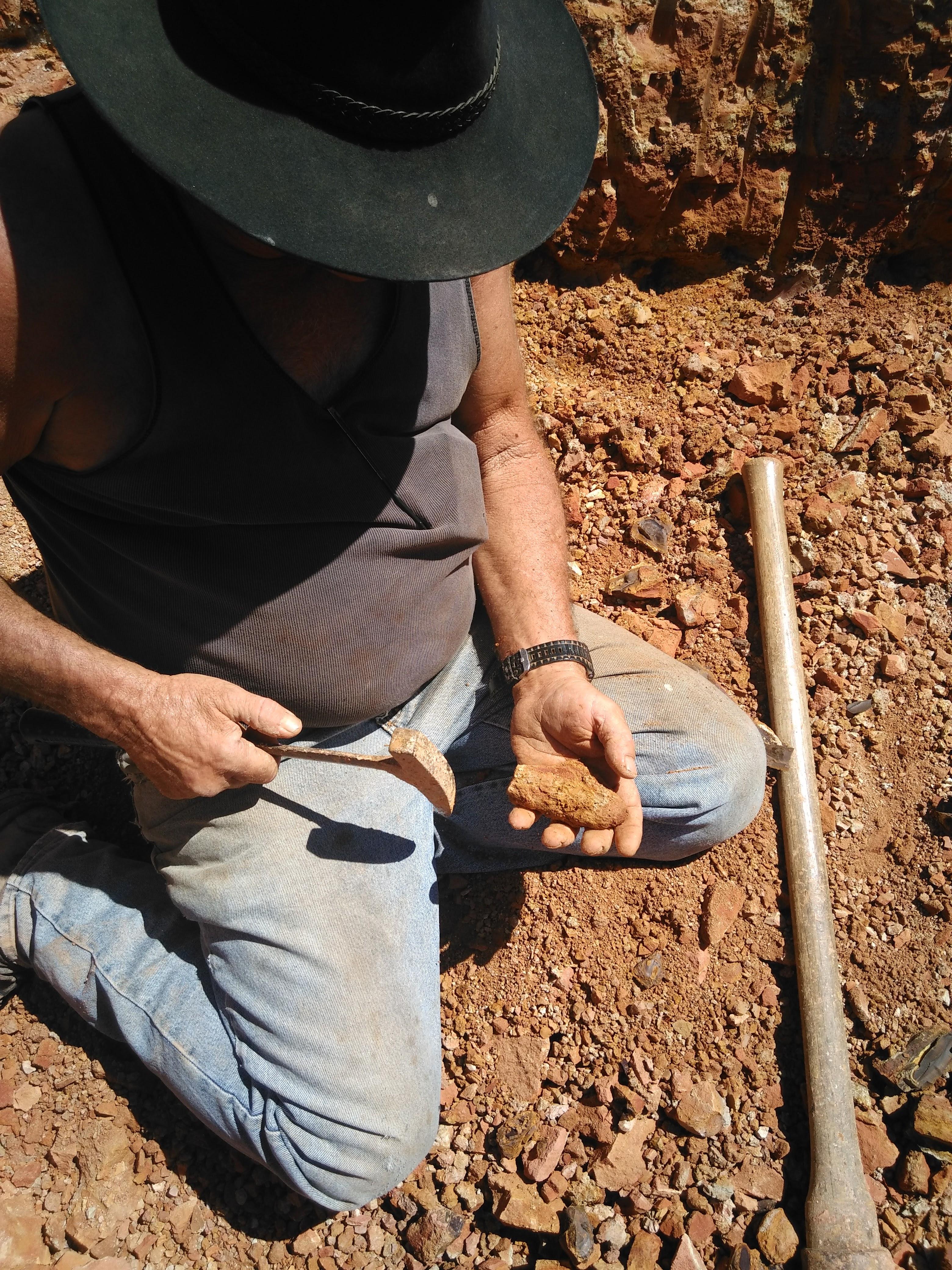
First-hand relationships with miners give Capricorn Gems direct knowledge of where its stones come from and how they are recovered
Boulder opal asks the cutter to respond to what is already there.
In some pieces, opal forms a thin line through ironstone. In others, colour covers much of the surface. Some stones present bright, concentrated areas, while others carry softer colour through a visible matrix.
Removing too much host rock can destroy the composition or weaken the stone. Leaving too much may obscure its strongest colour. The cutter must find the point at which geology and design begin to support one another.
This is why freeform cutting feels particularly natural for boulder opal. A successful shape follows the seam rather than forcing it into a familiar outline.
For jewellery designers, that individuality can determine the entire piece. A pendant may be built around a long, narrow flash. A wide freeform stone may suggest a sculptural ring. Smaller related stones can become earrings without being perfectly identical.
The stone arrives with a design direction already present.
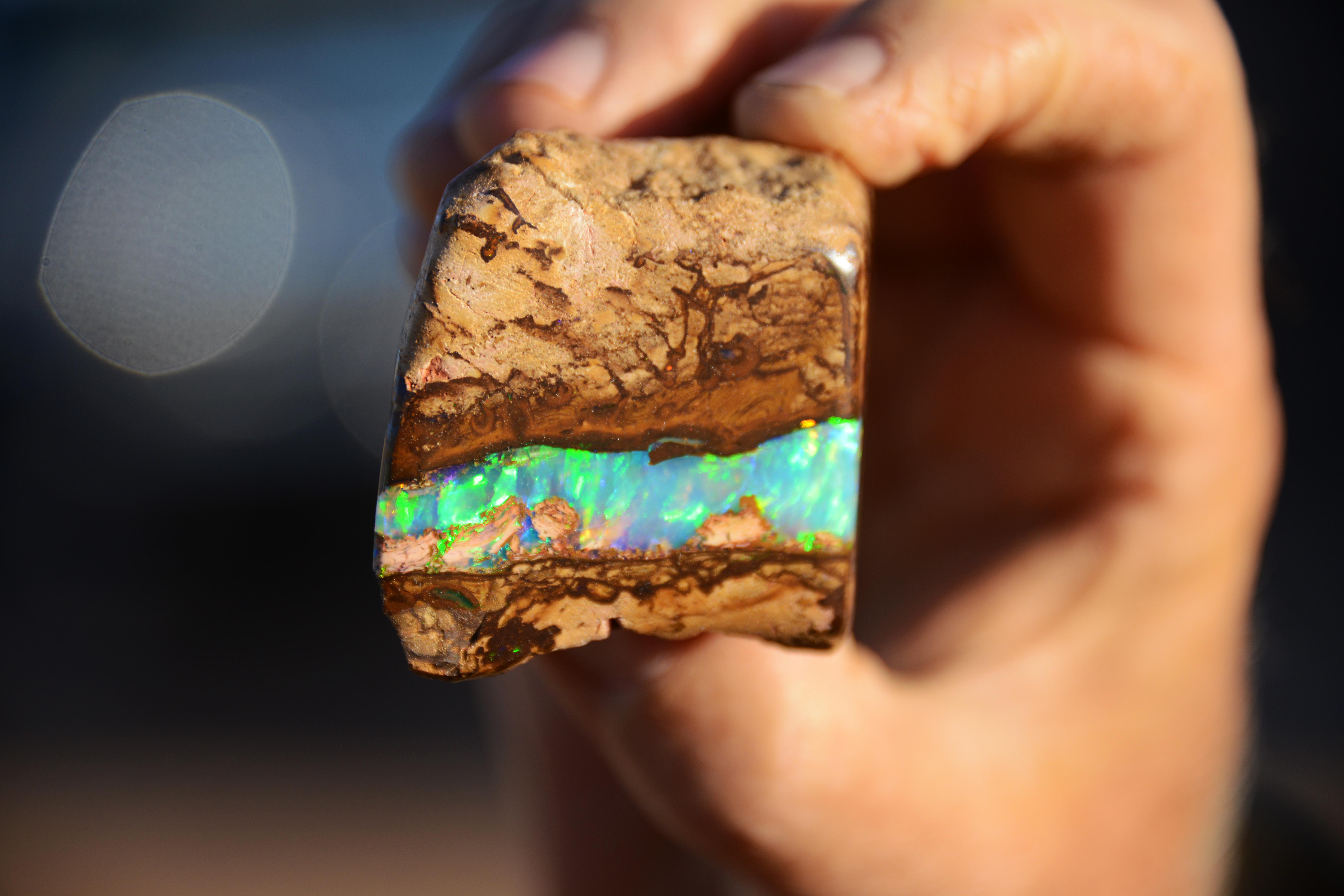
What the cutter chooses to keep: a vivid seam of Queensland boulder opal preserved within its natural ironstone host
Boulder opal should be assessed in movement and under several lighting conditions.
Brightness is important, but so is the distribution of colour across the face of the stone. Look at how much colour remains visible when the stone is tilted and whether its strongest areas will be seen once set.
Pattern can have a major influence on appeal. Broad flashes, fine lines, pinfire effects and landscape-like forms each create a different visual character.
The ironstone should also be examined. Its shape and texture form part of the finished stone, while cracks and unstable areas may affect how it can be set.
Buyers should ask whether the stone is a natural solid boulder opal, whether it has received any treatment and where it was mined. For a stone promoted through its provenance, the seller should be able to explain its route to market.
The best example is not always the largest or the one displaying the greatest number of colours. A smaller stone with strong brightness, an interesting pattern and a well-resolved shape may give a designer far more to work with.
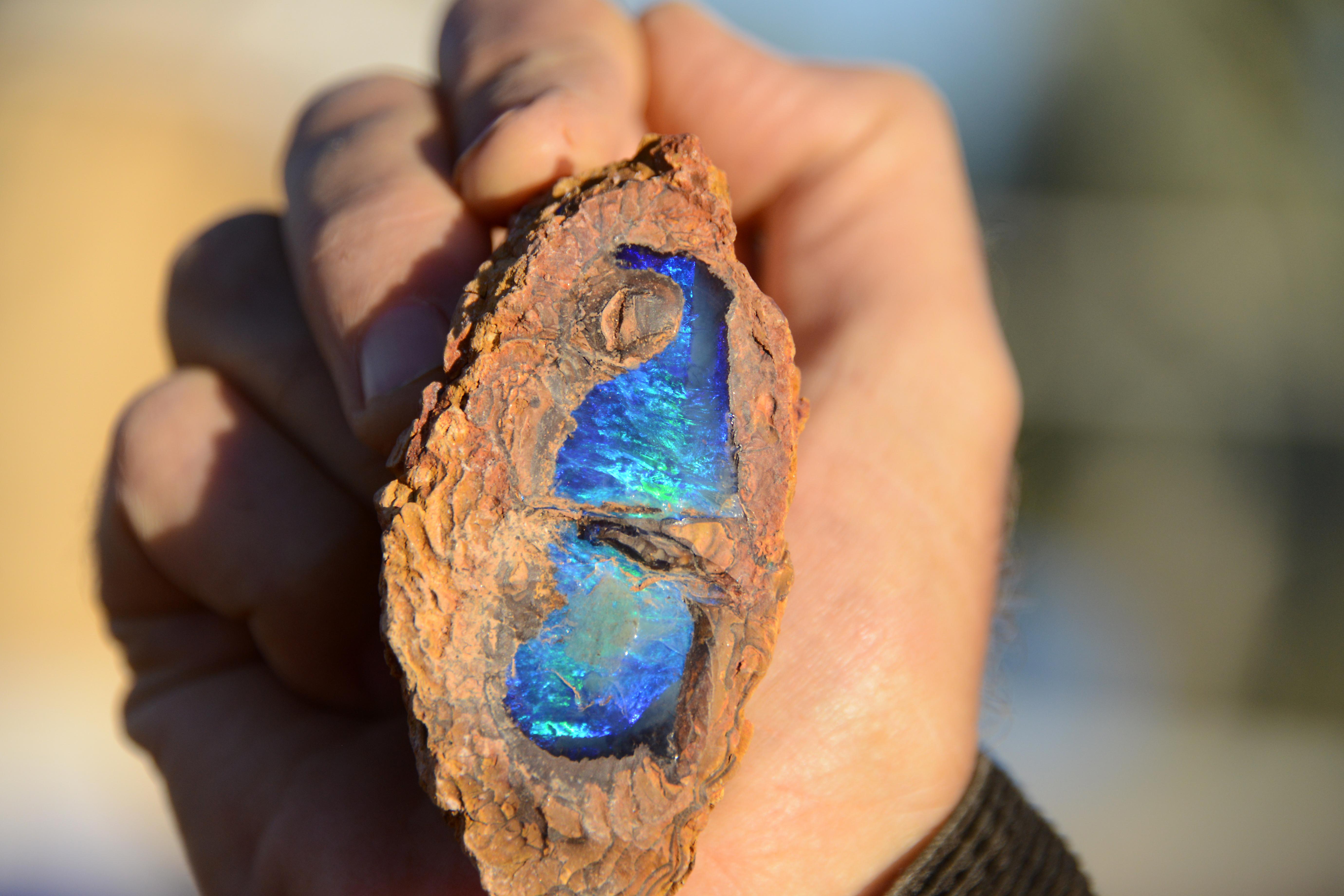
Choosing boulder opal begins with reading the rough, assessing its colour, pattern and natural ironstone structure before deciding how it should be cut
Opal measures approximately 5 to 6.5 on the Mohs scale, so it requires greater consideration than sapphire, ruby or diamond.
Protective bezels and thoughtful metalwork can reduce the risk of impact, particularly in rings. Pendants, earrings and brooches naturally receive less contact and allow designers greater freedom.
Opal should be cleaned using warm water, mild soap and a soft cloth. Ultrasonic and steam cleaners are unsuitable, while high heat and sudden changes in temperature should be avoided.
Store opal separately from harder gemstones that may scratch its surface.
These practical considerations do not make opal unsuitable for jewellery. They simply ask the designer and wearer to respect the material.
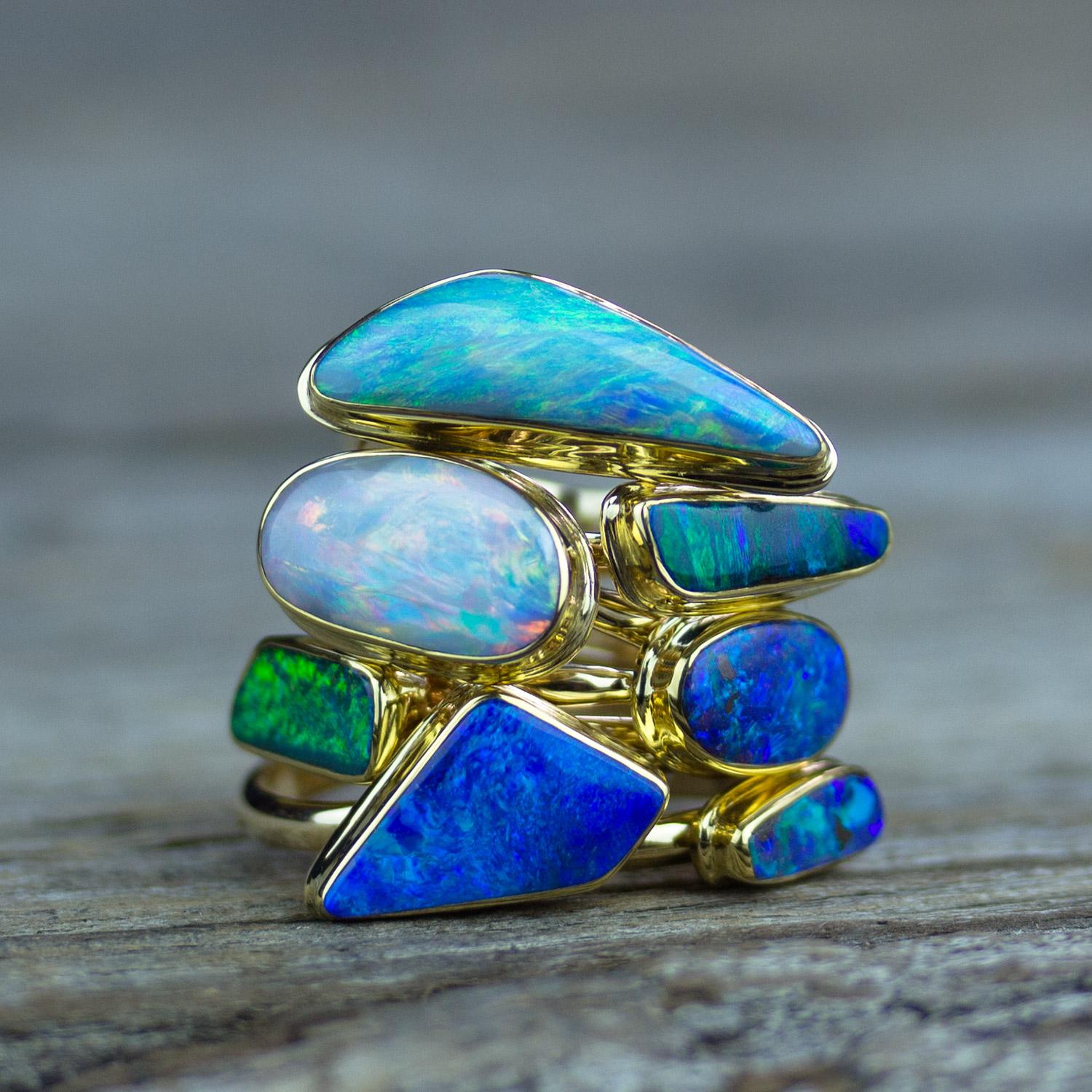
A stack of gold rings shows how protective bezel settings can follow opal’s natural contours while keeping its colour firmly in focus
Opal is the traditional birthstone for October and is also associated with the 14th wedding anniversary.
Its name is thought to have developed from the Sanskrit word upala, meaning precious stone, which later became opalus in ancient Rome.
Across different periods, opal has been associated with hope, truth and protection. Its ability to show many colours within one stone also led to the belief that it carried the qualities of several gemstones at once.
The symbolism is compelling, but the real appeal is already visible. Opal changes. It rewards attention. It refuses to look exactly the same twice.
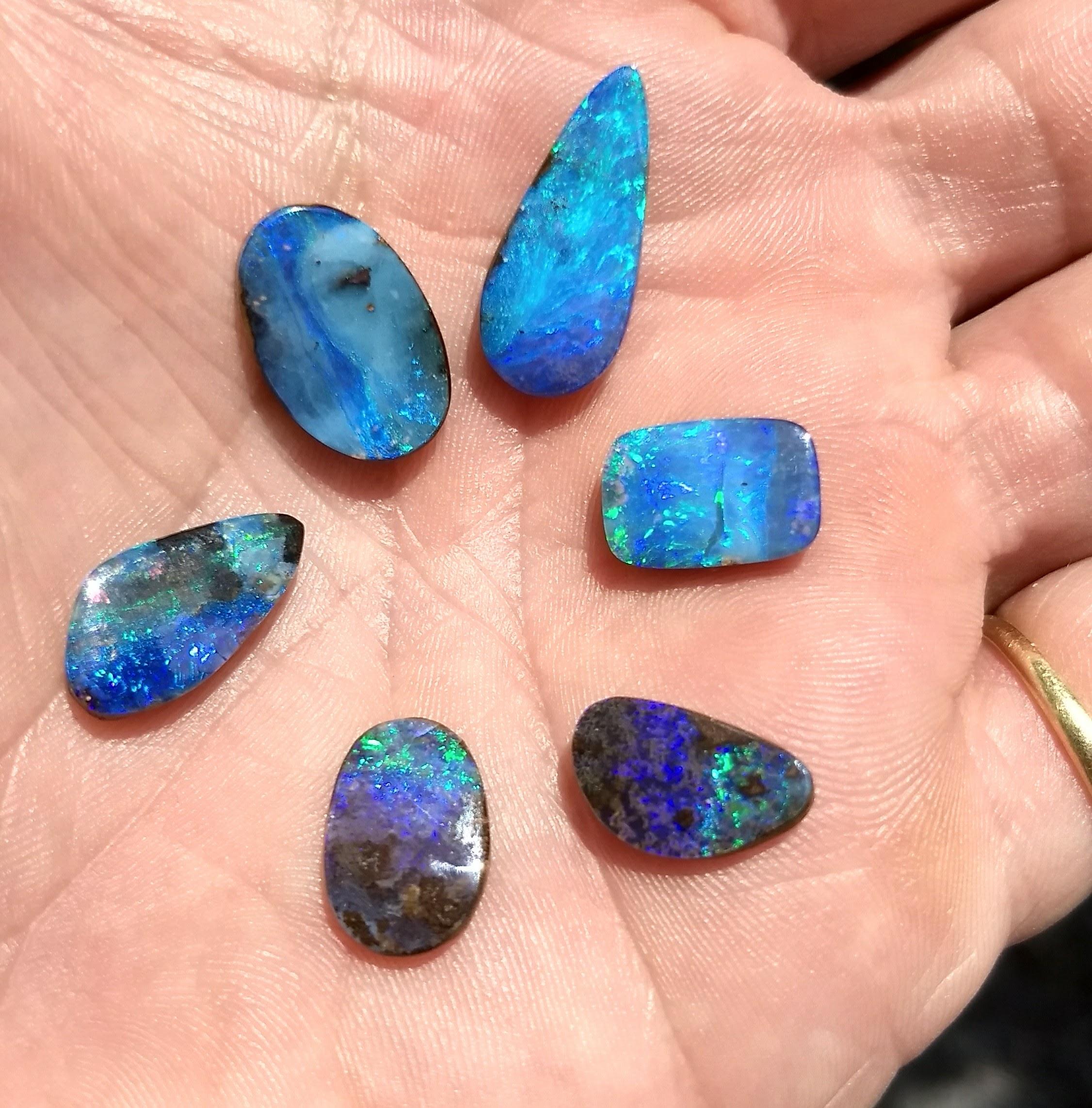
A selection of polished Queensland boulder opals reveals the variety of freeform shapes, natural ironstone patterns and blue-green play-of-colour found within the material
Boulder opal makes provenance visible.
The ironstone has not been polished out of the story. The shape has not been standardised for convenience. The landscape remains present in the finished gem.
That gives Queensland boulder opal particular relevance at a time when clients increasingly want to understand where a stone came from and who handled it before it reached the jeweller.
Capricorn Gems’ strongest asset is specificity. Ian Bone and Rod Beattie work within a defined region, with a limited group of gemstones and direct knowledge of the people behind them.
Their opals do not require an invented narrative. The colour, ironstone, mining photographs and cutting process already provide one.
For October, it is difficult to imagine a birthstone with a stronger sense of place.
Explore Capricorn Gems and its wholesale collection of Central Queensland sapphires, boulder opals, zircons and chrysoprase.
Learn about the landscape and mining communities behind Queensland boulder opal.
Read more about Capricorn Gems’ sourcing and ethical position, including Ian and Rod’s connections with the region’s miners and cutters.
Discover the science, history and care of October’s traditional birthstone through the GIA opal guide.
HIGH JEWELLERYFEB 2, 2026
Cartier En Équilibre: High Jewellery in a State of Poised Tension
Cartier unveils the latest En Équilibre chapter in Paris, exploring balance through colour, tension and architectural design
READ MORE
BULGARIFEB 19, 2026
Bulgari and Dua Lipa: Redefining Modern Luxury Through Cultural Influence
Bulgari names Dua Lipa as global ambassador, blending the maison’s heritage with contemporary cultural influence
READ MORE
ANDREW GEOGHEGANFEB 20, 2026
Treowth — Andrew Geoghegan’s Anglo-Saxon Discovery Sparks a New Fine Jewellery Chapter
A Saxon gold fragment discovered in Lincolnshire inspires Andrew Geoghegan’s new Treowth collection, beginning with the Goldwin eternity band
READ MORE


0 Comments
You must be logged in to comment. Click here to login.