






Don't miss a gem


Why the industry must urgently move beyond single-layer security
Security expert Jeff Hill reveals how jewellery crime has evolved — and why layered protection is now essential

The jewellery trade is facing one of its most challenging periods in recent memory. From violent smash-and-grab attacks to sophisticated after-hours burglaries, the scale and intensity of criminal operations have escalated sharply across the UK and Europe.
To understand what’s driving this shift — and what jewellers urgently need to change — The Jewels Club sat down with Jeff Hill, a security professional at Harrier Global, a firm built on deep operational expertise and intelligence-led protective strategy.
Hill, who advises high-value sectors including jewellery, shared a detailed analysis of where the risks now lie — and why the industry must rethink security from the ground up.
Hill opens with a stark assessment of recent events:
“In recent months, a series of high-profile robberies has sent a clear and troubling message to the jewellery trade: the criminal landscape is evolving, and so too must our response.”
What concerns him most is the change in tone:
From smash-and-grab raids carried out in broad daylight to highly organised after-hours burglaries, the tone of offending has shifted. The objective is no longer simply theft—it is dominance.”
According to Hill, today’s attacks are engineered to overwhelm staff, create psychological shock and eliminate any possibility of intervention.

Jeff Hill - Company Director, Harrier Global Ltd
Across Hatton Garden, Manchester and Birmingham, Hill highlights patterns that point unmistakably to organisation and planning:
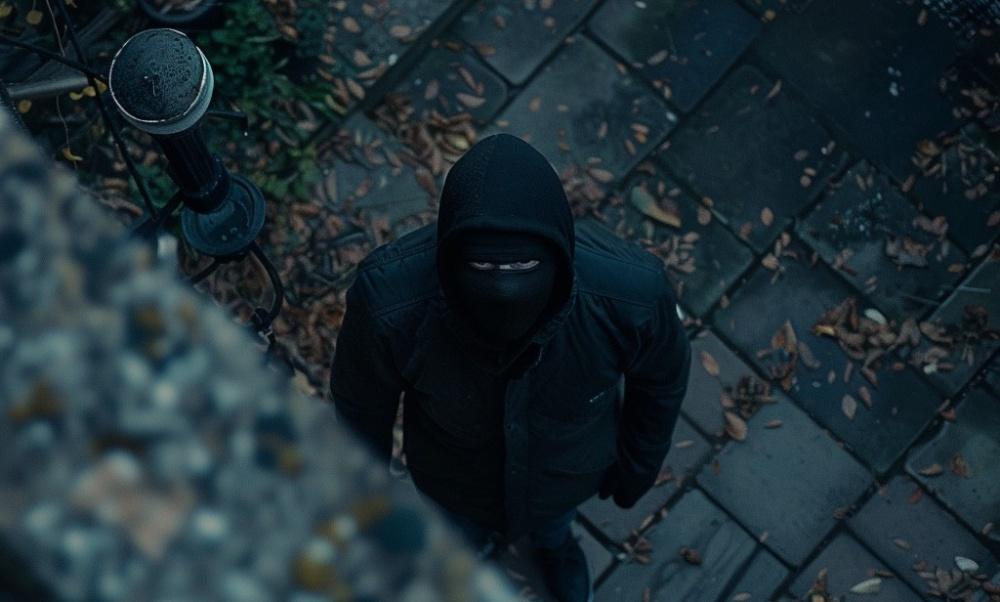
“Masked groups using sledgehammers and stolen vehicles… coordinated teams… military-style precision.”
He stresses that this is not random street crime:
“These are not opportunistic crimes. They are calculated operations.”
Offenders are studying store layouts, observing routines, monitoring social media and identifying security weaknesses long before striking.
And the risk extends beyond the retail environment.
Hill is clear: the weakest point is often the individual, not the premises.
“Jewellery professionals—whether proprietors, senior staff, workshop managers or couriers—often have direct access to significant stock.”
He has seen multiple cases where jewellers were followed home or intercepted en route:
“In several instances, individuals were assaulted or threatened in the street for bags containing stock.”
“There have also been cases of couriers being intercepted after predictable travel patterns were identified.”
Then comes the most disturbing trend of all.

Hill does not soften the terminology:
“A tiger kidnap is a targeted abduction—often at a victim’s home—designed to coerce them into providing access to assets elsewhere.”
And jewellers, he warns, are especially exposed:
“Transferable knowledge… portability of assets… public visibility.”
A tiger kidnap bypasses alarms, safes, doors and shutters — by exploiting the human being behind them.
Hill explains that Harrier Global’s methodology differs sharply from traditional security providers:
“We don’t approach security from the perspective of a single solution — personnel, tech or alarms. We look at security through the eyes of the criminal.”
Rather than pushing products, Harrier begins with the client’s life — how they live, travel, work, store stock, and move between environments.
“We work to understand lifestyle and family arrangements before building a security infrastructure that ensures clients not only remain safe, but feel safe.”
Their process includes “notional targeting” — assessing a client exactly as an organised criminal group would, identifying realistic vulnerabilities rather than imagined ones.
Hill adds:
“By layering the right measures — alongside lifestyle adjustments and quieter interventions like internet purging, contingency planning, staff vetting and engaging local policing teams — we can disrupt and displace criminal interest.”
It’s security as strategy, not hardware.

Jeff Hill, Director - Harrier Global
Hill describes a consistent pattern when reviewing incidents:
“A quality alarm system. A highly secure safe. Perhaps CCTV installed several years ago.”
But these, he stresses, rarely constitute genuine security:
“While these components are important, they are rarely integrated into a cohesive security infrastructure.”
Criminal groups look for:
Gaps between physical and procedural security
Predictable routines
Unprotected residential addresses
Poor access control
Over-reliance on visible deterrents
Hill’s most important warning:
“A single layer, no matter how robust, can usually be overcome. A layered system, by contrast, increases complexity, risk and time for offenders.”
This point, Hill insists, is where most businesses fall short.
He outlines the areas jewellers frequently overlook:
“Residential security for keyholders and senior personnel should be reviewed with the same seriousness as shopfront protection.”
“Travel protocols should be formalised rather than improvised.”
“Stock movement should follow risk-assessed routes and timing strategies.”
“Exhibition and trade fair attendance should be accompanied by appropriate transport security and accommodation planning.”
Social media, too, is a growing threat:
“Images of high-value pieces, announcements of travel schedules… can inadvertently signal opportunity.”
From both a B2B and B2C perspective, he says, a serious breach has long-term consequences — from trust erosion to supply chain disruption.
Hill makes the case that real protection is not hardware — it is strategy:
“An effective security infrastructure is not a product—it is a strategy.”
That strategy includes:
“Physical protection… electronic systems… procedural controls… personal security awareness training… residential risk mitigation… regular independent security audits.”
Most importantly:
“These measures must interact. Higher-level criminals thrive on predictability and fragmentation. A cohesive approach disrupts both.”
The jewellery world is built on beauty, craftsmanship and emotional significance — but that same value makes it a target. Hill’s insights illustrate a crucial truth: security must now be treated with the same seriousness as inventory, staffing and financial planning.
The industry cannot afford a reactive mindset.
It needs layered security, informed staff, integrated systems and protection that follows the individual — not just the premises.
Preparedness is not paranoia.
It is professionalism.
For jewellers seeking to review or strengthen security protocols — across retail, residential, travel or operational risk — Harrier Global provides specialist intelligence-led security strategies tailored to high-value sectors. harrierglobal.com

LEGOOCT 1, 2025
Block Gems: Why LEGO’s New Mineral Collection Is a Jewellery Lover’s Dream
LEGO’s new Mineral Collection isn’t just for collectors — it’s a colourful, display-worthy homage to the beauty of real gemstones, and a playful treat for jewellery lovers
READ MORE
JEWELSAUG 19, 2026
What Are We Really Buying? Gold, Silver and the New Jewellery Reality
Gold, silver, plating and value. What rising metal prices mean for the jewellery we buy and the questions every consumer should ask
READ MORE
JEWELSSEP 5, 2026
Beyond the Jewellery Box: How Howden Approaches Jewellery Insurance at Every Stage
Howden approaches jewellery insurance from both sides, arranging specialist cover for private collectors and businesses throughout the jewellery trade
READ MORE




0 Comments
You must be logged in to comment. Click here to login.