






Don't miss a gem
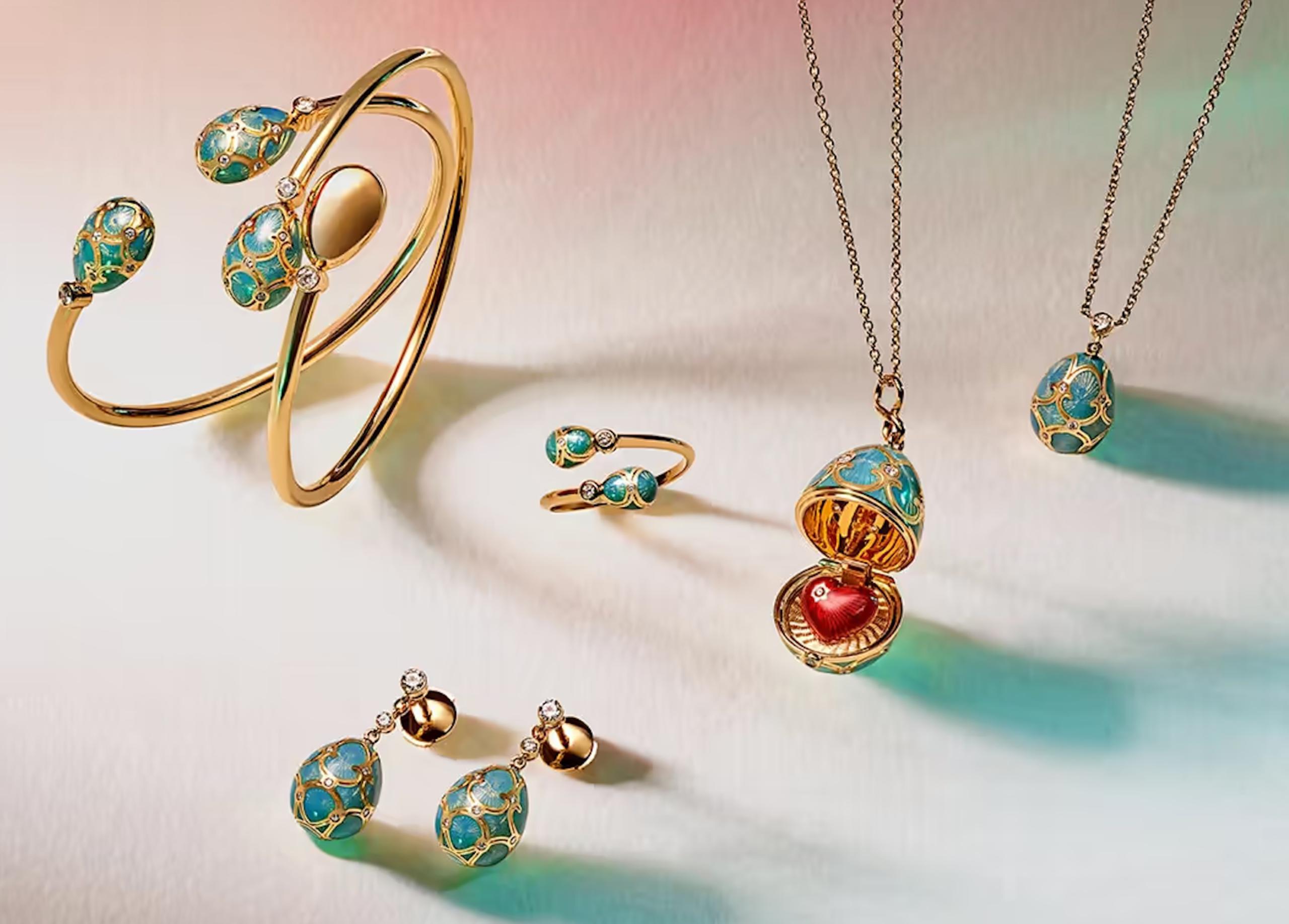
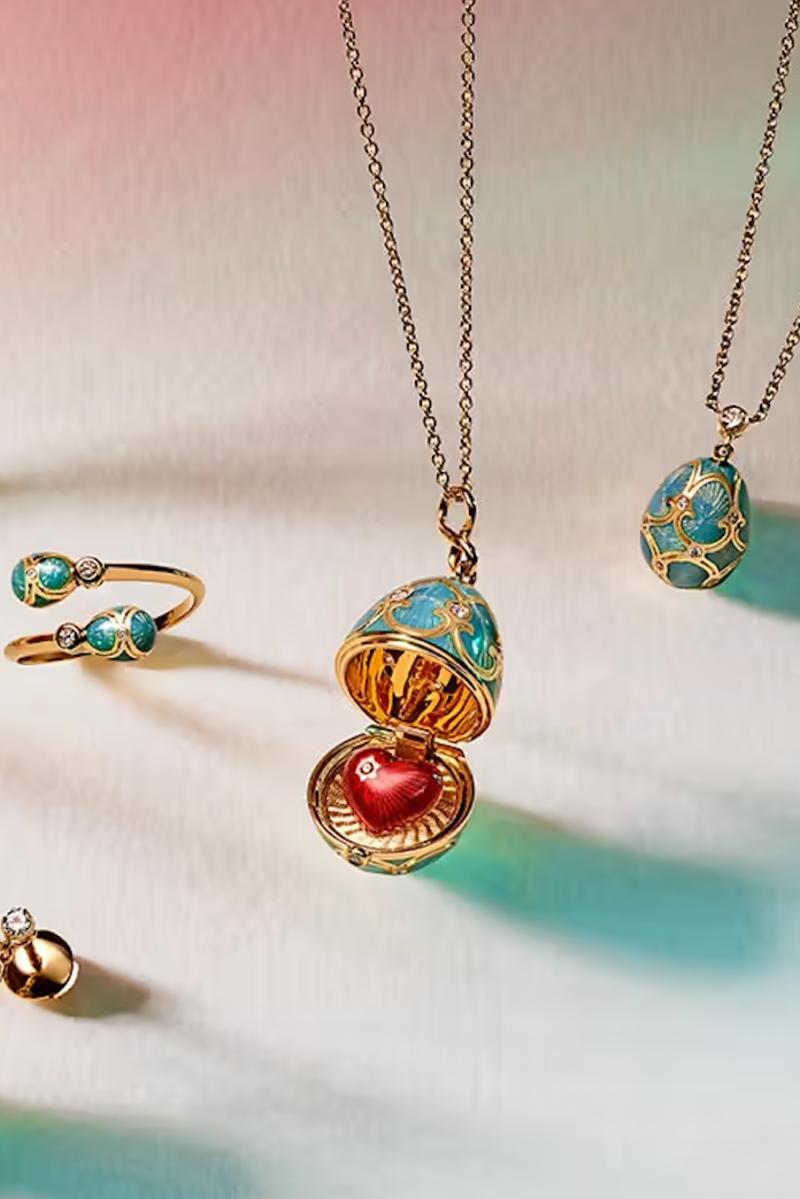
Few jewellery houses are as intrinsically linked to Easter as Fabergé — a connection that continues through its Heritage collection today
Fabergé’s Heritage collection continues the story of the egg, translating its historic connection to Easter into contemporary jewellery
The story of Fabergé begins with an Easter gift. In 1885, Tsar Alexander III commissioned the first Imperial Fabergé egg for Empress Maria Feodorovna, marking the start of a tradition that would come to define the house.
Over the following decades, 50 Imperial eggs were created, each one unique and each one concealing a surprise. These were not simply decorative objects, but highly technical works designed to combine craftsmanship, storytelling and innovation.
That origin remains central to Fabergé today.
Within the Fabergé Heritage collection, the egg is not a seasonal reference — it is the foundation of the brand’s design language.
The collection draws directly from the visual codes of the Imperial eggs, translating them into wearable jewellery. Pendants, rings, earrings and bracelets reinterpret the form through refined proportions, while maintaining the recognisable silhouette.
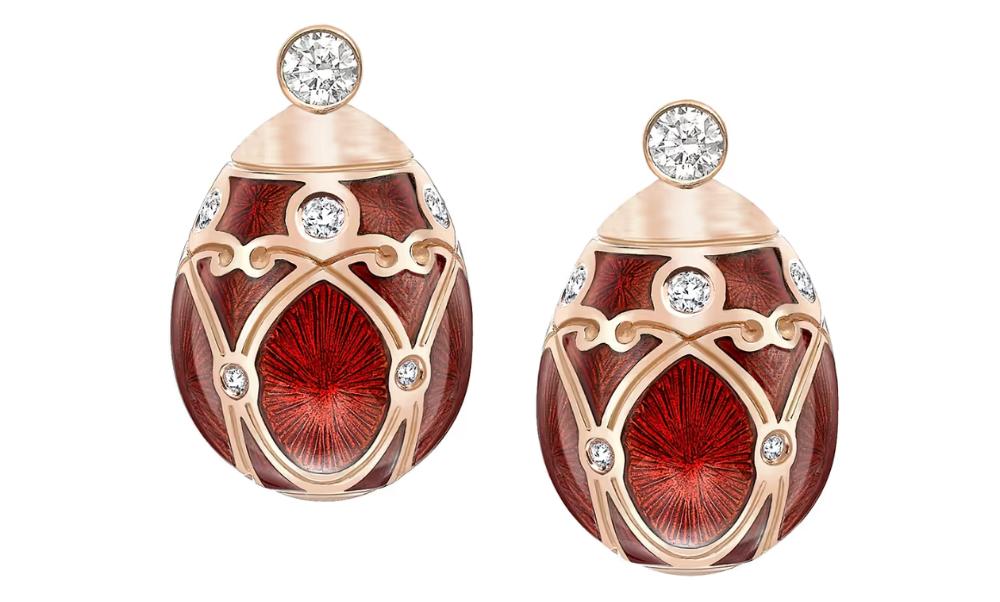
Signature elements such as guilloché enamel, intricate detailing and vibrant colour remain key. Crafted in 18ct yellow, white and rose gold, the pieces are set with diamonds alongside coloured gemstones including rubies, sapphires and emeralds.
The result is a collection that feels consistent with the house’s history, but adapted for a contemporary context.
A defining element of the Fabergé Heritage collection is the use of guilloché enamel — a technique closely associated with the house.
The process involves engraving intricate patterns into metal before applying layers of translucent enamel, allowing light to pass through and reflect off the surface beneath. The result is a distinctive depth and luminosity that shifts with movement.
Used extensively across the original Imperial eggs, this technique remains central to the Heritage collection today. It is what gives each piece its recognisable finish, whether in soft pastels or more vivid tones.
Rather than serving as decoration alone, guilloché enamel is a technical signature — one that connects contemporary designs directly back to Fabergé’s historic craftsmanship.
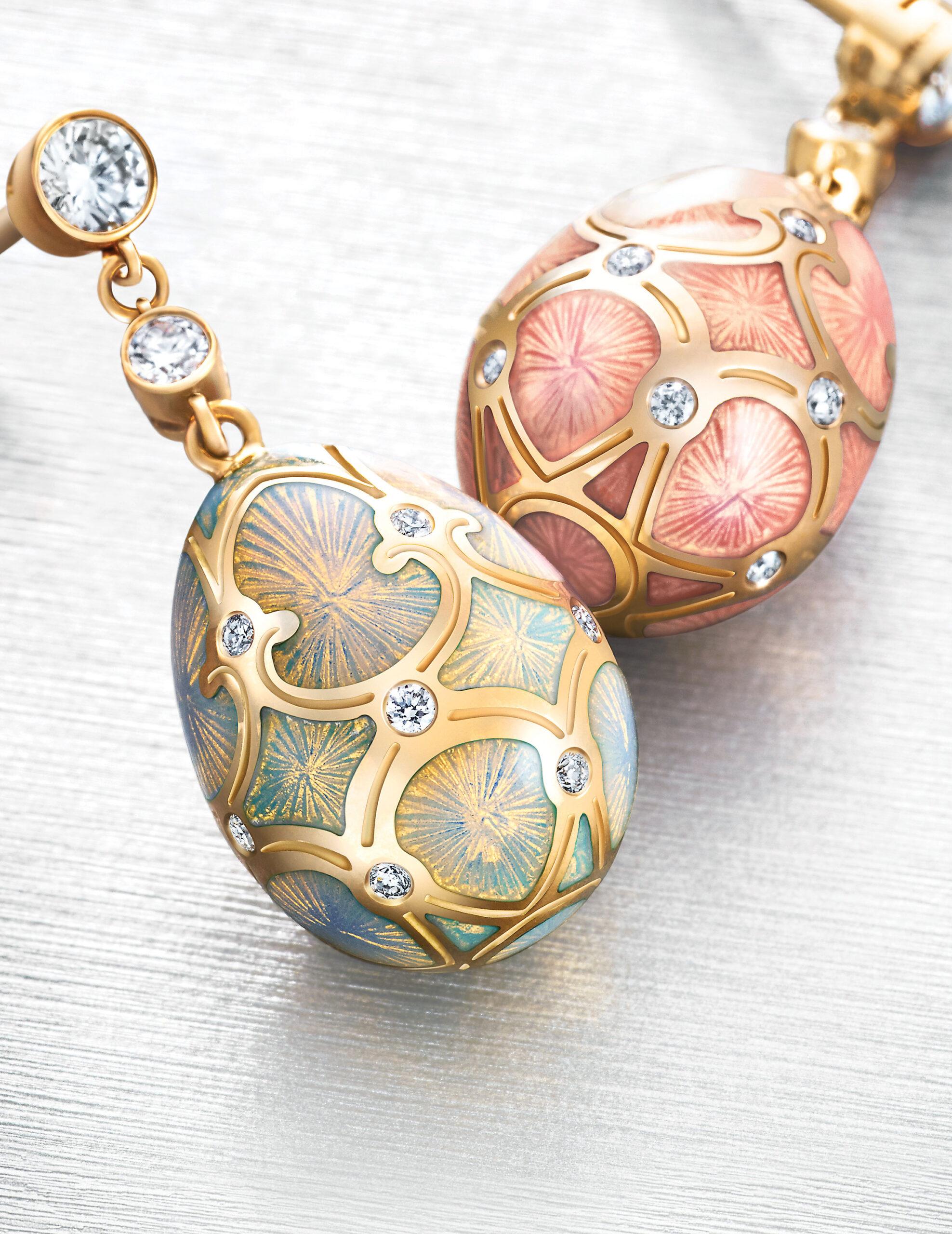
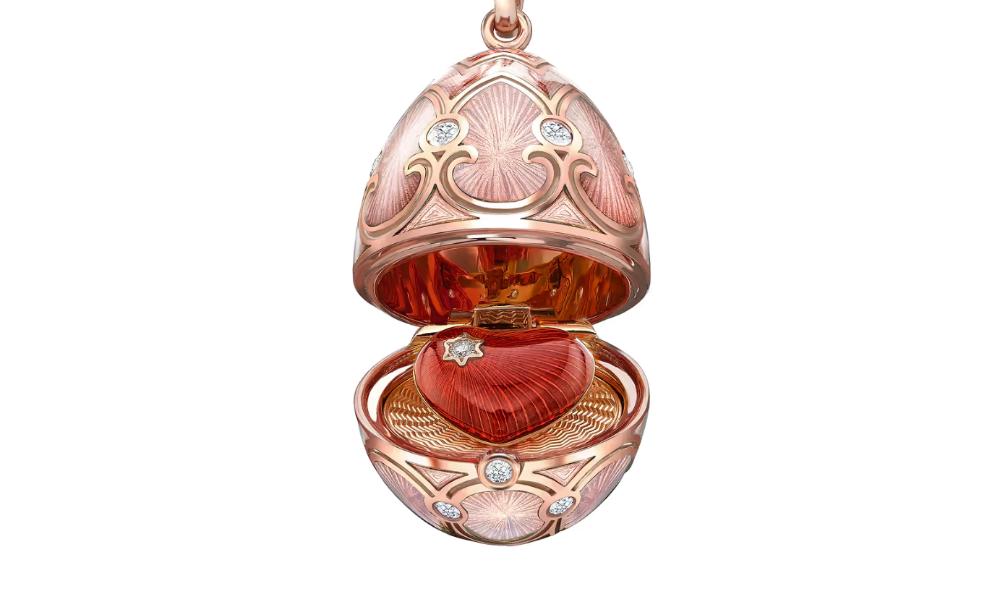
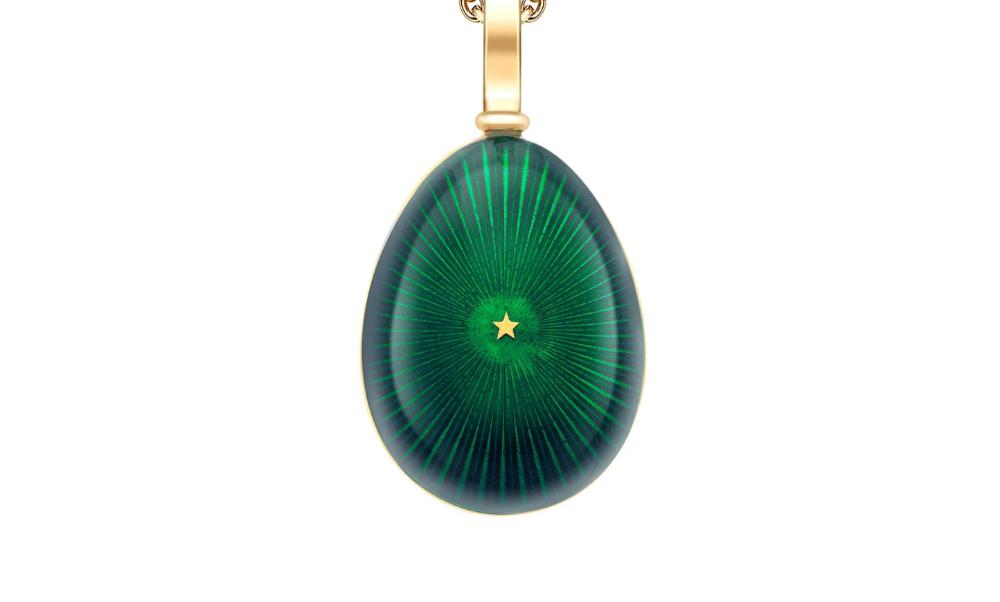
Fabergé Heritage egg pendants in 18ct gold with guilloché enamel and diamond detailing, showcasing the house’s signature engraved enamel technique
One of the defining characteristics of the original Fabergé eggs was the element of surprise.
Each piece concealed a hidden detail — a miniature object, a mechanism, or a carefully constructed interior designed to be revealed. This was not an addition, but a central part of the experience.
That concept continues within the Heritage collection.
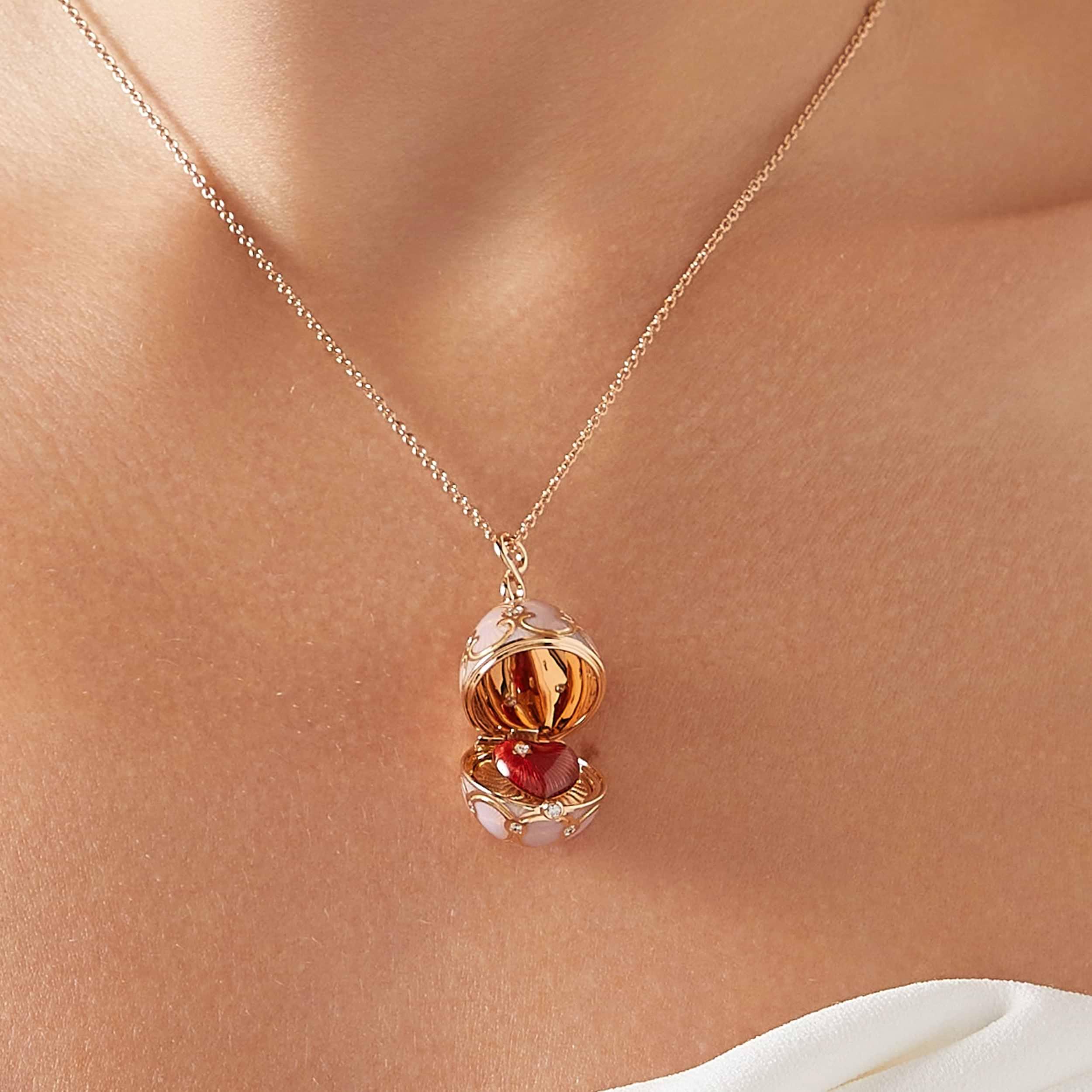
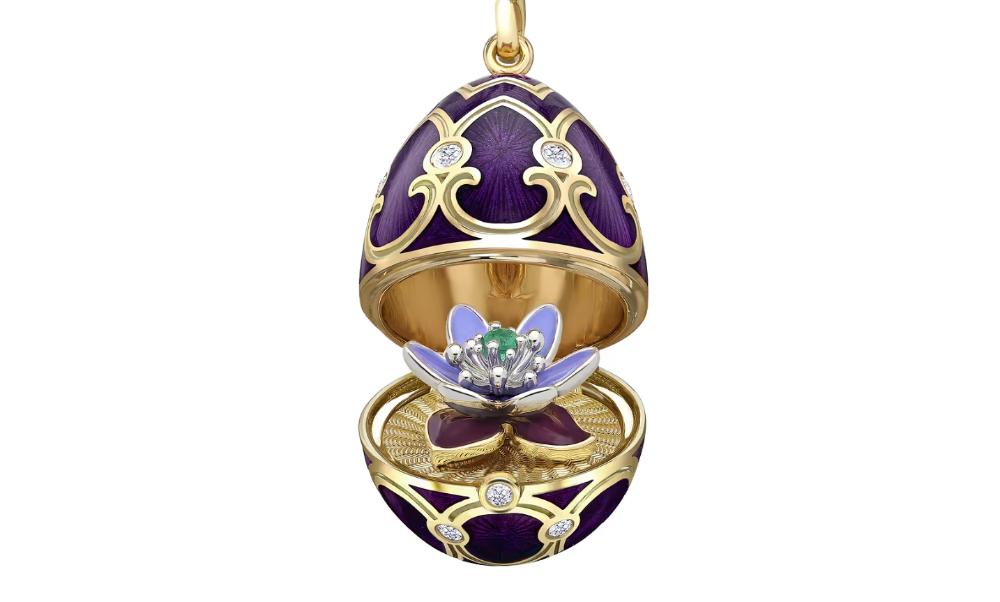
Many of the egg pendants open to reveal small elements, maintaining the idea that jewellery can be interactive as well as decorative. It is this moment of discovery that connects the modern pieces directly back to their historical counterparts.
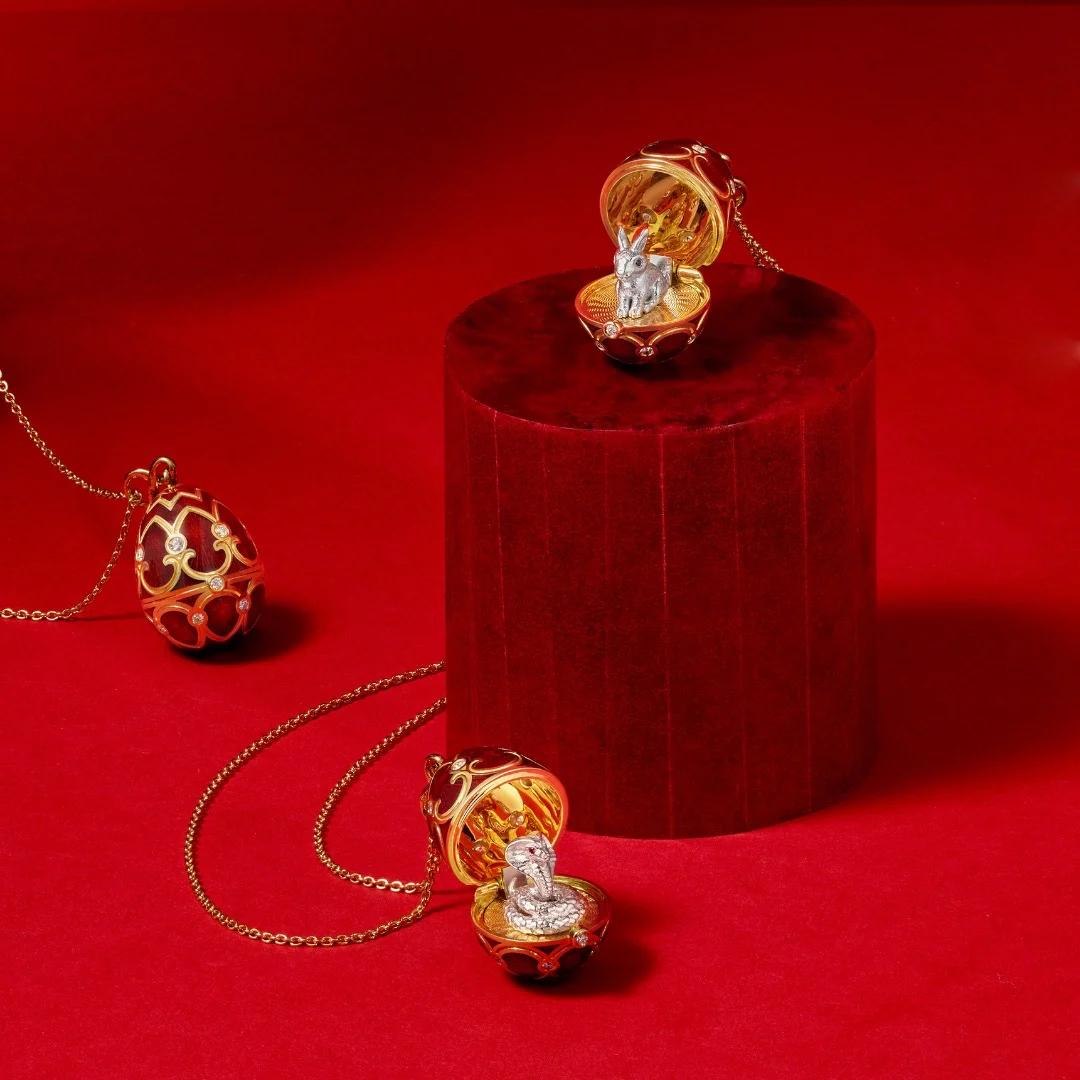
Fabergé Heritage egg pendants in 18ct gold and guilloché enamel, opening to reveal miniature surprises — a continuation of the house’s historic “surprise” tradition
Fabergé’s connection to Easter is rooted not only in history, but in symbolism.
The egg has long represented renewal, life and new beginnings — themes closely associated with Easter and the arrival of spring. This is reflected not only in the Imperial origins of the house, but in its archival references and storytelling today.
As highlighted in Fabergé’s own archive-inspired narratives, egg jewellery has also been used to mark personal milestones, with pieces added over time to symbolise growth and becoming.
Within the Heritage collection, these ideas continue to underpin the design — giving each piece a meaning that extends beyond its form.
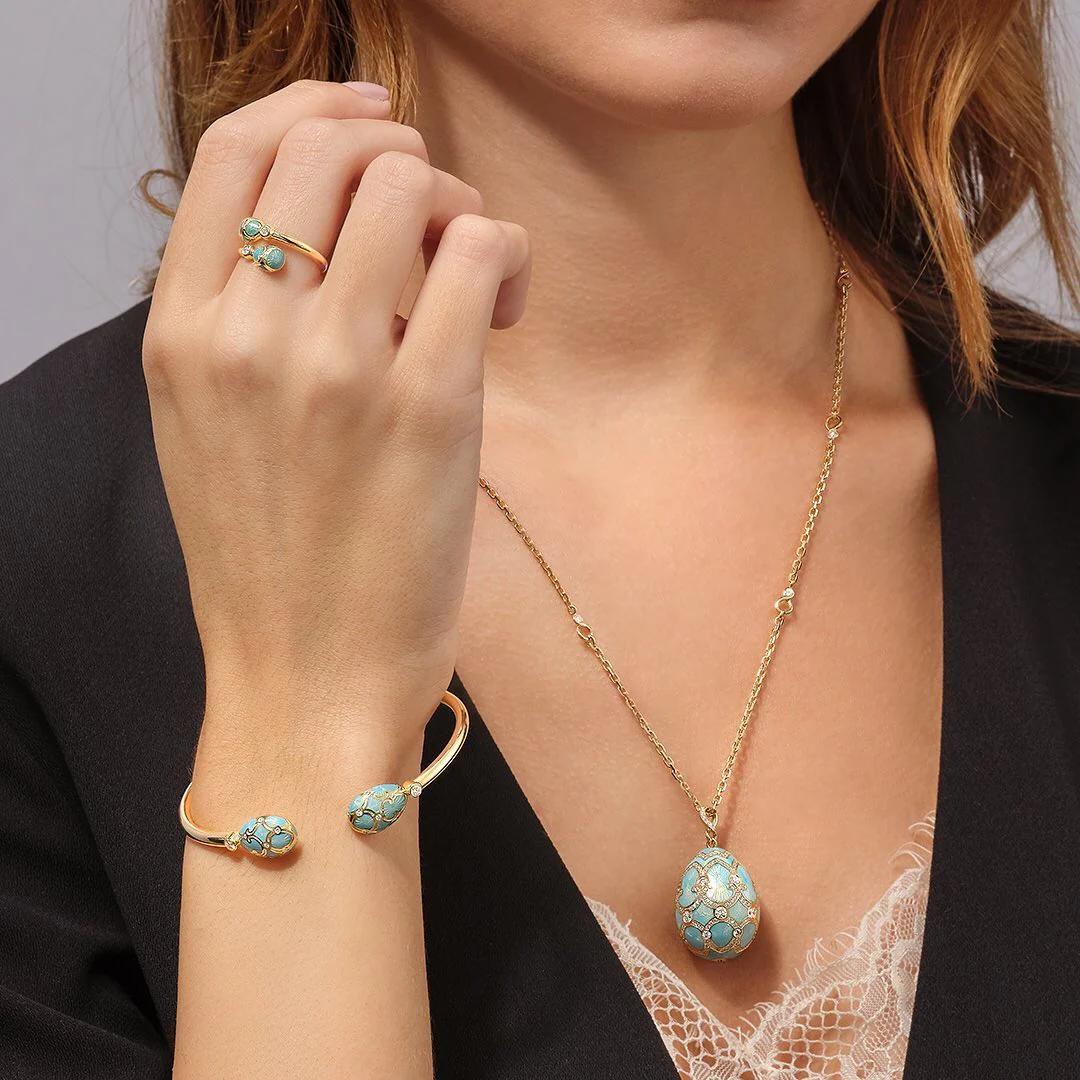
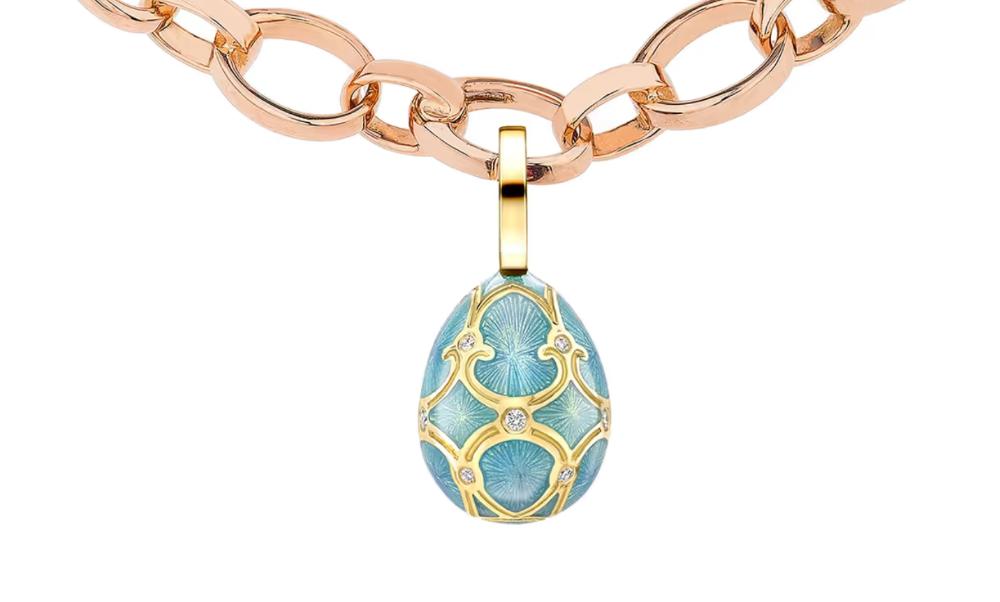
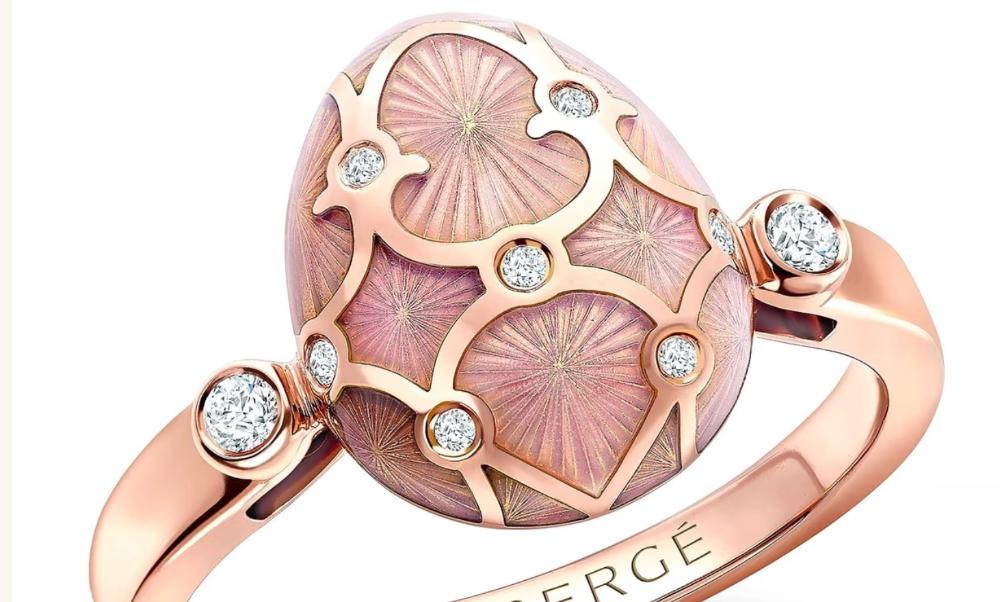
Fabergé Heritage egg pendant, bracelet and ring in 18ct gold with blue guilloché enamel and diamonds
While the original Fabergé eggs were created for royalty and tied specifically to Easter celebrations, the Heritage collection shifts that context.
The symbolism remains, but the pieces are designed to be worn beyond a single moment in the calendar.
This transition is significant. The egg moves from being a ceremonial object into something more personal — jewellery that can be worn daily, gifted and collected over time.
Watch the journey of a Fabergé Egg
Fabergé does not need to create a connection to Easter — it is already embedded in its identity.
What the Heritage collection does is reinterpret that relationship. Rather than producing pieces for a specific season, the house carries the symbolism forward into a permanent collection.
The egg remains a symbol of renewal and spring, but it is no longer confined to a single occasion. Instead, it becomes part of a broader narrative around personal meaning and expression.
Fabergé is one of the few houses where Easter is not a theme — it’s the origin story.
The Heritage collection works because it doesn’t try to reinvent that. It refines it. The egg remains central, the craftsmanship remains intact, and the idea of surprise is still present.
What’s interesting is how the meaning has evolved.
These are no longer imperial commissions created for royalty. They are personal pieces, designed to mark moments, to be worn, and to build a story over time.
Fabergé doesn’t modernise by changing its codes — it modernises by making them relevant to how jewellery is worn today.
Explore the Fabergé Heritage collection: faberge.com
Follow Fabergé on Instagram
Scroll the gallery to read more
HIGH JEWELLERYFEB 2, 2026
Cartier En Équilibre: High Jewellery in a State of Poised Tension
Cartier unveils the latest En Équilibre chapter in Paris, exploring balance through colour, tension and architectural design
READ MORE
BULGARIFEB 19, 2026
Bulgari and Dua Lipa: Redefining Modern Luxury Through Cultural Influence
Bulgari names Dua Lipa as global ambassador, blending the maison’s heritage with contemporary cultural influence
READ MORE
ANDREW GEOGHEGANFEB 20, 2026
Treowth — Andrew Geoghegan’s Anglo-Saxon Discovery Sparks a New Fine Jewellery Chapter
A Saxon gold fragment discovered in Lincolnshire inspires Andrew Geoghegan’s new Treowth collection, beginning with the Goldwin eternity band
READ MORE



0 Comments
You must be logged in to comment. Click here to login.