






Don't miss a gem
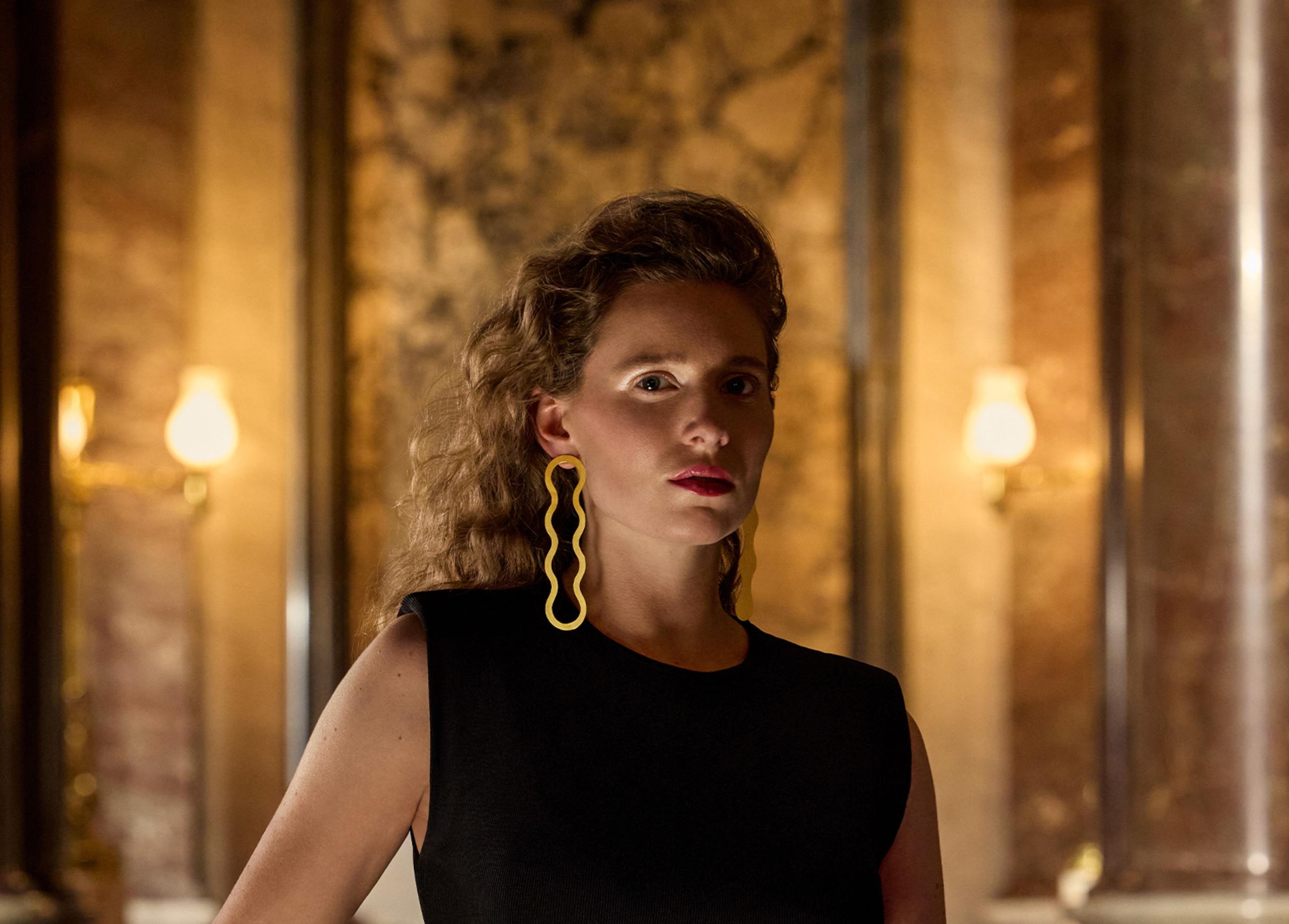
Week One has closed and a new group of makers is moving into Goldsmiths’ Hall. We look back at four names that caught our eye and ahead to three we will be watching
The makers on our radar as Goldsmiths’ Fair moves into Week Two
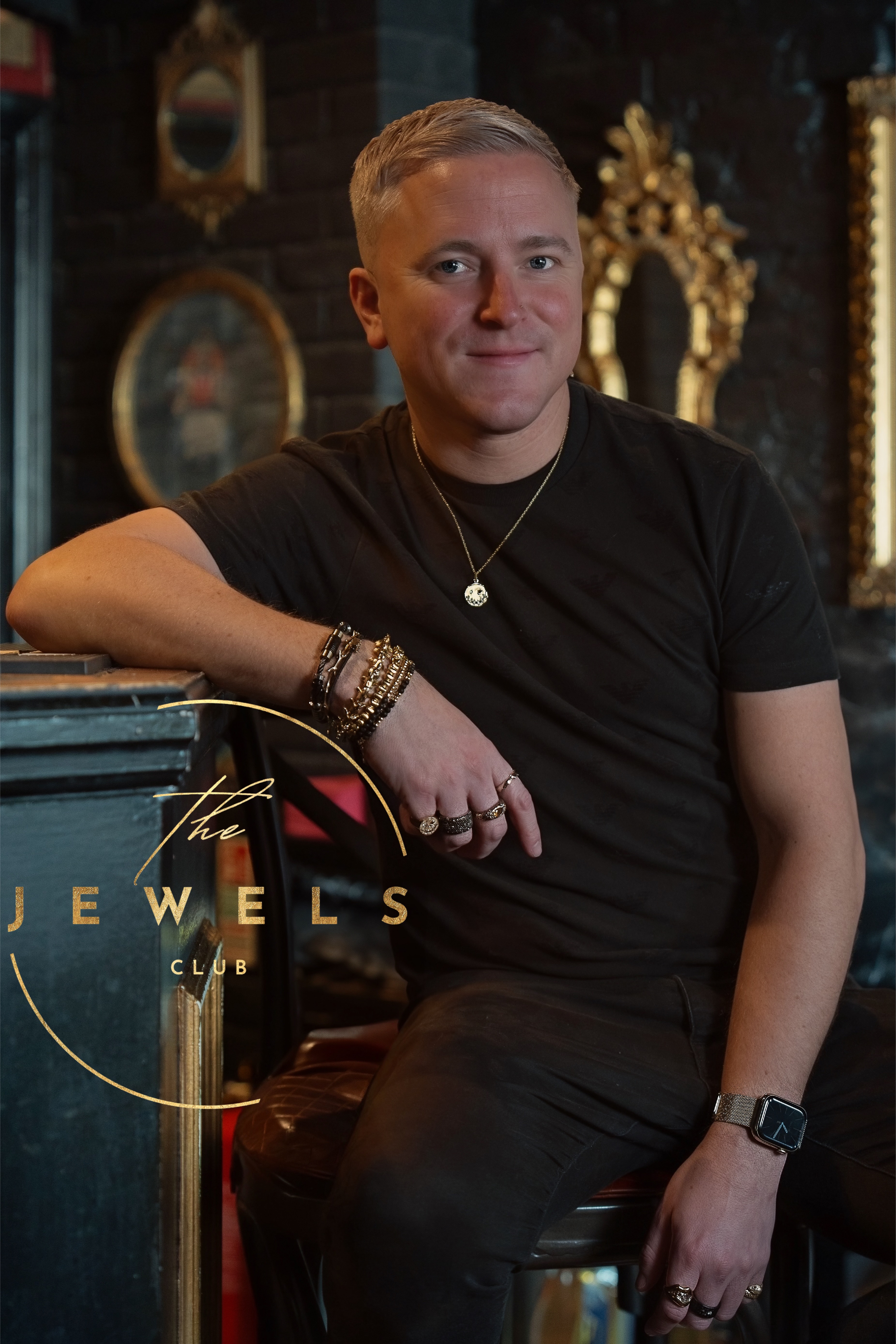
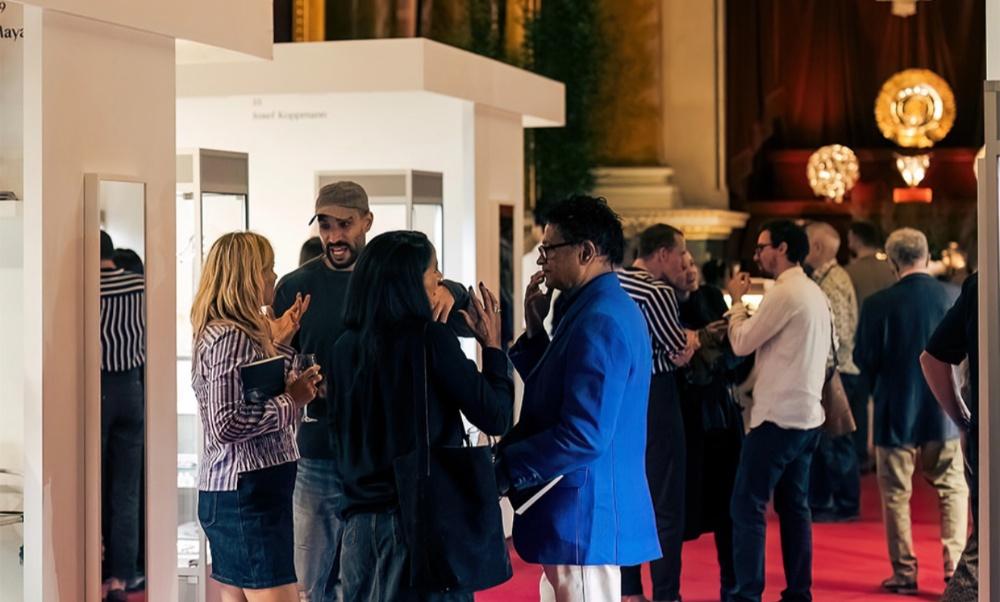
Week One of Goldsmiths’ Fair 2026 has closed, the red carpet is being reset and an entirely new group of makers is preparing to move into Goldsmiths’ Hall. The Goldsmiths’ Company reported that thousands of people came through the doors during the opening six days to see, try and buy work from some of the UK’s most accomplished jewellers and silversmiths. Following the Fair through the work, photography and updates shared across the week, four names in particular caught our attention.
This is where Goldsmiths’ Fair earns its place in the calendar. Across two distinct weeks, 138 independent makers present work directly to the public, with no retailer or gallery standing between the person who made the object and the person considering living with it. The Week One coverage revealed assured signatures and quietly obsessive detail, while Week Two, opening on Tuesday 29 September, brings a complete change of cast, and three names are already at the top of our list.
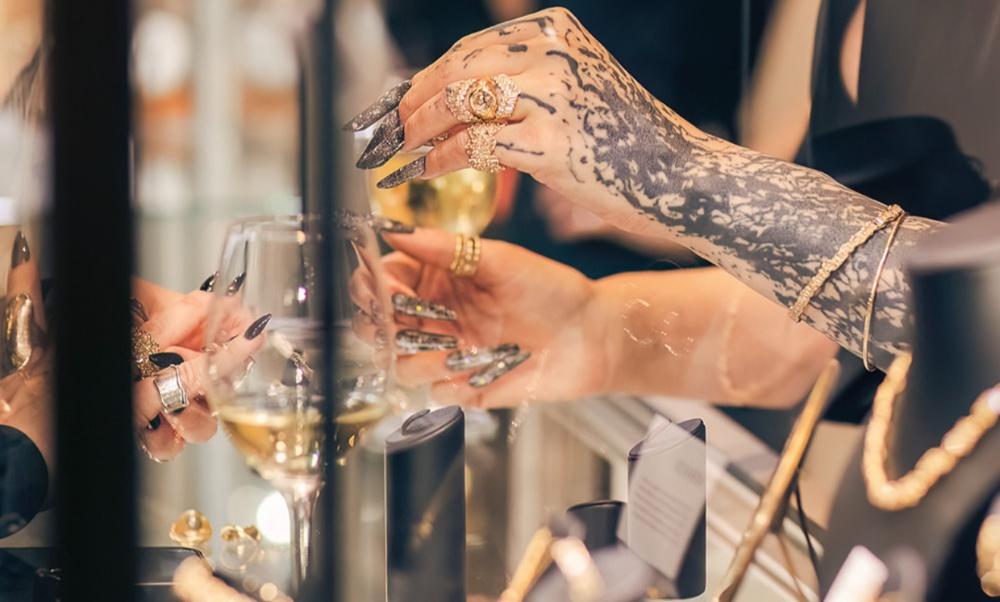
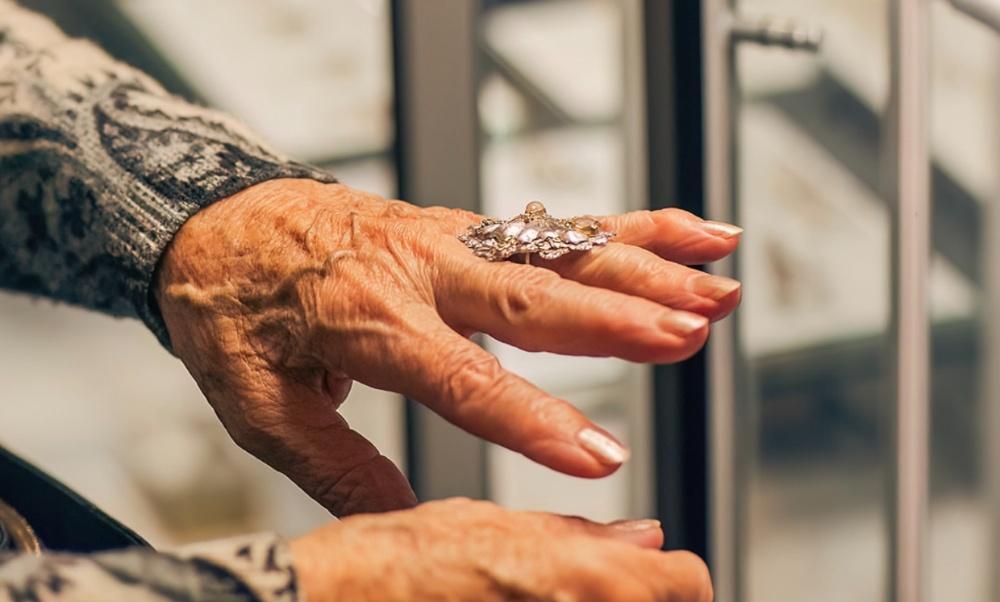
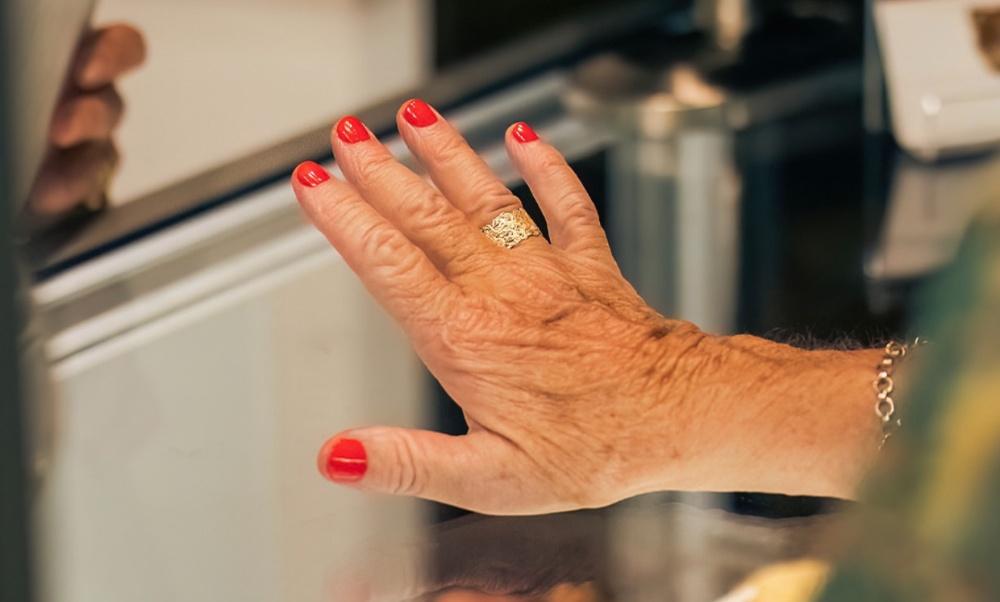
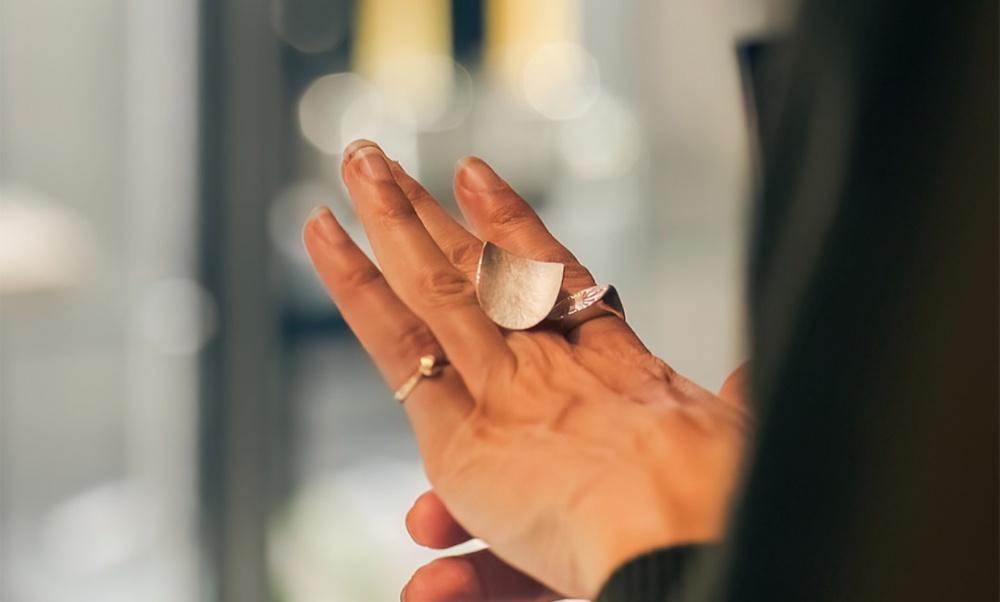
Jewellery may photograph beautifully, but photographs flatten it. They cannot tell you how a ring balances on the hand, whether an earring moves with the body, how engraving catches low light or why a stone that seemed restrained online suddenly feels completely alive. At the Fair, the eye, hand and maker’s voice all arrive together. That is not a nostalgic argument for shopping offline; it is a reminder that jewellery is a physical, emotional object and benefits from being encountered as one.
For independent jewellers, that encounter is commercially important. A sale counts, of course, but so does the person who returns with a partner, the collector who begins a commission and the visitor who remembers a name six months later. Goldsmiths’ Fair is run as a non-profit event and exhibitors retain the proceeds of their sales, so money spent at a stand goes directly back into a maker’s practice. At a time when permanent routes to market are limited and visibility is often rented one social post at a time, six days of concentrated, face-to-face attention can carry well beyond the week itself.
Fair Director Harriet Scott describes that balance between heritage and new thinking clearly:
“Goldsmiths’ Fair has grown from the Company’s centuries-long commitment to supporting exceptional craft, but its energy comes from the makers shaping the field today. What makes it so exciting is the mix of established voices, emerging businesses and genuinely new ideas. The Fair offers a vivid sense of where jewellery and silver are now, and where they might go next.”
Fair Director Harriet Scott
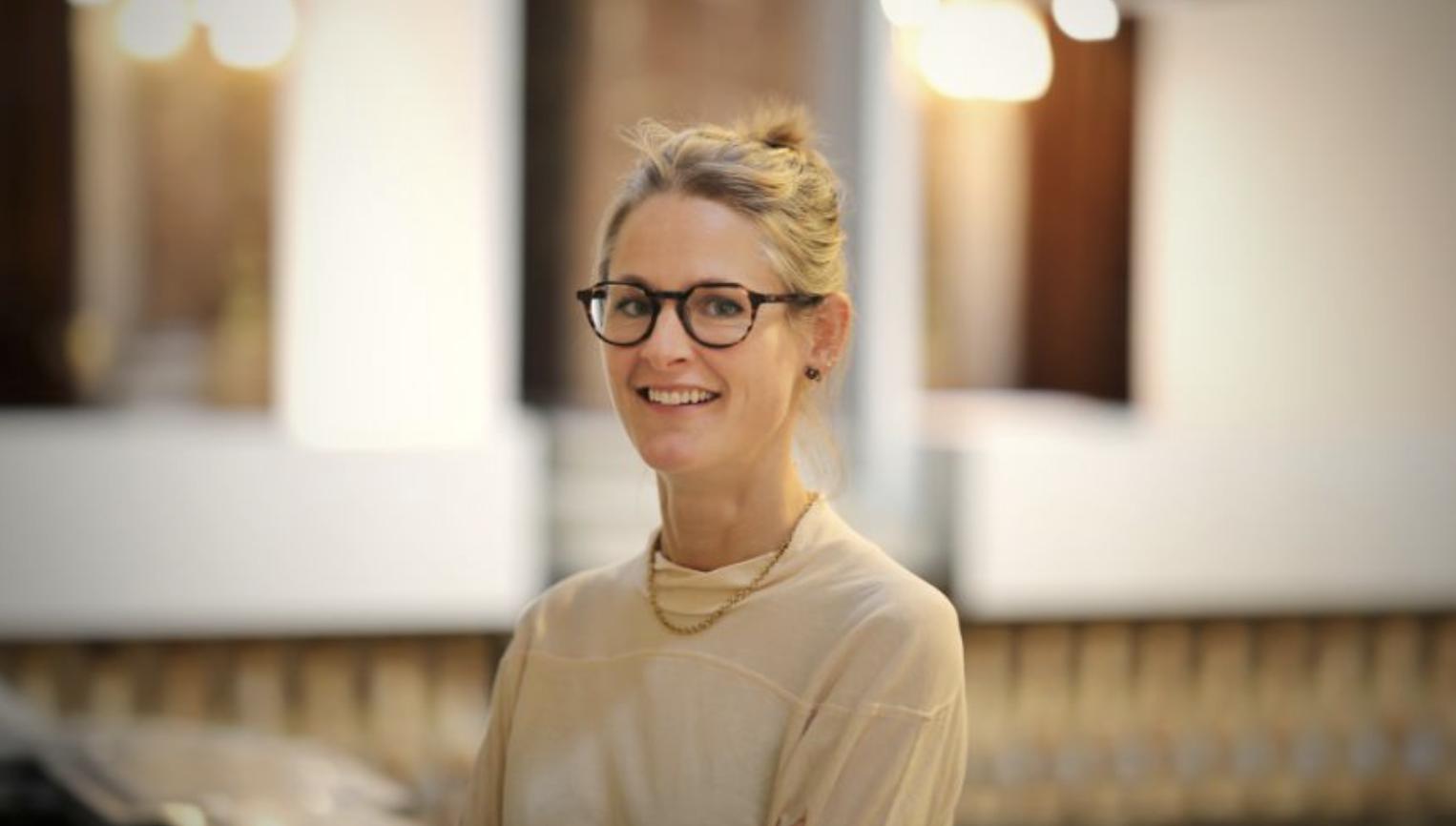
Harriet Scott, Fair Director of Goldsmiths’ Fair. Credit: Goldsmiths’ Fair
It is a useful way to understand the Fair, not as a static celebration of tradition, but as a view of a craft that continues to change.
Goldsmiths' Fair Film 2026
The pleasure of a fair this broad is that there is no single house style. The four Week One makers below could hardly be more different, yet each has the most valuable quality an independent jeweller can possess: a visual language recognisable as their own.
Kasun Ekanayake brings an industrial designer’s control to jewellery that never feels cold. His recent Eyes of Many work turns the eye into a graphic, protective presence across rings, pendants and necklaces, moving between sterling silver, gold vermeil and precious gold without diluting the idea. We loved the balance of precision and play: technically resolved pieces with enough attitude to feel personal rather than over-designed.
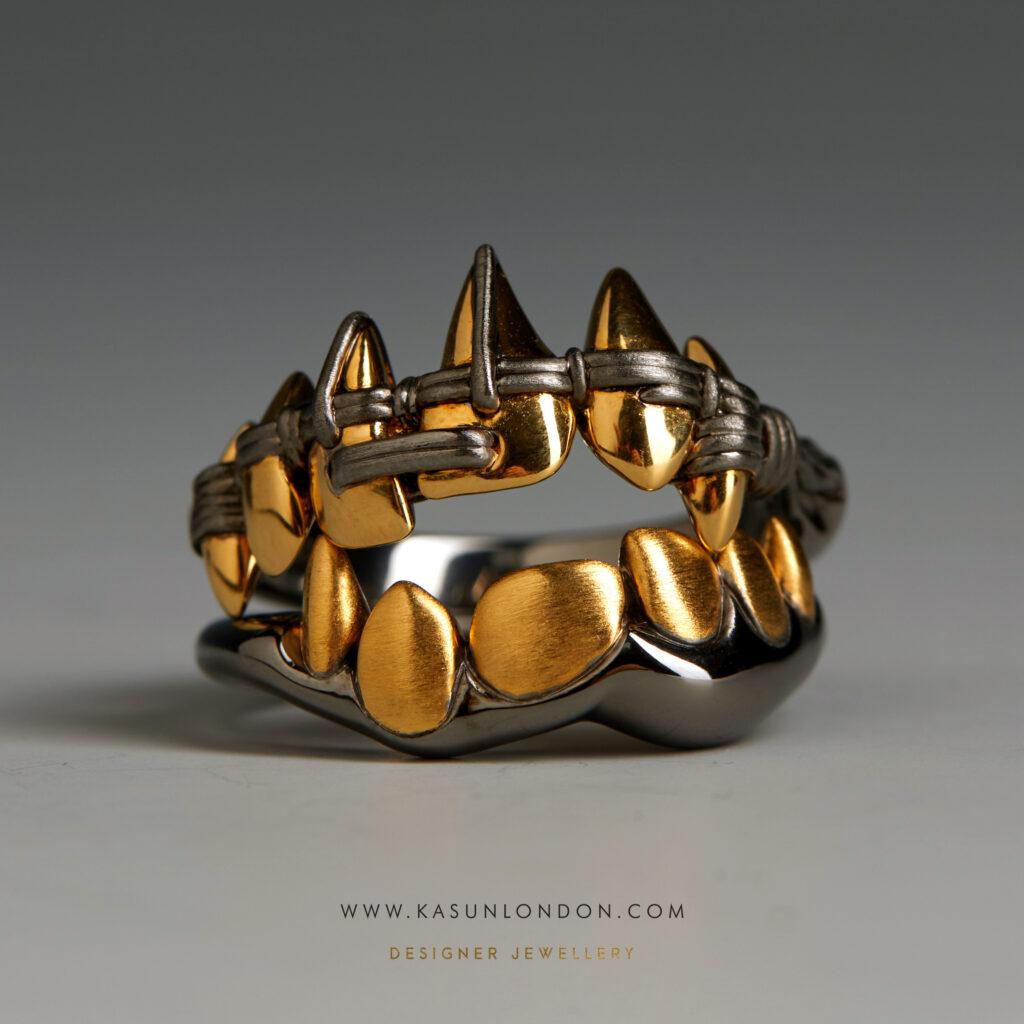
Sculptural gold and dark metal tooth rings by Kasun London
Castro Smith makes work that rewards closeness. His hand-engraved surfaces draw on mythology, nature and ancient symbols, wrapping imagery around signet rings and one-of-a-kind pieces so that the story reveals itself slowly rather than all at once. The engraving has discipline, but it also has movement; these are small, wearable worlds rather than flat decoration applied to metal.
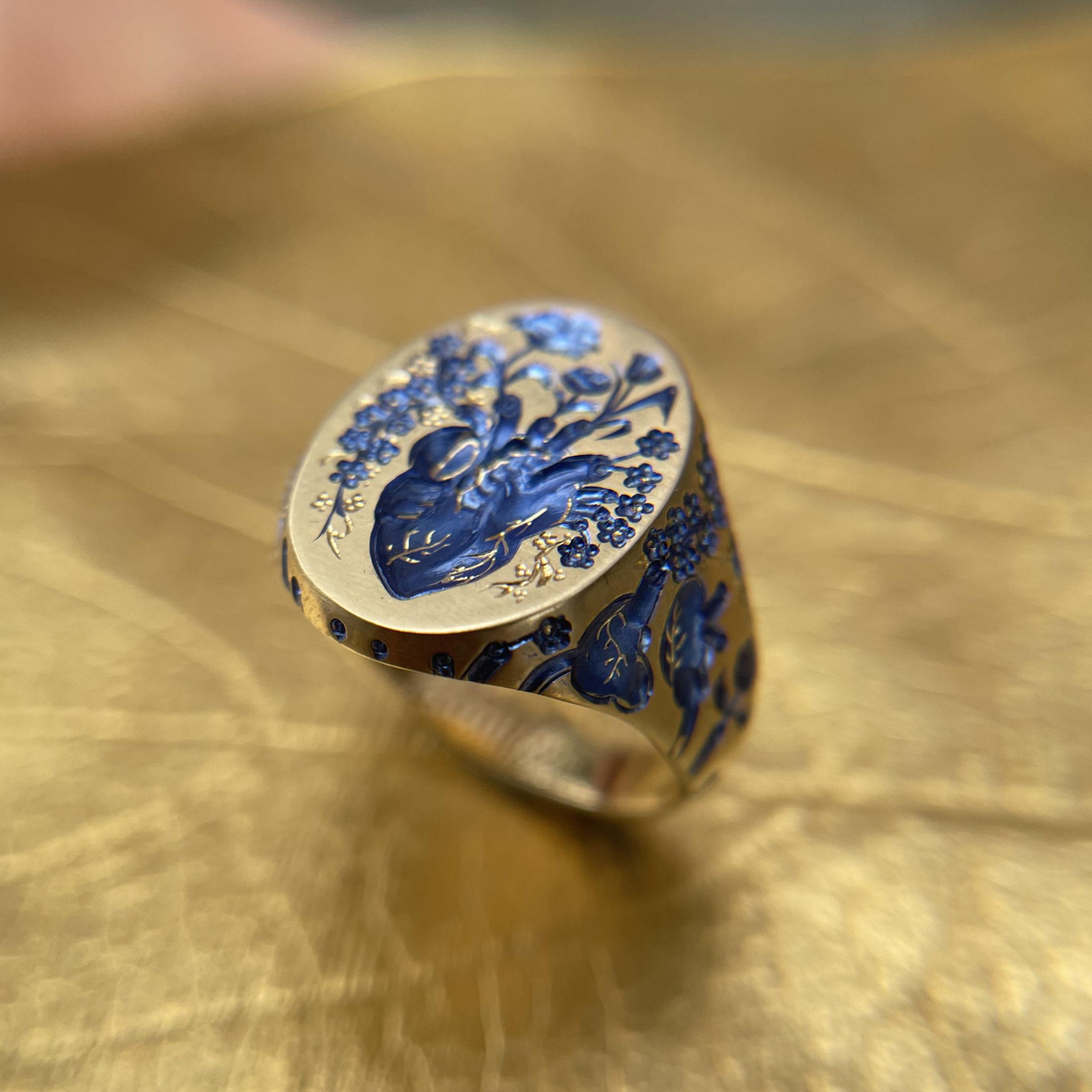
Hand engraved gold signet ring with blue floral and anatomical heart motifs by Castro Smith. Credit: Goldsmiths' Fair
Alison Macleod works from south-west Scotland, drawing on antique jewellery, curiosity cabinets and the stories objects gather over time. Her patterned and finely engraved gold pieces feel as though they could have been discovered rather than newly made, yet they remain entirely wearable now. Sentiment is often used loosely in jewellery, but here it is built into the object through detail, material and the clear intention that a piece should be worn, kept and eventually passed on.
Alison Macleod shares the stories and inspirations behind her intricately patterned jewellery, shaped by antique treasures, curiosity cabinets and objects made to be kept. Video: Goldsmiths’ Fair
Tomasz Donocik has always been comfortable pushing fine jewellery beyond polite convention. Precious stones and metals meet leather, silk, strong geometry and a sensibility shaped by art, film and literature, with modern technology working alongside traditional bench craft. His work brings scale and drama to the room, but its impact rests on precision; remove the workmanship and the theatre would have nothing to stand on.
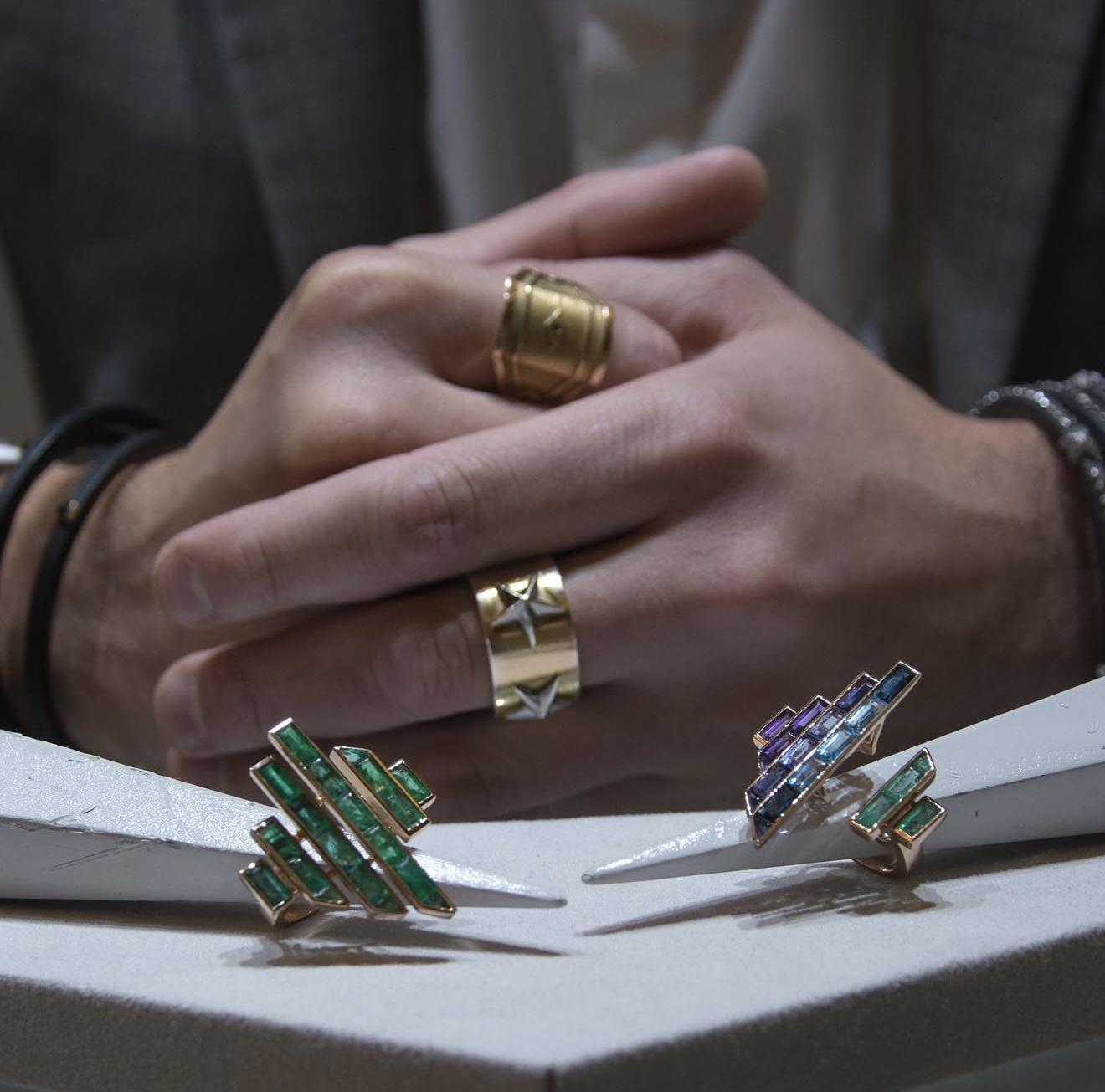
Geometric gemstone rings by Tomasz Donocik, displayed alongside his sculptural gold designs
One of the smartest things about Goldsmiths’ Fair is its two-week structure. From Tuesday, every stand changes hands, giving visitors a second exhibition rather than a lightly refreshed version of the first. Among the new group, these are the makers we are especially looking forward to seeing.
Susannah King arrives as a first-time exhibitor and a third-generation jeweller with a very contemporary instinct for colour. Her unusual gemstones sit within bold silhouettes informed by 1980s cocktail jewellery and the compartmentalised colour of Art Nouveau stained glass. There is joy in the scale and palette, but also a serious eye for composition; we want to see how those combinations behave away from the camera and on the hand.
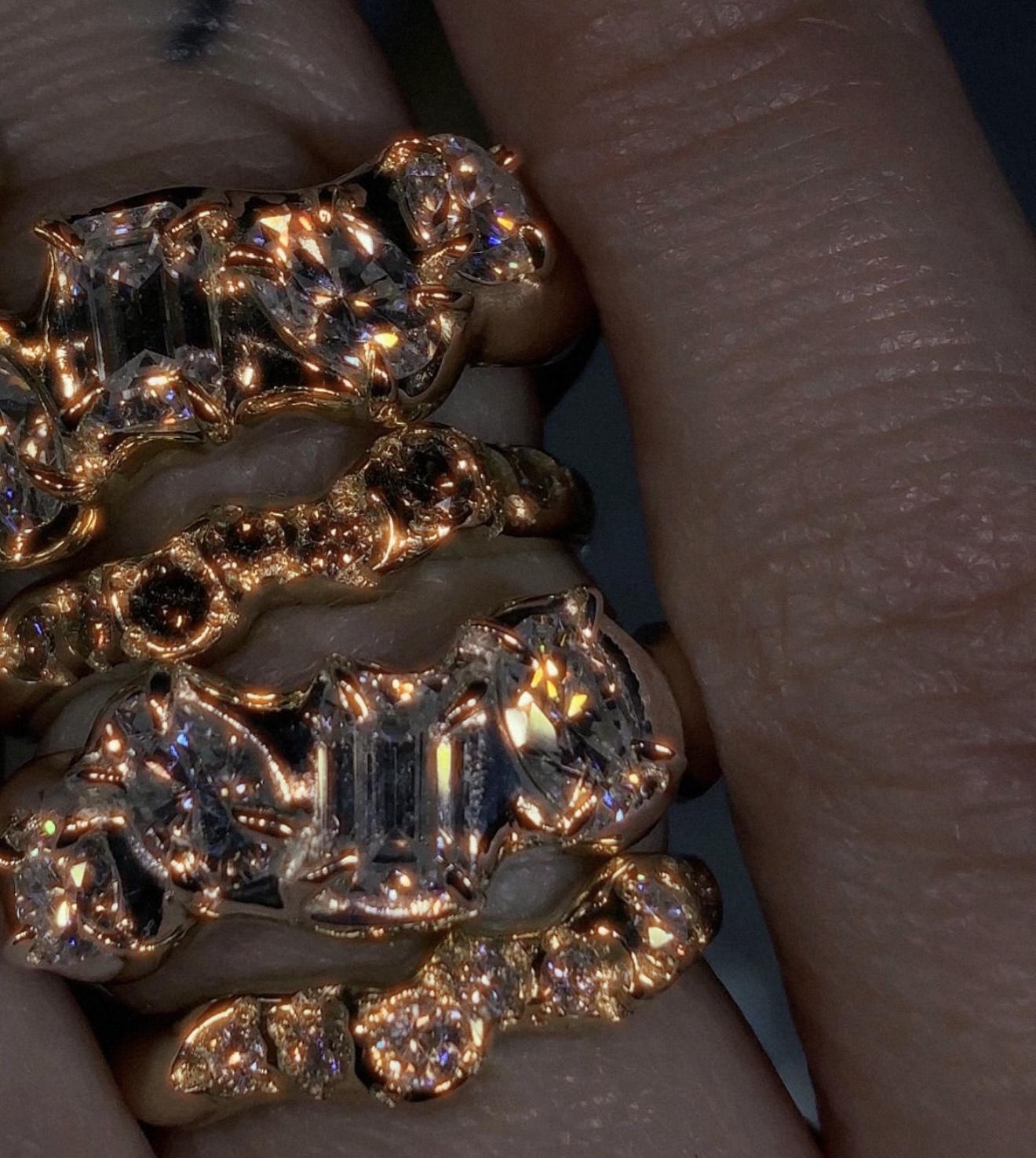
A collection of sculptural gemstone rings by Susannah King. Credit: Susannah King
Darren Sherwood occupies the productive space between classically trained goldsmithing and digital design. Having worked with houses including Fabergé, Cartier and Graff, he brings formidable technical knowledge to pieces shaped by both his English surroundings and his Trinidadian heritage. The attraction is not technology for its own sake, but the possibility of using it to extend what traditional craft can do.
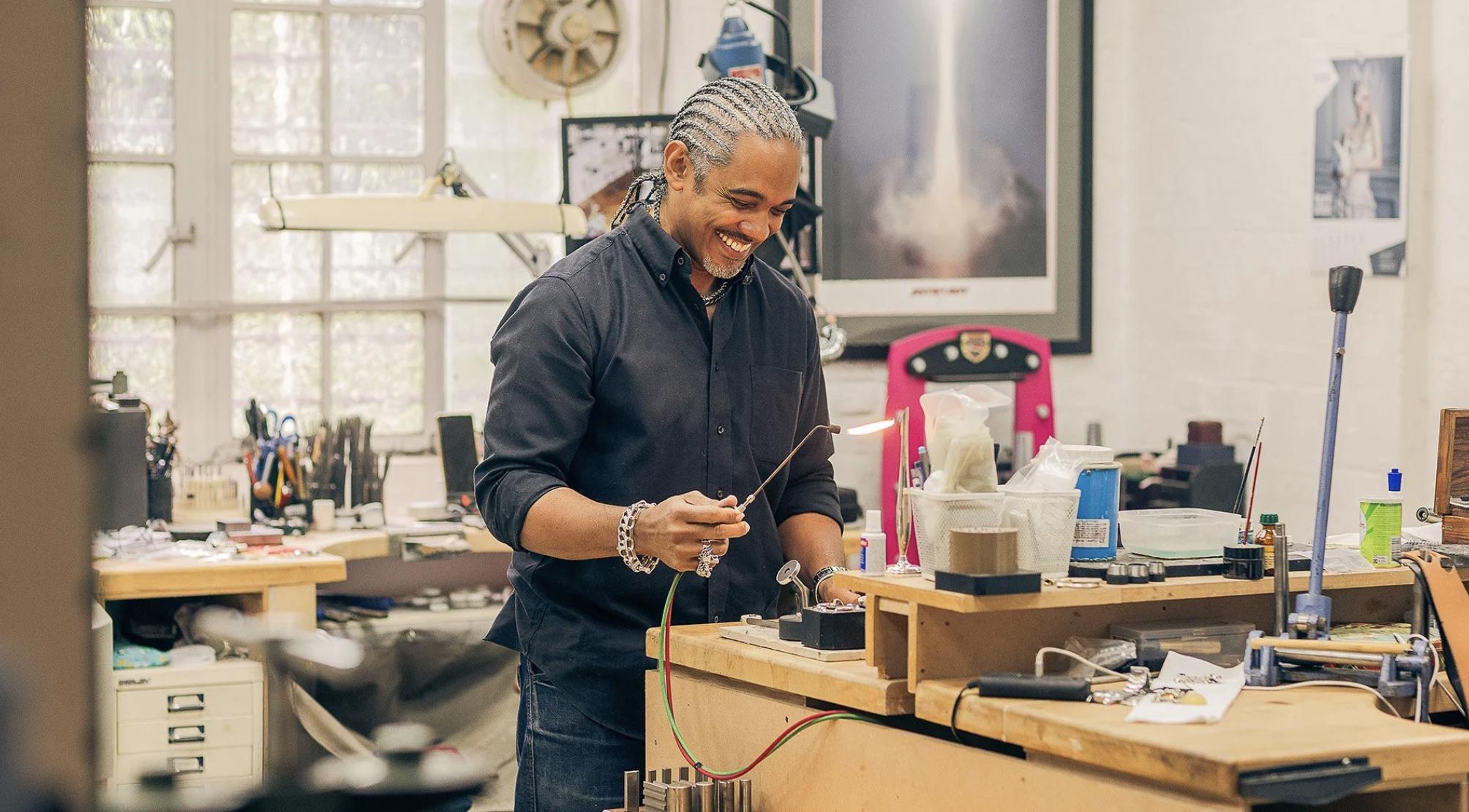
Jeweller Darren Sherwood at work in his London studio. Photograph: Paul Read, courtesy of Goldsmiths’ Fair
Ana Verdun treats jewellery as a place for exploration, bringing boldness and elegance into the same frame. Her practice spans distinctive collections, bespoke commissions and remodelling, with pieces designed to be worn with confidence rather than saved for permission or occasion. We are looking forward to seeing that edge in person, where proportion and presence can be judged properly.
Ana Verdun discusses her distinctive approach to jewellery, where bold design, craftsmanship and self-expression come together. Video: Goldsmiths’ Fair
Goldsmiths’ Fair is not only presenting established names. Thirteen makers are exhibiting for the first time in 2026, including Susannah King, Sam Ham and Cathy Timbrell. Ten have joined through the new Emerging Business Bursary, created to support craftspeople who established their businesses within the past six years, regardless of age or whether they followed a formal educational route.
Each bursary recipient receives a free stand, a £1,500 grant, professional training and access to an optional interest-free bullion loan. It is a practical form of support at a point when the costs of materials, exhibiting and building an audience can easily restrict who gets seen. With the Goldsmiths’ Company approaching its 700th anniversary in 2027, supporting new talent feels less like a side programme and more like an essential part of carrying the craft forward.
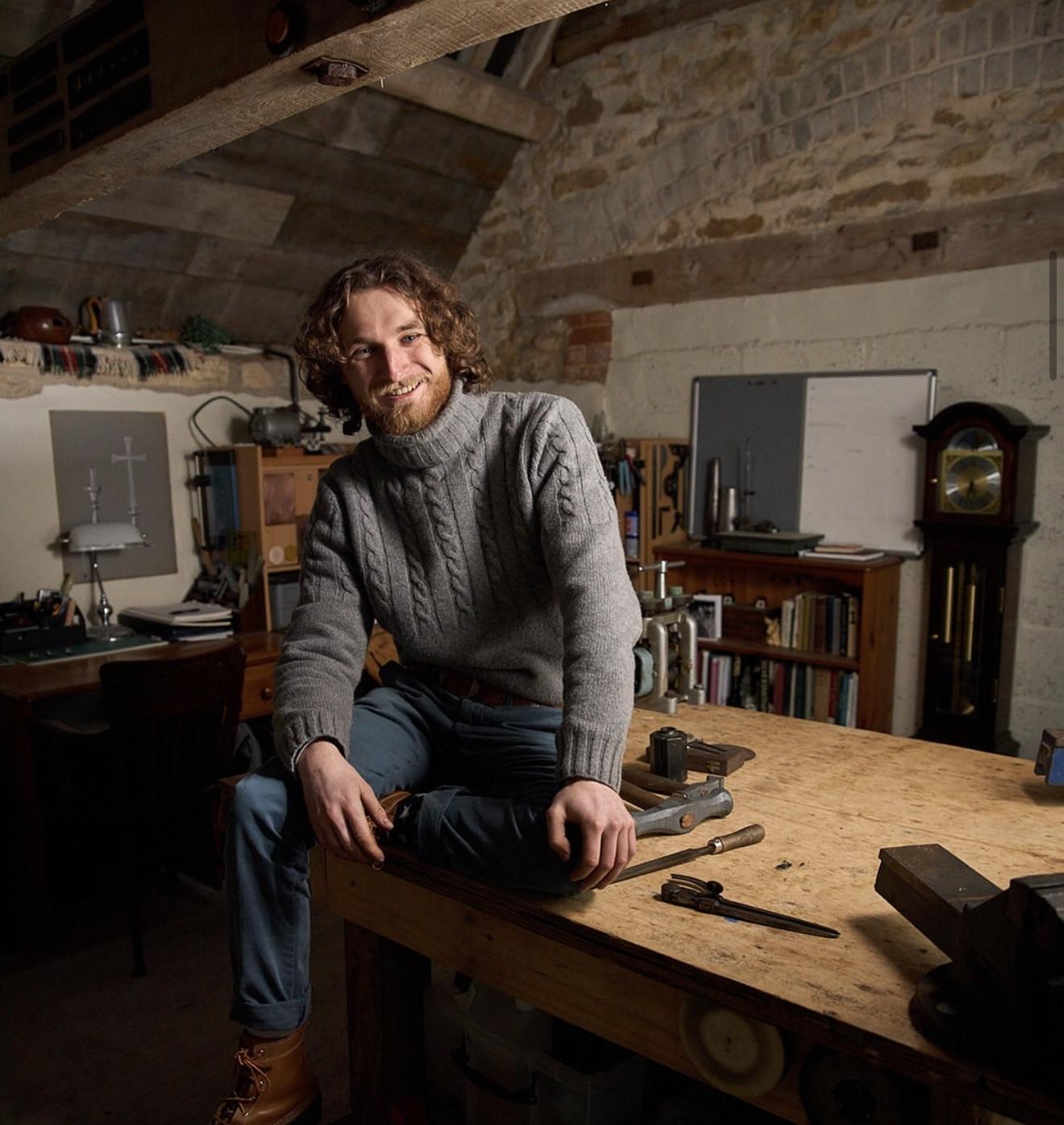
Silversmith and hand engraver Harry Stokes, founder of St Oakes and one of the ten recipients of the Goldsmiths’ Fair 2026 Emerging Business Bursary, in his workshop. His handcrafted silverware draws on established British decorative traditions, reworked through a contemporary silversmithing language
The Fair’s wider programme gives Week Two another reason to stay longer. Black Box, created by jeweller Silvia Weidenbach and digital artist Jon Emmony, places objects from the Goldsmiths’ Company collection inside an installation shaped by infrared photography, physical interventions and custom code that continually changes what the viewer sees. Its subject could hardly be more current: the relationship between material knowledge, human judgement and artificial intelligence, explored within a building devoted to centuries of skilled making.
There are morning talks on platinum, collectible design and the thinking behind Black Box, while the new Emerging Business Bursary introduces ten early-stage makers to the Fair with a free stand, a £1,500 grant, professional training and access to an optional interest-free bullion loan. That support is more than a worthy extra. If an event wants to present the future of craft, it has to help new practices survive long enough to become part of it.
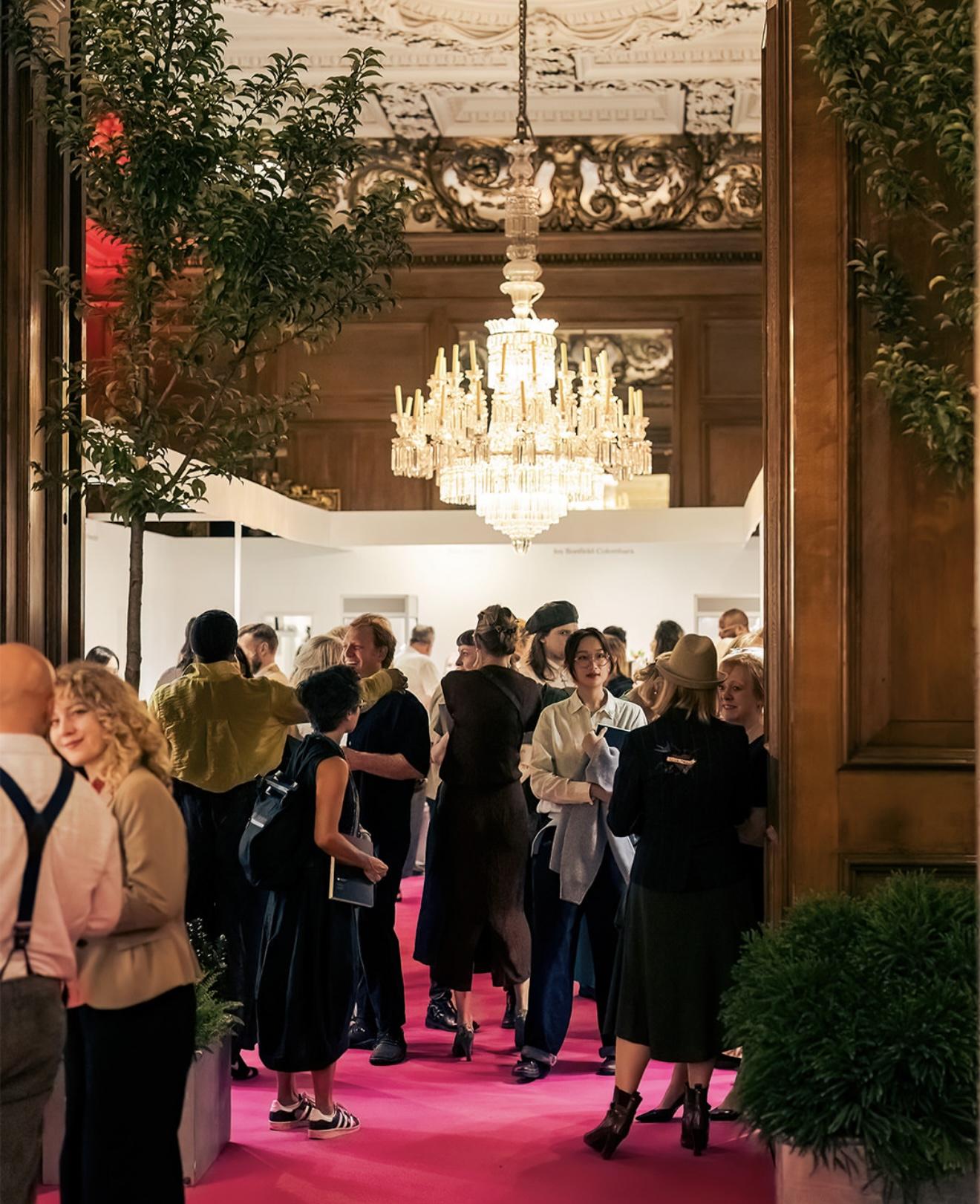
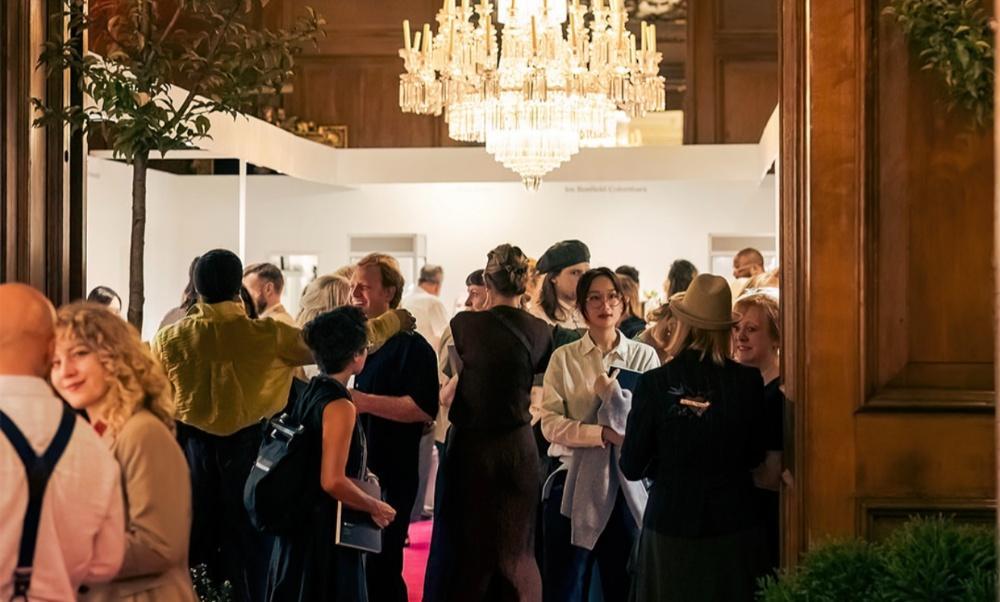
Visitors gather beneath the chandeliers of Goldsmiths’ Hall during Goldsmiths’ Fair 2026. Credit: Paul Read
The best fairs do more than assemble beautiful things. They make distinctions visible: between surface and substance, novelty and a real point of view, a piece that works in an image and one that comes alive when worn. Week One delivered those moments repeatedly, from the graphic wit of Kasun London to Castro Smith’s engraving, Alison Macleod’s quietly storied gold and Tomasz Donocik’s controlled drama.
Week Two now starts the conversation again. Go with a shortlist, but leave room to be interrupted by something unfamiliar; talk to the makers, try on the piece that looks too bold and ask how it was made. A fair becomes important to independent jewellery when looking leads to understanding and understanding leads, when the moment is right, to buying. Goldsmiths’ Fair still makes that chain of events possible under one very grand roof.
Goldsmiths’ Fair Week Two runs from Tuesday 29 September to Sunday 4 October 2026 at Goldsmiths’ Hall, Foster Lane, London EC2V 6BN. Opening hours are 11am–6.30pm Tuesday to Saturday and 11am–4.30pm on Sunday.
Single-day admission is £35 on the door, while a run-of-show ticket is £35 when booked in advance or £40 on the door, subject to availability. Check the current programme and book through the official Goldsmiths’ Fair website before travelling.
Our selection is only a starting point. Goldsmiths’ Fair brings together a much wider mix of jewellers and silversmiths, and part of its appeal lies in discovering the name you did not arrive expecting to find. Use the links below to explore the full exhibitor list, see what is happening each day and plan your visit
Scroll the gallery below
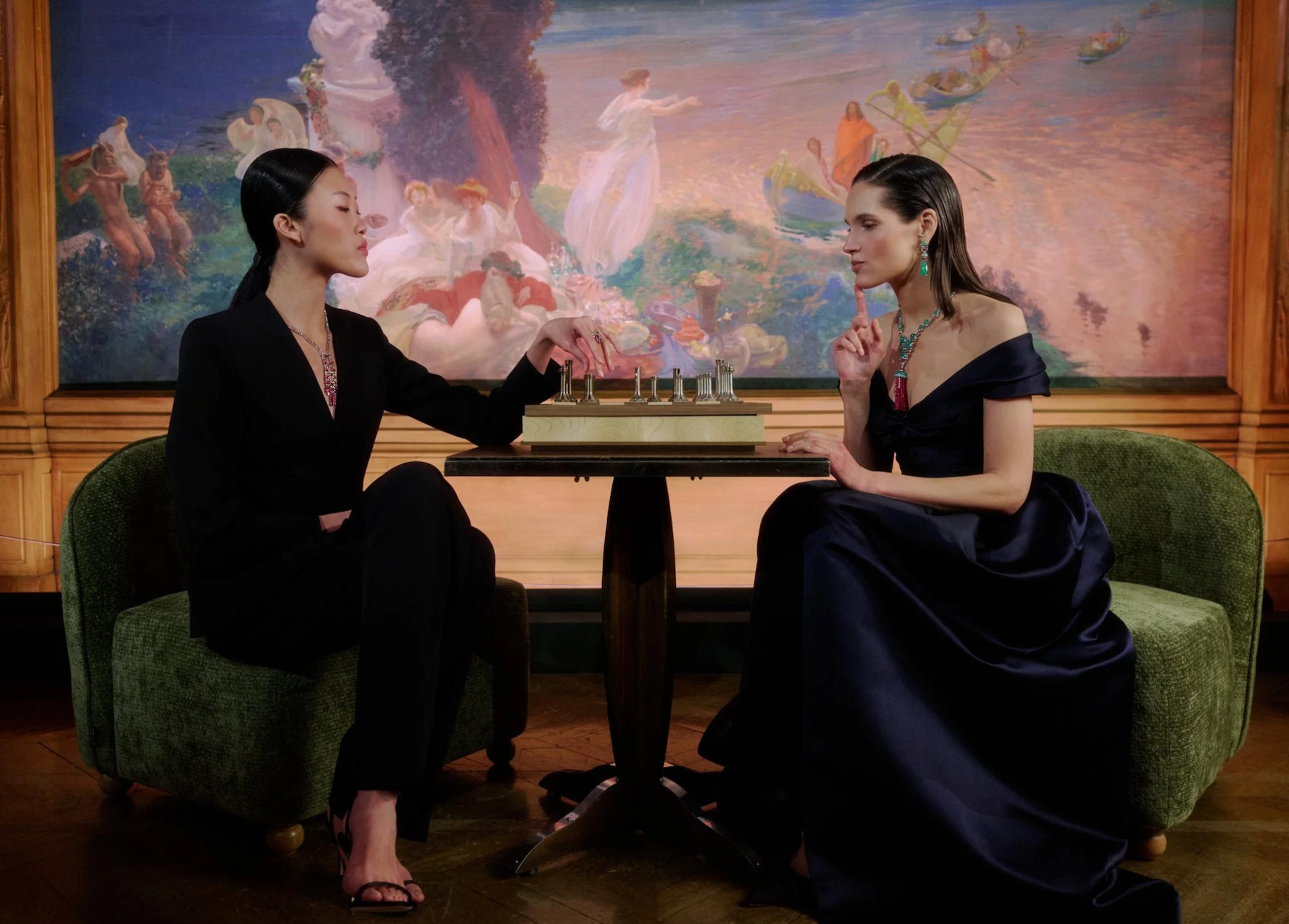
HIGH JEWELLERYFEB 2, 2026
Cartier En Équilibre: High Jewellery in a State of Poised Tension
Cartier unveils the latest En Équilibre chapter in Paris, exploring balance through colour, tension and architectural design
READ MORE
BULGARIFEB 19, 2026
Bulgari and Dua Lipa: Redefining Modern Luxury Through Cultural Influence
Bulgari names Dua Lipa as global ambassador, blending the maison’s heritage with contemporary cultural influence
READ MORE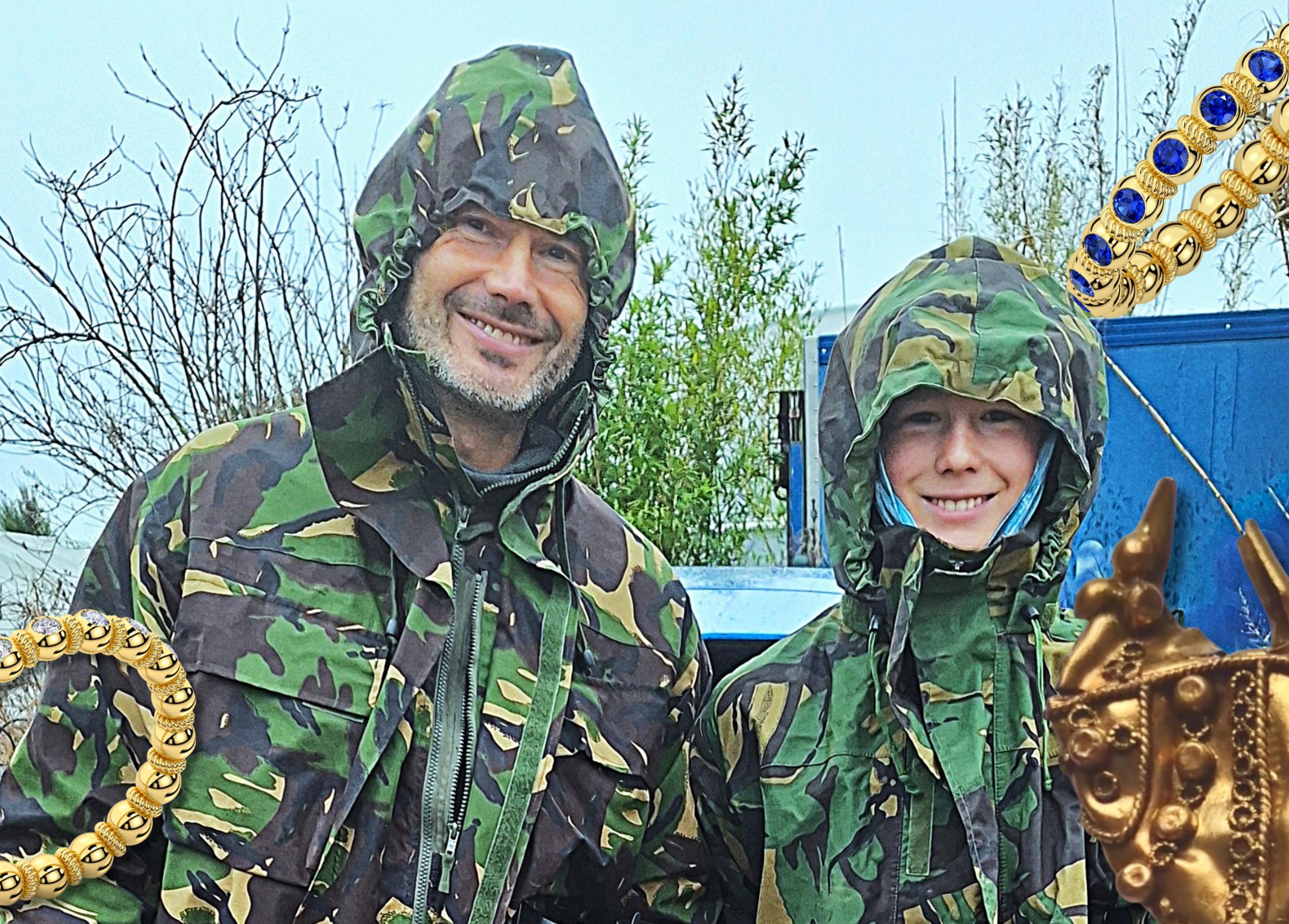
ANDREW GEOGHEGANFEB 20, 2026
Treowth — Andrew Geoghegan’s Anglo-Saxon Discovery Sparks a New Fine Jewellery Chapter
A Saxon gold fragment discovered in Lincolnshire inspires Andrew Geoghegan’s new Treowth collection, beginning with the Goldwin eternity band
READ MORE


0 Comments
You must be logged in to comment. Click here to login.