






Don't miss a gem
The closure leaves up to 220 students facing an uncertain future and raises wider questions about the sustainability of specialist jewellery education and skills
The British Academy of Jewellery has closed with immediate effect, highlighting growing concerns around jewellery education, specialist skills and the industry's future talent

The British Academy of Jewellery (BAJ) has closed its higher education courses with immediate effect, leaving up to 220 students across London, Birmingham, Leicester and Sheffield facing the prospect of transferring their studies or finding alternative routes to complete their education.
The academy was issued with a wind-up order on 4 August, according to Companies House, with liquidators now appointed. The closure was confirmed by the Office for Students (OfS) on 17 August.
For the jewellery industry, this is significant news.
BAJ has been one of the UK's specialist providers of jewellery education, offering students routes into jewellery design, manufacturing, business and management. Its closure comes at a time when the industry continues to discuss skills shortages, training and how best to bring new talent into the trade.
Up to 220 students affected
According to the OfS, up to 220 current higher education students are affected. They are primarily studying undergraduate and postgraduate face-to-face and online courses covering jewellery, business and management.
Students studying the BA (Hons) Jewellery Design and Production course have the option of transferring to Kingston University, which validates the programme. Kingston has also confirmed that it will support students in considering alternative study options, while students can withdraw and request an award of credit.
Students on courses validated by Pearson are also being supported with options for continuing their studies.
Deonne Rowland, Deputy Director of Financial Sustainability at the OfS, said:
“This will be really difficult news for students at the British Academy of Jewellery. Our priority is to make sure their interests are safeguarded and that they understand their options.”
Rowland added:
“The British Academy of Jewellery has partnership arrangements with Kingston University and Pearson, which validate and award the academy’s courses and have committed to supporting their students through this challenging time.”
She continued:
“We have been working closely with the academy and its partners to ensure students have the information, advice, and guidance they need to continue their studies with an alternative higher education provider.”
A specialist institution with a long history
The academy was founded in 1999 as Holts Academy before becoming the British Academy of Jewellery in 2017.
Over the years it developed into a specialist education provider with campuses and programmes designed specifically around the jewellery industry.
Its offering has included jewellery design and manufacturing alongside business and management, with practical training forming a central part of its identity.
That specialist focus makes the closure particularly notable.
Jewellery education is not simply about academic study. Much of the industry's knowledge is practical, requiring workshops, equipment, specialist tutors and access to people with genuine experience of working within the trade.
For students entering the industry, institutions such as BAJ can provide a bridge between education and employment.
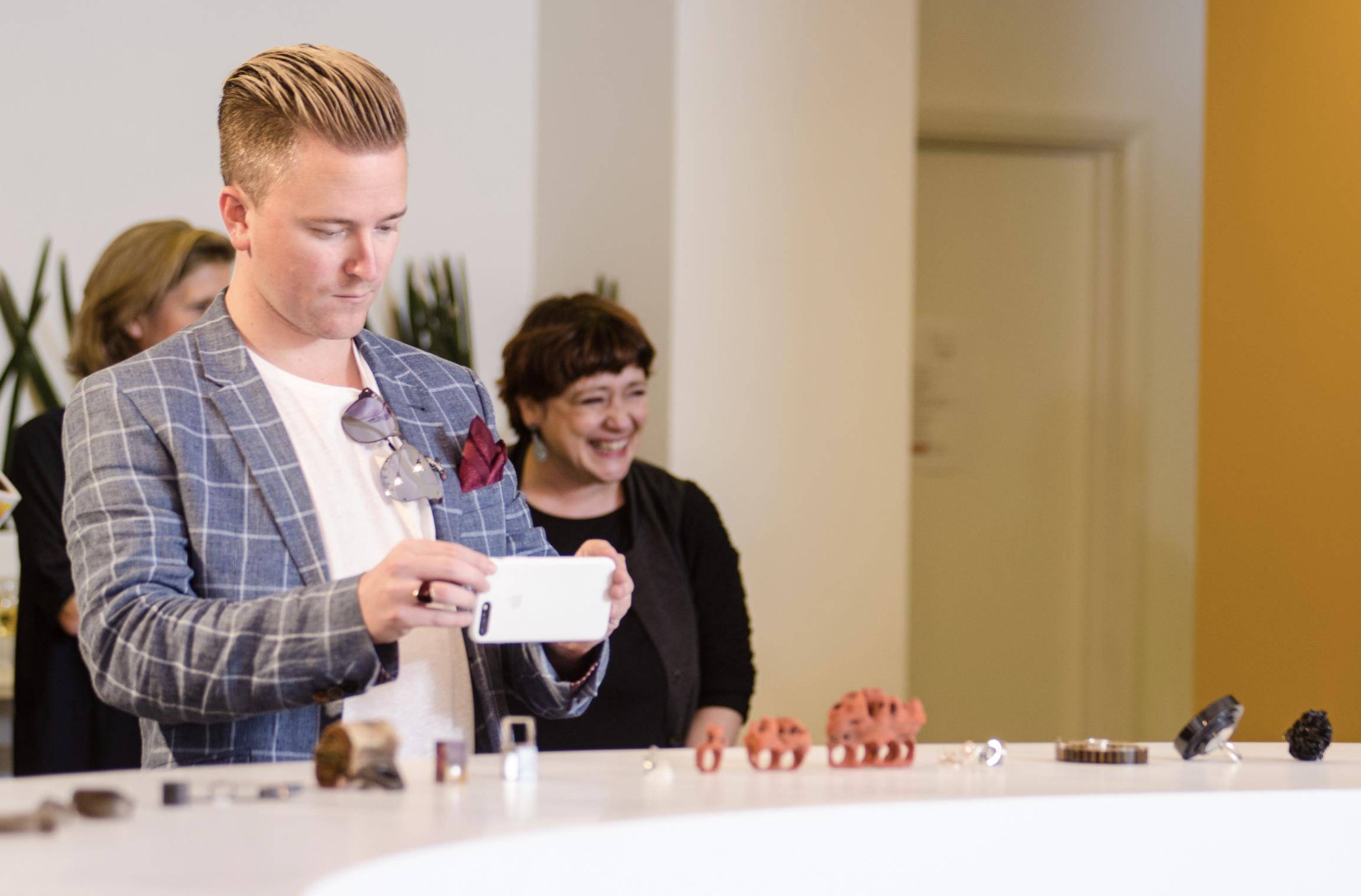
BAJ Erasmus Project
Financial pressure
The closure also highlights the increasingly difficult financial environment facing specialist education providers.
According to Times Higher Education, BAJ lost 44 per cent of its income following cuts to strategic priorities funding for arts and creative subjects.
The academy had also faced financial uncertainty in recent years. Its parent company, London-based Free To Learn, went bust earlier this year, after which BAJ was put up for sale before being bought back by its original owner at a reduced price.
Its latest accounts, for the financial year ending July 2025, recorded a surplus of £591,859. However, the accounts also stated that the organisation had “faced significant challenges” and intended to “strengthen” its resilience by “progressively building cash reserves”.
The contrast is striking: a reported surplus in its latest accounts, followed within a year by a wind-up order and the closure of its higher education provision.
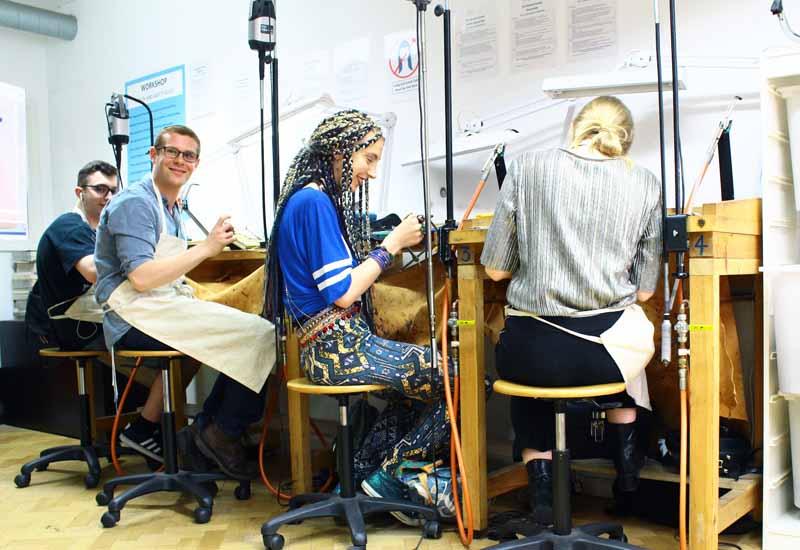
Students at the work bench with BAJ
Following the recent developments surrounding the British Academy of Jewellery, Dr Matthew J. Williamson, Principal, and Amir Shaikh, Chief Operating Officer, have issued a statement outlining the circumstances behind the academy’s liquidation and the steps being taken to support students and staff.
In their statement, the directors explain that the liquidation stems from historic liabilities incurred before they took responsibility for the leadership of BAJ in October 2025.
“A winding up petition was lodged against the British Academy of Jewellery which was granted on 22nd July. The winding up petition and liquidation of BAJ was the result of historic liabilities incurred before we as Directors took responsibility for the leadership of BAJ in October 2025 but which, despite significant effort, we were unable to satisfactorily discharge.”
The directors say they subsequently attempted to challenge the winding-up order, but that a rescission application was unsuccessful.
“Despite attempts by the Directors, a rescission application was unsuccessful. BAJ is, thus, in liquidation.”
Importantly, BAJ's leadership also stresses that the liquidation is not related to the standard of its teaching or quality assurance processes.
“The liquidation of BAJ is unrelated to the quality of the teaching delivery or quality assurance processes of BAJ.”
The statement says the directors are now working with the liquidators, regulators and awarding bodies to try to protect both students and staff.
“The Directors of BAJ are working with the liquidators, regulators and awarding bodies to attempt to protect students and staff.”
They also say that work is underway to identify a route that would allow existing students to complete their studies, while potentially enabling future students to benefit from BAJ's teaching and industry connections.
“Thus, we are working at pace to identify a way forward to allow existing students to complete their studies and to enable future cohorts of students to benefit from BAJ’s excellent teaching and industry links.”
The statement provides important context to the closure and makes clear that, despite the liquidation, BAJ's leadership is seeking a route forward for its students, staff and potentially the institution itself.
A warning for specialist education
The BAJ closure also sits within a much bigger conversation about the vulnerability of smaller and specialist education providers.
A report by the Quality Assurance Agency last year concluded that the higher education sector was “largely unprepared” for university closures and called for greater legal protections for students affected by them.
For jewellery, the implications are particularly important.
The industry relies on a highly specialised skills base. Bench skills, setting, CAD, design, manufacturing and other technical disciplines require dedicated training and, often, years of hands-on experience.
If specialist providers become increasingly difficult to sustain, the consequences could eventually extend beyond education and into the wider jewellery workforce.
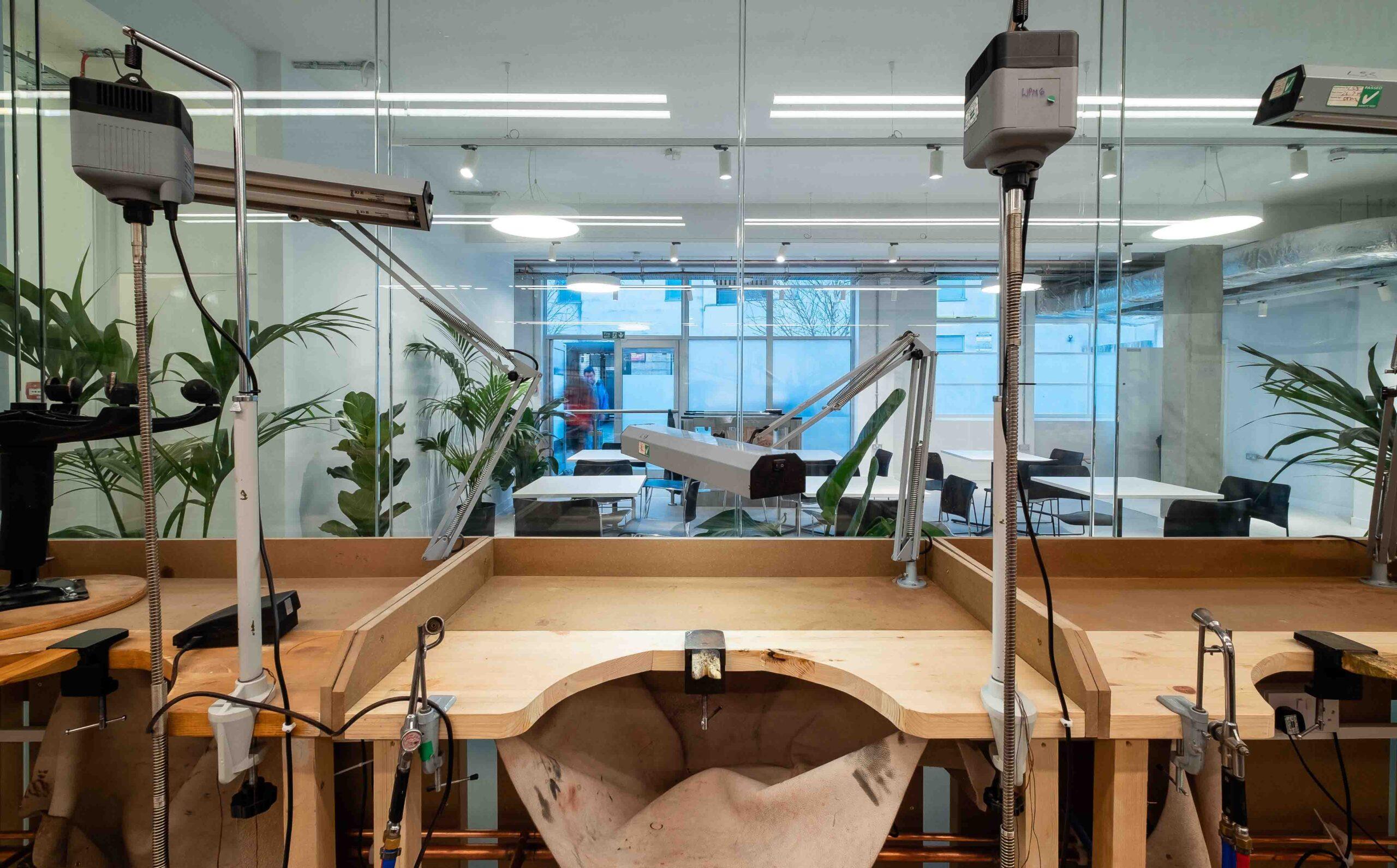
British Academy of Jewellery's London Campus
What happens to the next generation?
The immediate priority is the students affected.
The OfS has confirmed that students must be given the opportunity either to continue their studies with another provider or to end their studies and receive credit for their academic attainment to date. Self-funded students may face delays in receiving refunds because the academy is now in liquidation.
But there is a bigger question for the jewellery industry.
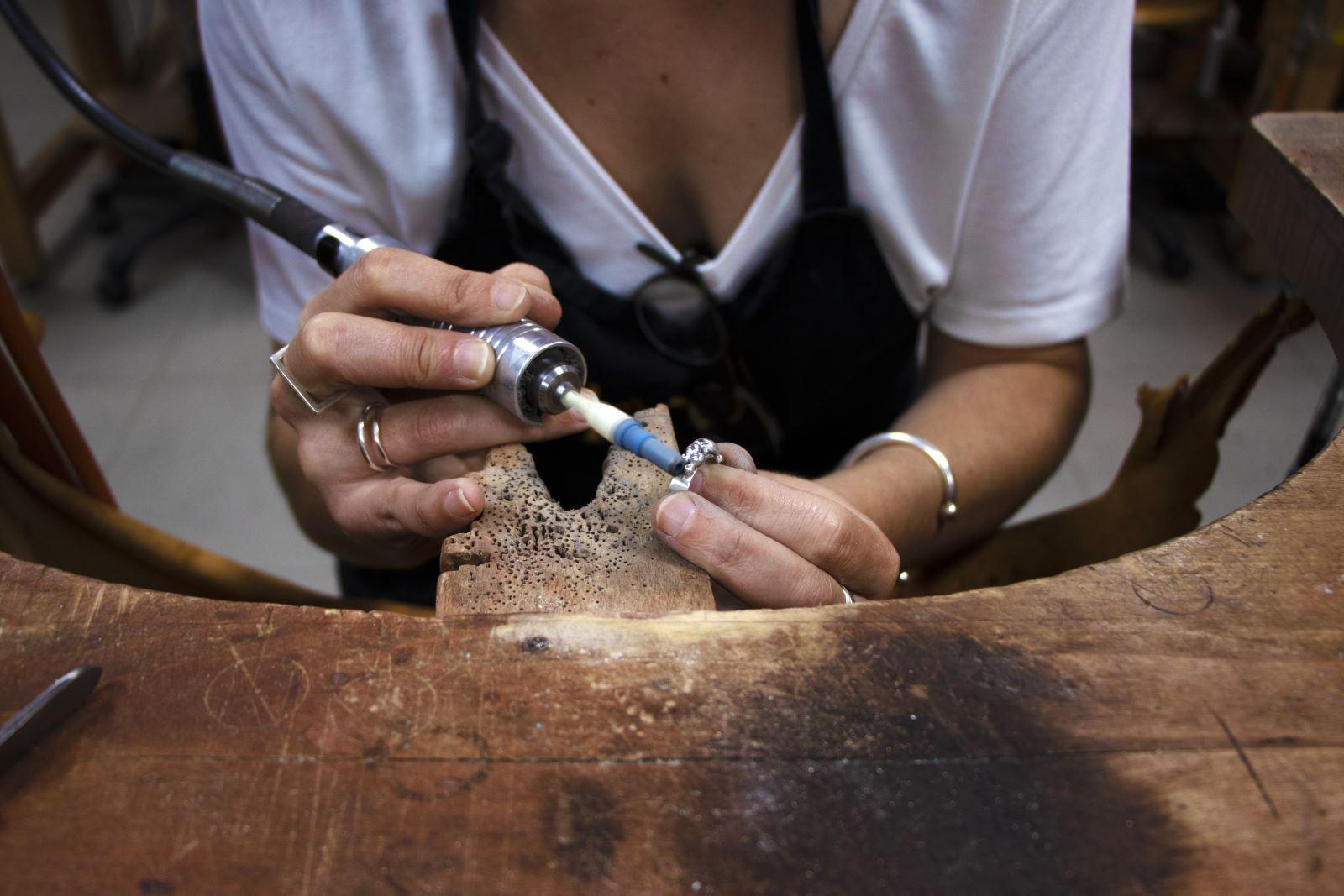
Student at the bench with British Academy of Jewellery
Where will the next generation of jewellers learn their skills?
The industry regularly talks about the shortage of skilled workers and the importance of attracting young people into jewellery.
Yet attracting talent is only one part of the equation. There also needs to be a sustainable education infrastructure capable of teaching those people once they decide to enter the industry.
The closure of BAJ demonstrates how fragile that infrastructure can be.
More than an education story
It would be easy to view the closure simply as a story about a higher education provider and the students now forced to consider their options.
For the jewellery industry, it is more than that.
The UK has a global reputation for jewellery design, manufacturing and craftsmanship. That reputation has been built over generations, through businesses, schools, colleges, apprenticeships and individual makers passing knowledge from one generation to the next.
When an institution dedicated to that process disappears, the impact is not necessarily felt immediately.
But over time, fewer training places can mean fewer skilled graduates, fewer people entering specialist roles and potentially a smaller pool of talent for the industry to draw from.
The industry needs to pay attention
BAJ's students now need practical support, clear information and viable alternatives. That must remain the immediate priority.
But the wider jewellery sector should also be paying attention.
The closure raises difficult questions about how specialist jewellery education is funded, how financially resilient providers can be made, and what responsibility the industry itself has in supporting the training of its future workforce.
Jewellery depends upon skills that cannot simply be replaced overnight.
The next generation of designers, makers, setters, CAD specialists and manufacturers has to learn somewhere.
The question now is whether the industry is doing enough to make sure those places remain available.
Andrew Martyniuk, founder of The Jewels Club, was part of the team involved in the rebrand of Holts Academy to the British Academy of Jewellery in 2017.
Reflecting on the closure, Martyniuk hopes that something can still be done to protect the opportunities available to those entering the jewellery industry and, importantly, to preserve the specialist skills that underpin the trade.
Having been involved in the rebrand of Holts Academy to the British Academy of Jewellery, it is incredibly sad to see what has happened. My thoughts are very much with the students and everyone who has worked at BAJ.”
“I sincerely hope that something can be done for the good of the industry and, most importantly, for the future talent coming through. We need to make sure that specialist skills — from polishing and finishing through to setting, manufacturing, CAD and design — continue to be taught and passed on.”
“The future of our industry depends on having people with these skills. If we lose the places where people can learn them, we risk losing an important part of the knowledge and expertise that makes the UK jewellery industry what it is.”
Andrew Martyniuk - The Jewels Club Founder
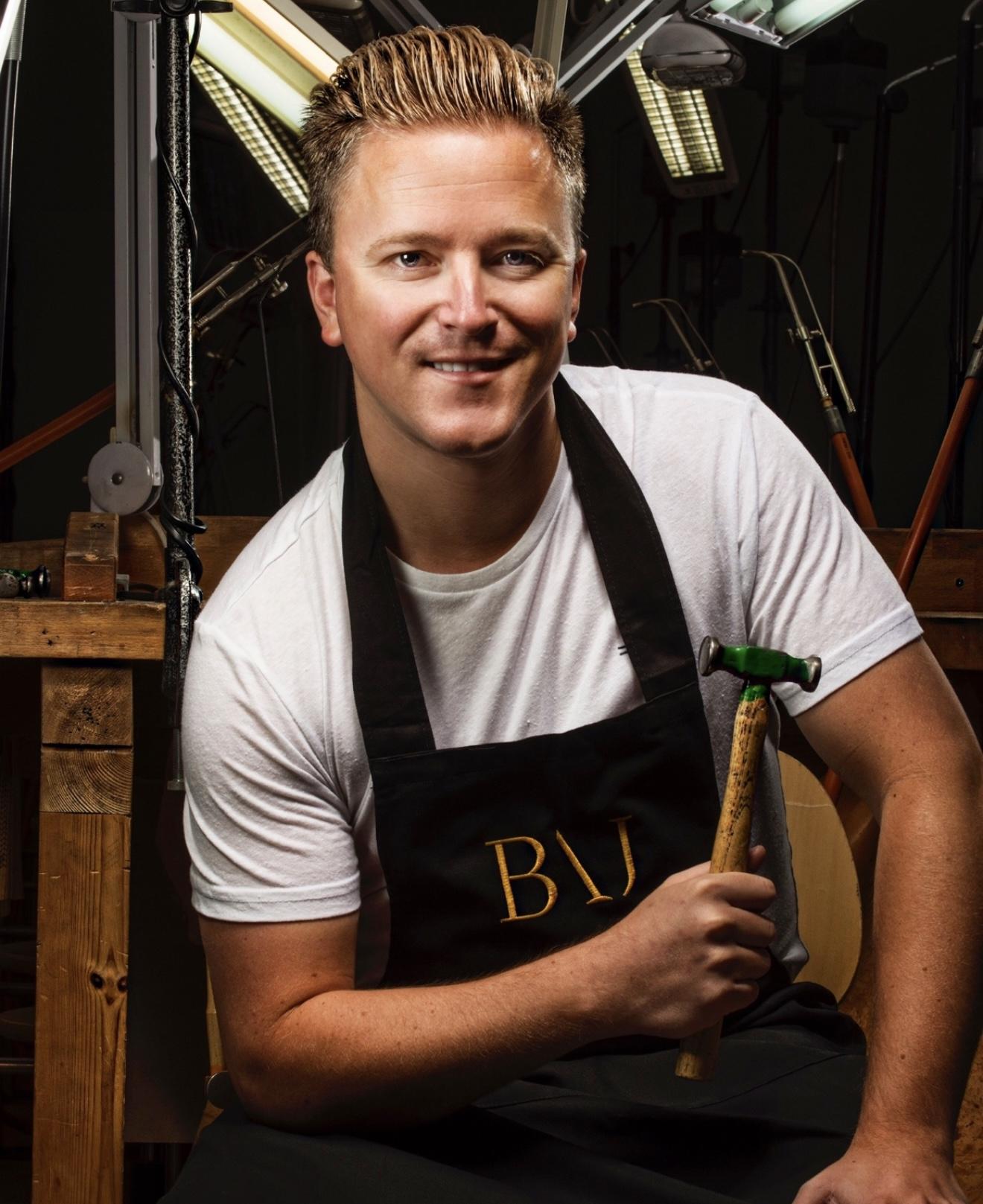
The Jewels Club fouder Andrew Martyniuk in his BAJ days
For Martyniuk, the closure should therefore be viewed not simply as the loss of an education provider, but as an opportunity for the industry to consider what it can do collectively to support jewellery education and ensure that the next generation has a clear route into the trade.
The challenge now is to turn concern into action — and to make sure that the skills the industry depends upon are still here for the next generation.
INSIGHTSJUL 19, 2025
UK Jewellery Sector Demands Government Action for Small Businesses
UK jewellery and allied craft leaders unite to call for urgent government reform, highlighting the structural challenges facing small and microbusinesses.
READ MORE
GJEPCJUL 27, 2025
A Pact Signed in Power — and Sealed in Gold
India–UK FTA signed by Modi and Starmer unlocks $2.5bn trade vision for Indian jewellery exports
READ MORE
INDUSTRY & POLICYAUG 8, 2025
Tariff Shock – What Trump’s 50% Duties Mean for India’s Gold, Jewellery & Diamond Trade
India’s jewellery and diamond industries face unprecedented pressure as US tariffs jump to 50%, prompting official backlash and rapid readjustments in trade strategies.
READ MORE