






Don't miss a gem
Mountain Province will transfer its 49% stake as diamond-price pressure reshapes the Canadian mine’s ownership
De Beers will become the sole owner of Gahcho Kué under a debt-led restructuring with Mountain Province Diamonds

Mountain Province Diamonds will transfer its 49% interest in the Gahcho Kué mine to De Beers in exchange for relief from debt, reclamation costs and associated liabilities. The agreement reveals how weak diamond prices are changing who can afford to own and operate major mines.
De Beers is set to become the sole owner of the Gahcho Kué diamond mine in Canada’s Northwest Territories after Mountain Province Diamonds agreed to surrender its 49% participating interest as part of a comprehensive financial restructuring.
The transaction is not a conventional acquisition with an announced cash price. Mountain Province’s interest will instead pass to De Beers in satisfaction of outstanding debts, remaining reclamation payments and other obligations connected to the mine.
De Beers already owns 51% of Gahcho Kué and operates the mine. Once the transaction is completed, it will hold the entire participating interest and assume full control of one of the most important sources of Canadian rough diamonds.
Mountain Province holds its interest in Gahcho Kué through a wholly owned subsidiary, 2435386 Ontario Inc. Under the restructuring agreement, that subsidiary will transfer its 49% stake to De Beers.
In return, Mountain Province and its subsidiaries will be released from outstanding indebtedness owed to De Beers, together with associated guarantees, security arrangements and obligations arising from the joint venture.
The agreement also removes Mountain Province’s remaining share of the mine’s decommissioning, reclamation and environmental clean-up costs. These long-term obligations are significant because the financial responsibility attached to a mine continues beyond the production and sale of its diamonds.
This is therefore more than a change in ownership. It is an exchange in which an interest in a producing diamond mine is being used to settle the financial commitments required to keep participating in it.
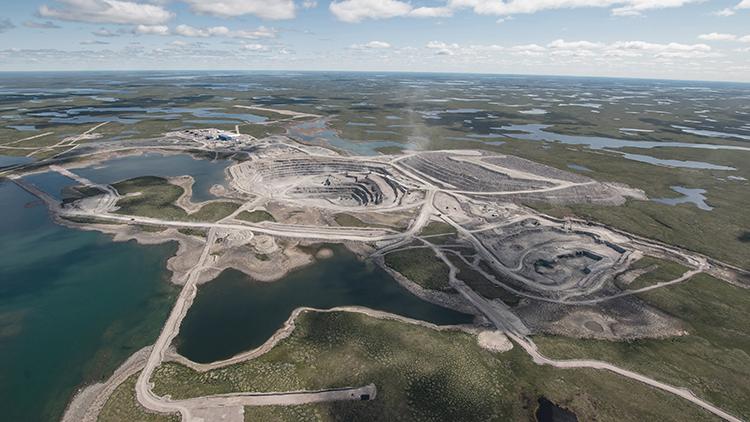
An aerial view of the Gahcho Kué diamond mine in Canada’s Northwest Territories, where De Beers is set to acquire Mountain Province Diamonds’ 49% interest. | Image: Mountain Province Diamonds
Mountain Province said the restructuring followed an extensive review of the alternatives available to the company.
Its president and chief executive, Jonathan Comerford, attributed the situation to a material decline in diamond prices during the past year, driven principally by tariff-related uncertainty and conflict in the Middle East.
The agreement, he said, offered the most credible route to protect stakeholder value under the circumstances. It removes liabilities from Mountain Province, provides greater certainty for the employees and communities connected to Gahcho Kué, and preserves a possible route back into the mine should market conditions and the company’s finances improve.
That explanation reaches beyond the balance sheet of one producer. Diamond mines require substantial capital throughout their operating lives, while reclamation and environmental responsibilities remain even when prices fall. A mine may continue producing diamonds while becoming increasingly difficult for a financially constrained partner to support.
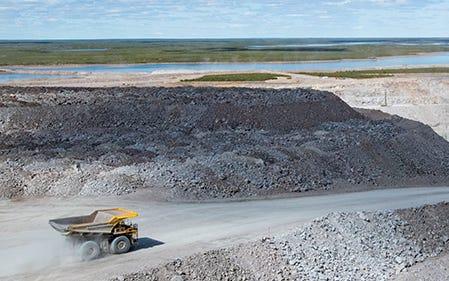
A haul truck transports material through the Gahcho Kué open-pit diamond mine in Canada’s Northwest Territories. | Image: Mountain Province Diamonds
The transfer does not necessarily close Mountain Province’s relationship with Gahcho Kué forever.
Its subsidiary will retain a right of first offer and a right of first refusal if De Beers later decides to sell all or substantially all of the mine or its mineral rights.
Mountain Province will also hold an option to repurchase the transferred 49% interest at any point before 31 December 2029. The price would be equivalent to the share of decommissioning costs attributable to that interest at the time.
These rights preserve an opportunity rather than guaranteeing a return. Mountain Province would still need sufficient funding to exercise the option and meet the continuing financial responsibilities of mine ownership.
Its creditors have agreed to suspend interest payments, capital repayments and the exercise of specified rights for six months. This gives the company time to restructure its balance sheet and pursue new funding.
If market conditions continue to improve, Mountain Province says that capital could support the exercise of its rights at Gahcho Kué and the continued development of its Kennady diamond assets surrounding the mine.
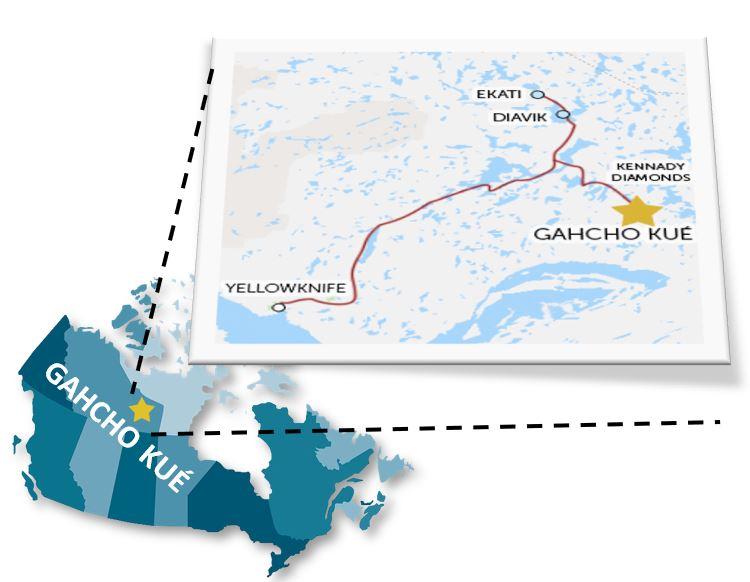
The Gahcho Kué mine lies northeast of Yellowknife in Canada’s Northwest Territories, near the Kennady diamond assets. | Image: Mountain Province Diamonds
For De Beers, the agreement consolidates an asset it already operates and understands. Moving from 51% to 100% removes the joint-venture structure and gives the company sole responsibility for the mine’s production, costs, liabilities and future decisions.
Gahcho Kué began commercial production in 2017 and is a significant contributor to Canada’s diamond output. The mine is situated approximately 280 kilometres northeast of Yellowknife and operates in one of the world’s most demanding mining environments.
Full ownership could simplify decision-making and provide greater continuity for the workforce, local suppliers and communities connected to the operation. It also means De Beers will carry the entire financial exposure, including the environmental and reclamation obligations previously shared with Mountain Province.
That distinction matters. Acquiring the remaining interest gives De Beers every diamond produced by the mine, but it also gives the company every cost attached to producing those diamonds and eventually closing and restoring the site.
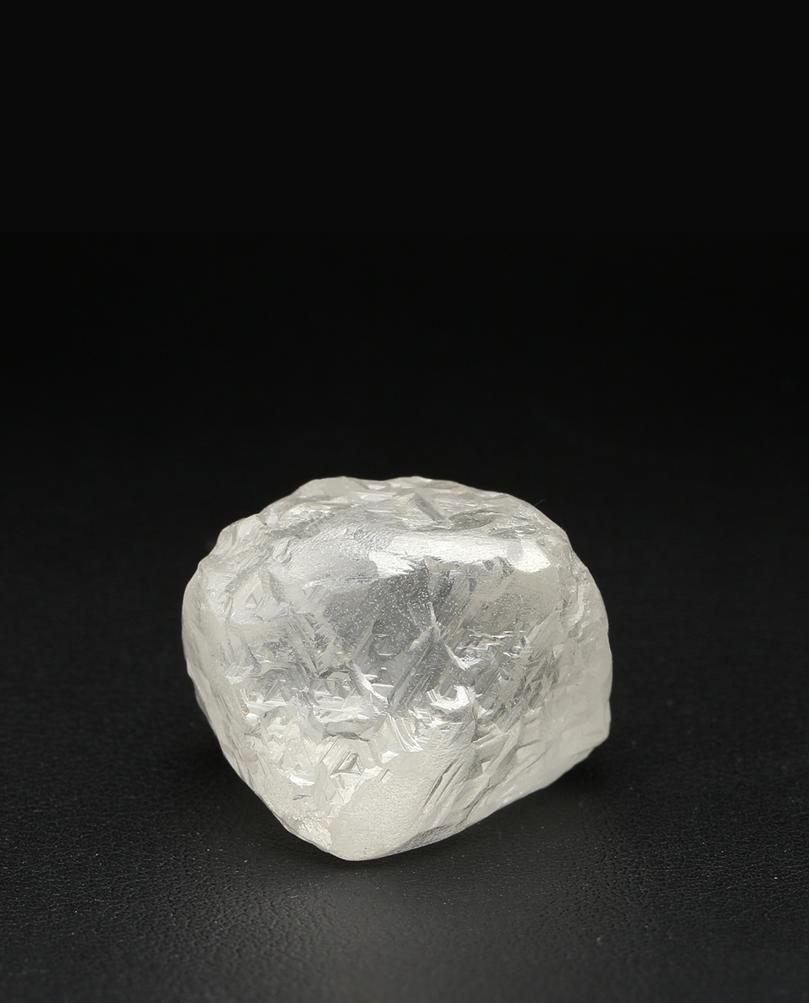
A large rough diamond recovered from the Gahcho Kué mine in Canada’s Northwest Territories. | Image: Mountain Province Diamonds
The Gahcho Kué restructuring captures the contradiction facing the natural-diamond sector. These mines contain valuable resources, support communities and feed an international jewellery market, yet ownership becomes difficult when rough prices cannot comfortably support the capital, debt and environmental obligations involved.
Mountain Province is not selling its stake to realise a conventional gain. It is transferring ownership to remove liabilities and stabilise its financial position. That makes the agreement a revealing measure of present market conditions.
For De Beers, sole ownership offers control and operational continuity. For Mountain Province, the deal provides relief and time, while retaining a carefully limited route back before the end of 2029.
The mine itself remains in place. What has changed is the calculation of who can afford to own it.
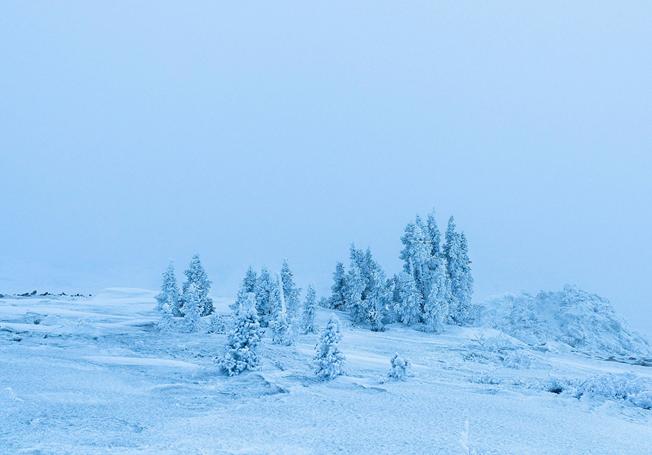
The remote Arctic landscape surrounding the Gahcho Kué diamond mine in Canada’s Northwest Territories. | Image: Mountain Province Diamonds
Read the complete Mountain Province Diamonds restructuring announcement.

INSIGHTSJUL 19, 2025
UK Jewellery Sector Demands Government Action for Small Businesses
UK jewellery and allied craft leaders unite to call for urgent government reform, highlighting the structural challenges facing small and microbusinesses.
READ MORE
GJEPCJUL 27, 2025
A Pact Signed in Power — and Sealed in Gold
India–UK FTA signed by Modi and Starmer unlocks $2.5bn trade vision for Indian jewellery exports
READ MORE
INDUSTRY & POLICYAUG 8, 2025
Tariff Shock – What Trump’s 50% Duties Mean for India’s Gold, Jewellery & Diamond Trade
India’s jewellery and diamond industries face unprecedented pressure as US tariffs jump to 50%, prompting official backlash and rapid readjustments in trade strategies.
READ MORE