






Don't miss a gem


The Wave Jewellery co-founder is drawing attention to payment-processing costs and offering jewellery businesses a review of their merchant statements
Jeweller and payments consultant Paul Henderson believes many jewellery businesses could reduce their card-processing costs by reviewing their current agreements

After approximately 25 years in the jewellery trade, Paul Henderson understands how quickly apparently small costs can reduce a retailer’s margin.
Henderson co-founded Wave Jewellery in 2001, developing the business from its base in Kendal and building direct experience of jewellery retail, customer service, stock investment and the commercial pressures faced by independent businesses. Wave Jewellery continues to specialise in diamonds, bespoke engagement rings and jewellery handmade in the UK.
He now also works as an independent Dojo Payment Consultant through Card Machines & Business Funding, helping businesses examine their payment-processing costs, compare card-machine options and explore business funding provided through YouLend.
His current message to the jewellery trade is straightforward: check what accepting card payments is really costing you.
Henderson says the average UK retail card-processing rate is approximately 1.3 to 1.8 per cent, while jewellery businesses can find themselves paying between 2.1 and 2.8 per cent or more. Transactions involving American Express and other card types may push costs above 3 per cent, depending on the merchant’s agreement.
These figures reflect Henderson’s own industry comparisons and are not drawn from a published jewellery-wide dataset. Rates vary according to the provider, card type, transaction channel, annual turnover and the commercial profile of the individual business.
However, his central point is supported by simple arithmetic. Even a modest difference in percentage terms can become a material annual cost.
“If you’re on 2.5 per cent or more, you’re almost certainly overpaying,” Henderson says. “On £100,000 of card turnover, that can mean £500 to £1,000 or more a year unnecessarily.”
He says he has encountered potential rates starting from approximately 1.4 to 1.6 per cent for jewellery businesses, although the rate available to any merchant will depend on its circumstances and transaction history.

Paul Henderson, co-founder of Wave Jewellery and an independent Dojo Payment Consultant through Card Machines & Business Funding. | Source: Paul Henderson
For a business processing £100,000 in annual card sales:
| Effective rate | Annual processing cost |
|---|---|
| 2.5% | £2,500 |
| 2.0% | £2,000 |
| 1.5% | £1,500 |
Moving from an effective rate of 2.5 per cent to 2 per cent would save £500. Reaching 1.5 per cent would save £1,000.
At £500,000 of annual card turnover, the difference between 2.5 and 1.5 per cent becomes £5,000. At £1 million, it becomes £10,000.
The calculation is valid only when the rates being compared cover the same mixture of cards and include the same services. A low advertised percentage may be accompanied by terminal rental, authorisation charges, gateway costs, compliance fees or other additions.

A customer makes a contactless payment using a Dojo card machine at an independent café near Kendal. | Source: Card Machines & Business Funding
Henderson’s involvement in the jewellery industry gives him a perspective that differs from that of a general payment-services salesperson. He has operated within a trade where average transaction values can be high, stock requires considerable investment and trust is central to every customer relationship.
He also understands that changing a payment system cannot be considered solely as an exercise in finding the lowest percentage. Reliability, settlement speed, fraud prevention and access to support are especially important when a single transaction may represent several thousand pounds.
Through Card Machines & Business Funding, Henderson offers businesses a free review of their existing merchant statement. The service is intended to provide a line-by-line comparison of current processing costs and identify charges or rates that might be improved.
His website states that he works directly with independent retailers, hospitality businesses and other companies across Cumbria and the North West, while also assisting businesses elsewhere in the UK. As an independent consultant, he introduces merchants to Dojo rather than operating the underlying payment service himself.
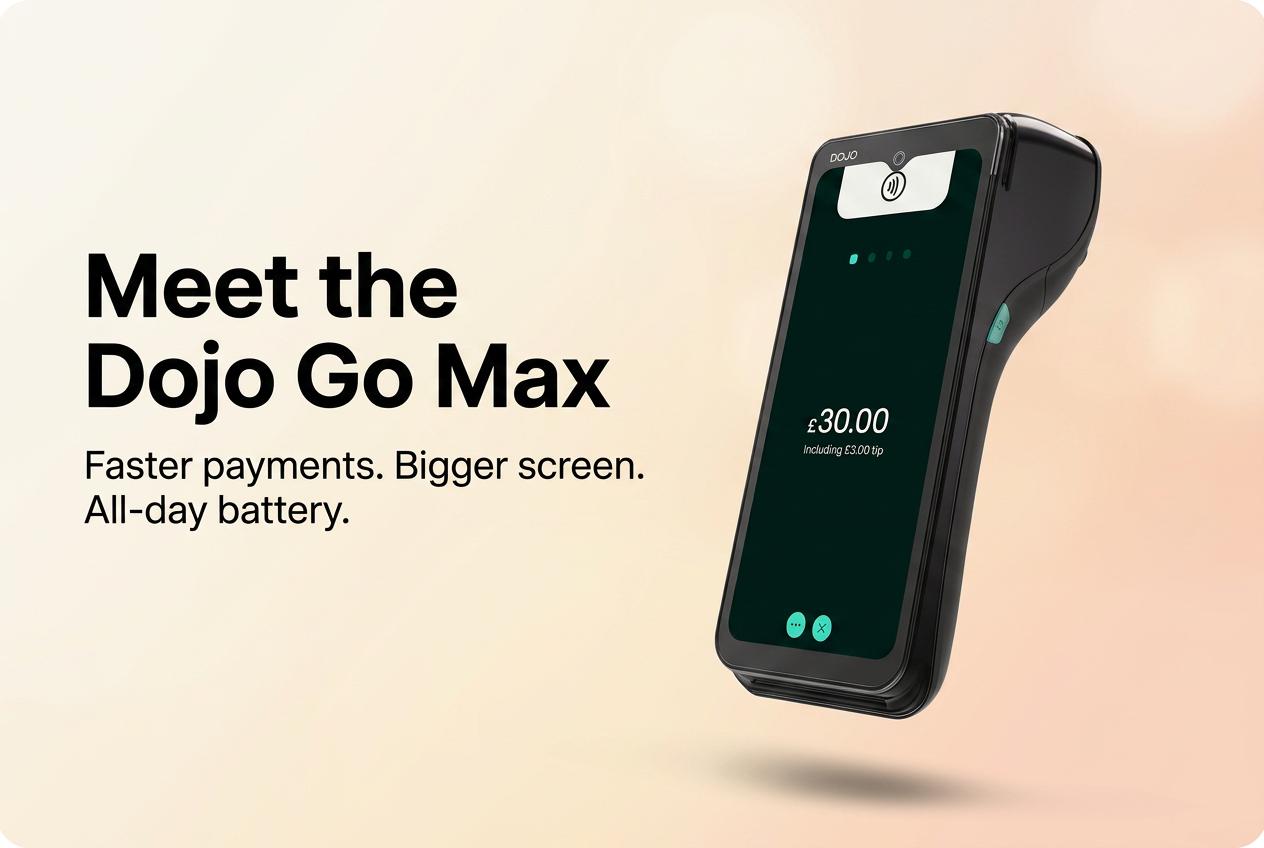
The Dojo Go Max card terminal, designed with a larger touchscreen, all-day battery and faster payment processing. | Source: Card Machines & Business Funding
One reason card fees are difficult to compare is that several different costs can appear inside the merchant service charge.
For eligible UK domestic consumer transactions, interchange fees are capped at 0.2 per cent for debit cards and 0.3 per cent for credit cards. Interchange is the amount generally transferred by the merchant’s acquiring bank to the customer’s card issuer.
It is only one part of the total cost.
The merchant service charge may also include card-scheme fees, the acquirer’s margin and other processing costs. The Payment Systems Regulator is clear that although certain interchange fees are capped, the total merchant service charge is not.
Different pricing can apply to commercial cards, international cards, American Express, online payments and transactions taken over the telephone. The type of card used by the customer can therefore make a noticeable difference to the amount retained from a sale.
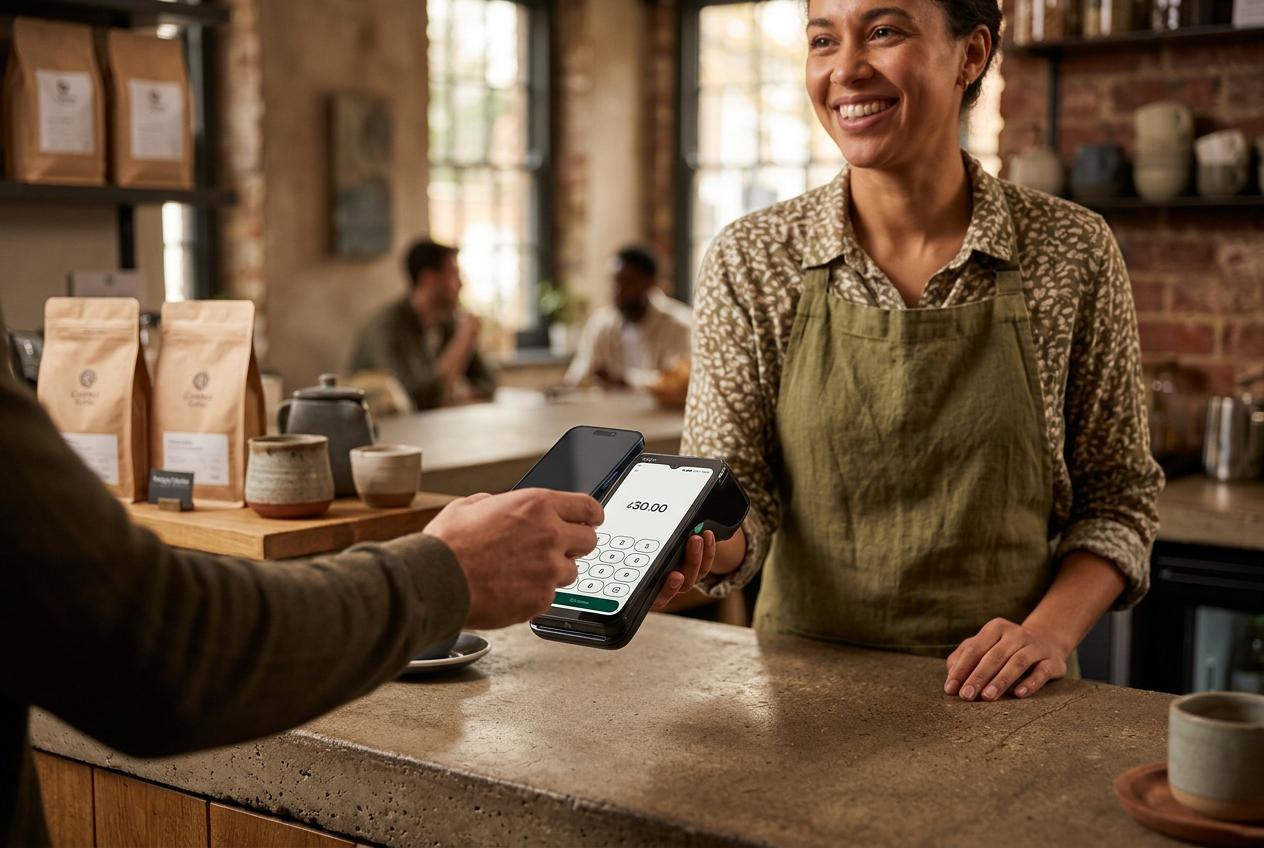
A café customer prepares to make a £30 payment using the Dojo Go Max handheld card terminal. | Source: Card Machines & Business Funding
Jewellery transactions often involve valuable, portable products that can be readily resold. High average transaction values, online orders and card-not-present payments can influence a provider’s assessment of fraud and chargeback exposure.
An established jeweller processing mostly domestic debit cards in a physical shop may therefore receive a different offer from an ecommerce business selling high-value pieces internationally.
The proportion of commercial cards, overseas cards and American Express transactions will also affect the final cost. This is why Henderson’s figures should be treated as a reason to review an agreement rather than a universal rate that every jeweller should expect to receive.
The most useful starting point is the business’s all-in effective rate.
Add together every payment-related charge paid during a representative period. Divide that amount by the total value of card sales processed during the same period, then multiply the result by 100.
For example, if a jeweller processes £50,000 in card sales during one month and pays £1,150 in transaction charges, terminal rental, gateway costs and other processing fees, its effective rate is 2.3 per cent.
A 12-month calculation provides a more reliable picture than a single statement because it captures seasonal trading and variations in the cards customers use.
Businesses should also separate in-store transactions from ecommerce, telephone and payment-link sales. This can reveal whether one channel is significantly more expensive than another.
Before changing provider, a jeweller should establish whether a quotation includes:
Terminal purchase or rentalA
Authorisation or per-transaction fees
Minimum monthly charges
Payment-gateway costs
PCI compliance or non-compliance charges
Refund and chargeback fees
International and commercial card supplements
Online and card-not-present charges
Settlement or currency-conversion fees
Installation, support and account-closure costs
Settlement time also matters. A lower rate may be less attractive if funds are held for longer, a reserve is required or support is unavailable when a high-value payment encounters a problem.
Compatibility with ecommerce platforms, point-of-sale systems and accounting software should form part of the comparison.
A jeweller reviewing its payment agreement should ask:
What would our total annual cost have been using last year’s actual transaction mix?
Which cards and transaction types sit outside the advertised rate?
What terminal, gateway, compliance and monthly charges are added separately?
How long is the agreement, and what would it cost to leave?
How quickly will funds reach our account, and could a reserve be applied?
Payment providers covered by the regulator’s card-acquiring measures must make pricing information clearer and provide merchants with access to comparison tools. Initial point-of-sale terminal hire agreements covered by the rules are also limited to 18 months.
The Payment Systems Regulator has encouraged businesses to shop around or renegotiate when their current arrangement no longer offers good value.
Paul Henderson’s intervention is useful because it comes from somebody who understands jewellery retail as well as payment services. He knows that a fraction of a percentage point can matter when it is applied to every card sale made throughout the year.
His quoted market rates should be understood as commercial observations rather than definitive industry averages. Every jewellery business has a different mixture of cards, sales channels, transaction values and risks.
The wider recommendation is sound. Jewellers should calculate their effective rate, examine every additional charge and ask competing providers to price the same 12 months of transaction data.
The lowest advertised percentage will not always represent the best agreement. A transparent rate, dependable settlement, suitable fraud controls and accessible support may prove more valuable than a headline saving that disappears once the additional fees are included.
Card-processing costs are easy to overlook because they are deducted automatically. That is precisely why they deserve regular attention.
Learn more about Paul Henderson and request a merchant-statement review through Card Machines & Business Funding.
Jewellers considering a new agreement can also consult the Payment Systems Regulator’s guidance on interchange fees and merchant service charges.
Editorial note: Paul Henderson is an independent payment consultant who introduces businesses to Dojo. He is not authorised or regulated by the Financial Conduct Authority. Dojo is a trading name of Paymentsense Limited, which is authorised and regulated by the FCA. Business funding is provided by YouLend and is subject to eligibility. This article does not constitute financial advice or an endorsement of a payment provider.

INSIGHTSJUL 19, 2025
UK Jewellery Sector Demands Government Action for Small Businesses
UK jewellery and allied craft leaders unite to call for urgent government reform, highlighting the structural challenges facing small and microbusinesses.
READ MORE
GJEPCJUL 27, 2025
A Pact Signed in Power — and Sealed in Gold
India–UK FTA signed by Modi and Starmer unlocks $2.5bn trade vision for Indian jewellery exports
READ MORE
INDUSTRY & POLICYAUG 8, 2025
Tariff Shock – What Trump’s 50% Duties Mean for India’s Gold, Jewellery & Diamond Trade
India’s jewellery and diamond industries face unprecedented pressure as US tariffs jump to 50%, prompting official backlash and rapid readjustments in trade strategies.
READ MORE