






Don't miss a gem
Jewellery and Silversmithing is set to close to new students in 2027. Here is why the trade must speak up before vital skills, facilities and opportunities are lost
Add your name to the campaign protecting ECA’s Jewellery and Silversmithing course

The jewellery world speaks often about heritage. We celebrate hand skills, place value on provenance and tell customers that knowledge passed from one generation to the next is part of what makes an object precious, but that story becomes difficult to defend when the places responsible for teaching those skills are allowed to disappear.
That is why the proposed closure of Jewellery and Silversmithing at Edinburgh College of Art should concern the entire trade, not only its students and staff. This is not simply an internal university decision or the loss of one line from a prospectus; it is a warning about what happens when practical creative education is treated as expensive provision rather than essential industry infrastructure.
A petition launched by Irene Kernan, Director of Craft Scotland, says that the University of Edinburgh plans to close three undergraduate courses at Edinburgh College of Art: Jewellery and Silversmithing, Textiles and Performance Costume. According to the petition, the programmes will close to new admissions in 2027 before being taught out over the following four years.
The University’s own programme page now states that the Jewellery and Silversmithing BA is no longer open to new applications for 2027 entry. It describes the change as part of a wider review intended to support the long-term sustainability of teaching, while directing prospective applicants towards Product Design.
Sustainability is a real concern for every educational institution, and specialist workshop courses are undoubtedly costly to run. They require equipment, technicians, safe working environments, experienced tutors and enough physical space for students to learn through repeated practice, but those costs are not evidence that the subject has lost its value; they are evidence of what meaningful craft education actually requires.
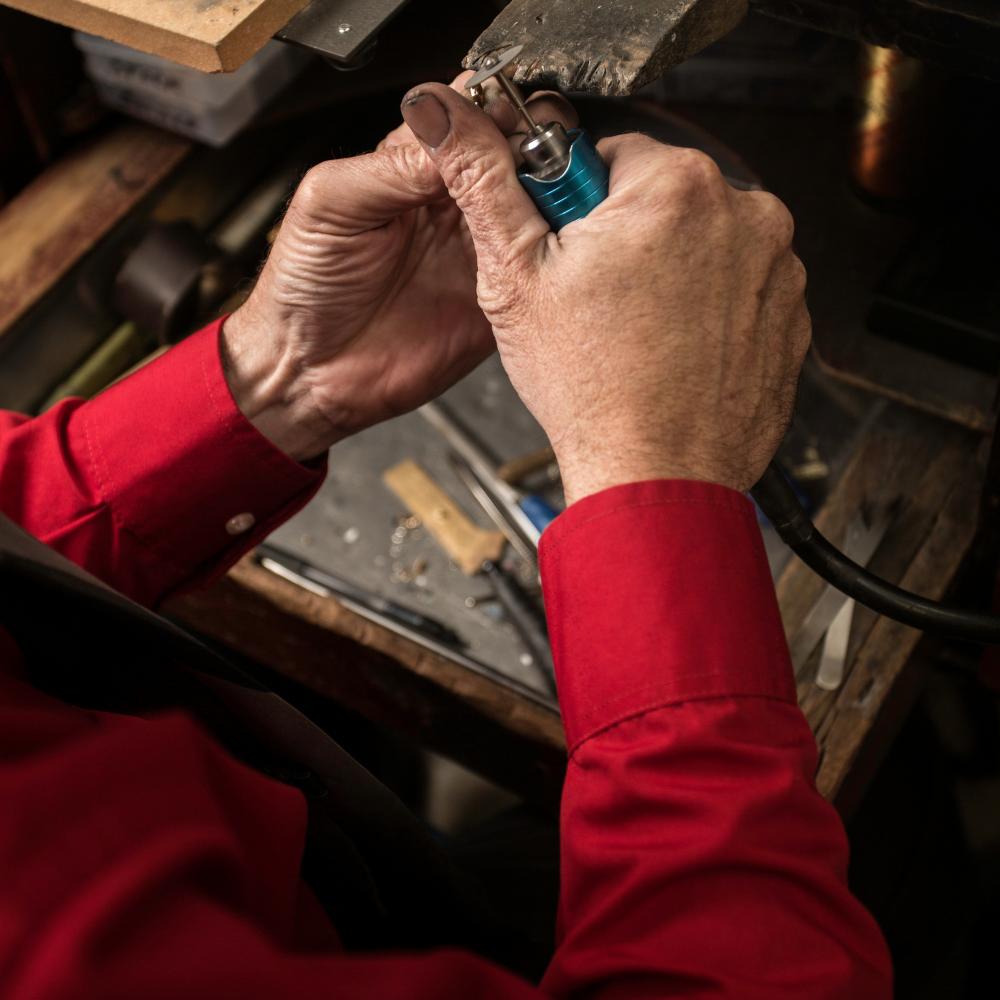
Jewellery education preserves the specialist hand skills and material knowledge that can only be learned at the bench
Jewellery can be discussed in a lecture theatre and designed on a screen, but it is understood at the bench. Students learn how metal behaves under a hammer, when solder is about to flow, why a stone setting fails and how apparently minor decisions about weight, balance and finish change the way an object feels on the body.
That knowledge is difficult to reduce to a manual because much of it is tacit. It passes through demonstration, correction, observation and the quiet accumulation of judgement, often with a technician or tutor noticing a problem before the student has learned how to see it.
Digital tools belong in contemporary jewellery education and can expand what designers are able to imagine and produce. They do not remove the need to understand materials, and a render—however convincing—cannot teach someone how to anneal silver, control a torch or recognise when a piece has been polished past the point of life.
The existing ECA course reflects that breadth. Its published programme information describes a combination of traditional techniques, new technologies, precious and non-precious materials, contextual study, dedicated bench space, industry projects and work placements, which is precisely the kind of joined-up education a modern jewellery sector needs.
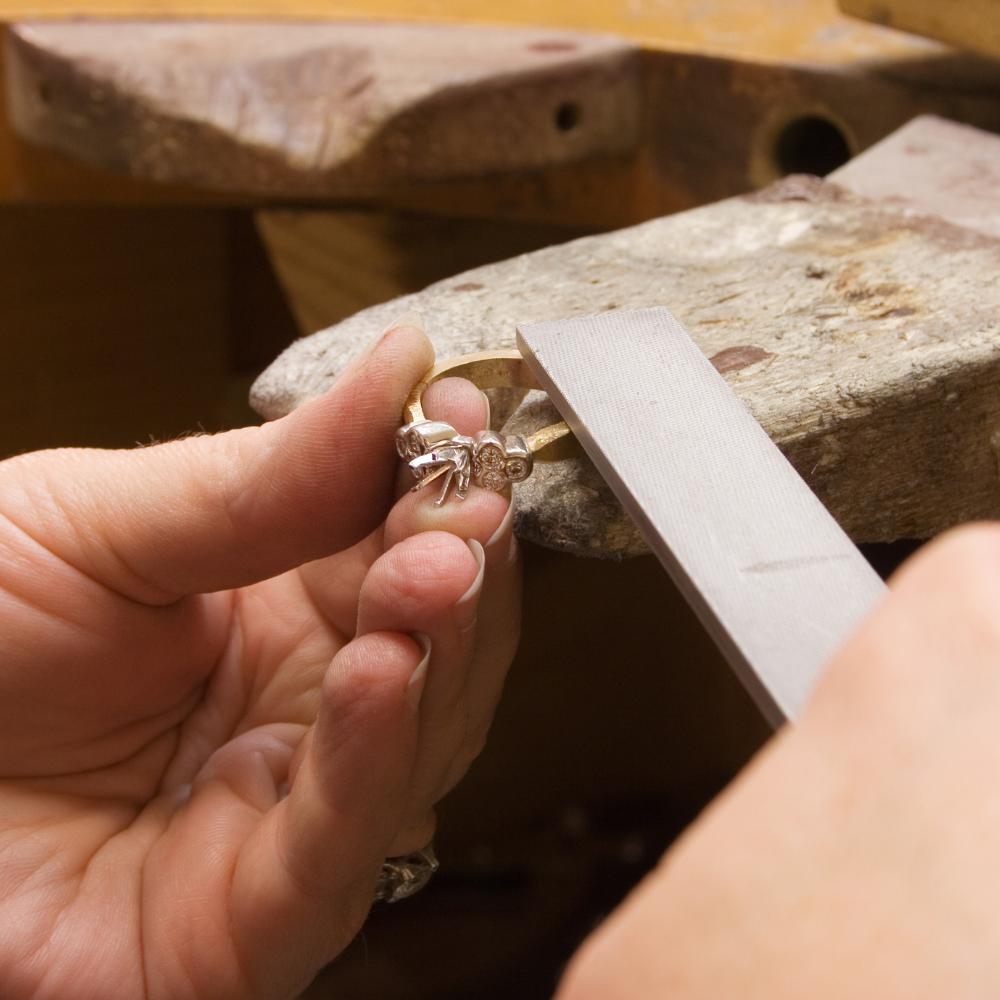
Jewellery education keeps specialist hand skills alive, preserving the material knowledge that can only be learned at the bench
The loss of a specialist degree does not mean that nobody will learn to make jewellery. Some will find apprenticeships, private courses, community workshops or generous mentors, and those routes deserve far greater recognition and investment than they currently receive.
They are not, however, interchangeable with a sustained programme of study. A degree offers time to experiment, access to specialist equipment, structured technical development, critical debate and a community in which students can fail safely before their livelihood depends on getting every decision right.
There is also an access question that should not be ignored. Jewellery tools, materials and workshop space are expensive, so when institutional provision contracts, practical education becomes easier to reach for people who already have money, family connections or access to a bench and harder for those who do not.
Closing a course can therefore narrow the trade long before the effects appear in a shop window. Fewer entry points mean fewer voices, fewer perspectives and a smaller chance that the next important Scottish jeweller will be able to enter the field at all.

Specialist workshops give emerging jewellers the time, tools and guidance to turn practical skills into lasting careers
Jewellery courses do not feed a single job description. Their graduates become independent makers, bench jewellers, designers, teachers, researchers, curators, founders, technicians and employees within larger jewellery and luxury businesses, while others carry their understanding of materials into adjacent creative industries.
They also create businesses and communities around themselves. A graduate setting up a studio buys tools, commissions casting, works with photographers, enters exhibitions, supplies galleries and may eventually employ or teach somebody else, meaning the value of their education travels far beyond the individual student.
Edinburgh College of Art has promoted its Jewellery and Silversmithing programme as internationally respected, closely connected to industry and supported by specialist workshops. The College also recently celebrated current students and alumni winning recognition from the Goldsmiths’ Craft and Design Council, the British Art Medal Society and the Cutlers’ Company, making the decision to end undergraduate recruitment particularly difficult to reconcile with the programme’s visible success.
At the same time, Heritage Crafts has placed the allied trades supporting British silversmithing on its 2025 Red List of Endangered Crafts. The warning is not that Britain has stopped admiring silver, but that the hidden network of specialist knowledge behind its production is becoming dangerously thin.

Access to specialist teaching, tools and workshop space gives the next generation of jewellers the freedom to learn, experiment and develop their craft
The British jewellery industry relies heavily on the language of craft. Brands use workshop imagery, makers’ hands, historic techniques and multigenerational knowledge to distinguish their work from mass-produced objects, because customers understand that skill gives jewellery meaning.
That language carries a responsibility. An industry cannot continue trading on the romance of craftsmanship while remaining detached from the schools, colleges, apprenticeships and workshops where future craftspeople are formed.
Scotland’s own cultural policy recognises creative skills as economically and socially important, with the Scottish Government reporting that the wider creative industries contribute billions of pounds to the economy and support tens of thousands of jobs. Yet national ambition means little if the specialist routes that turn creative potential into professional ability are steadily removed.
The issue extends beyond Jewellery and Silversmithing. Textiles and Performance Costume are also material disciplines built around knowledge that cannot be preserved through theory alone, and their proposed loss points towards a broader retreat from forms of education that need time, space and human instruction.
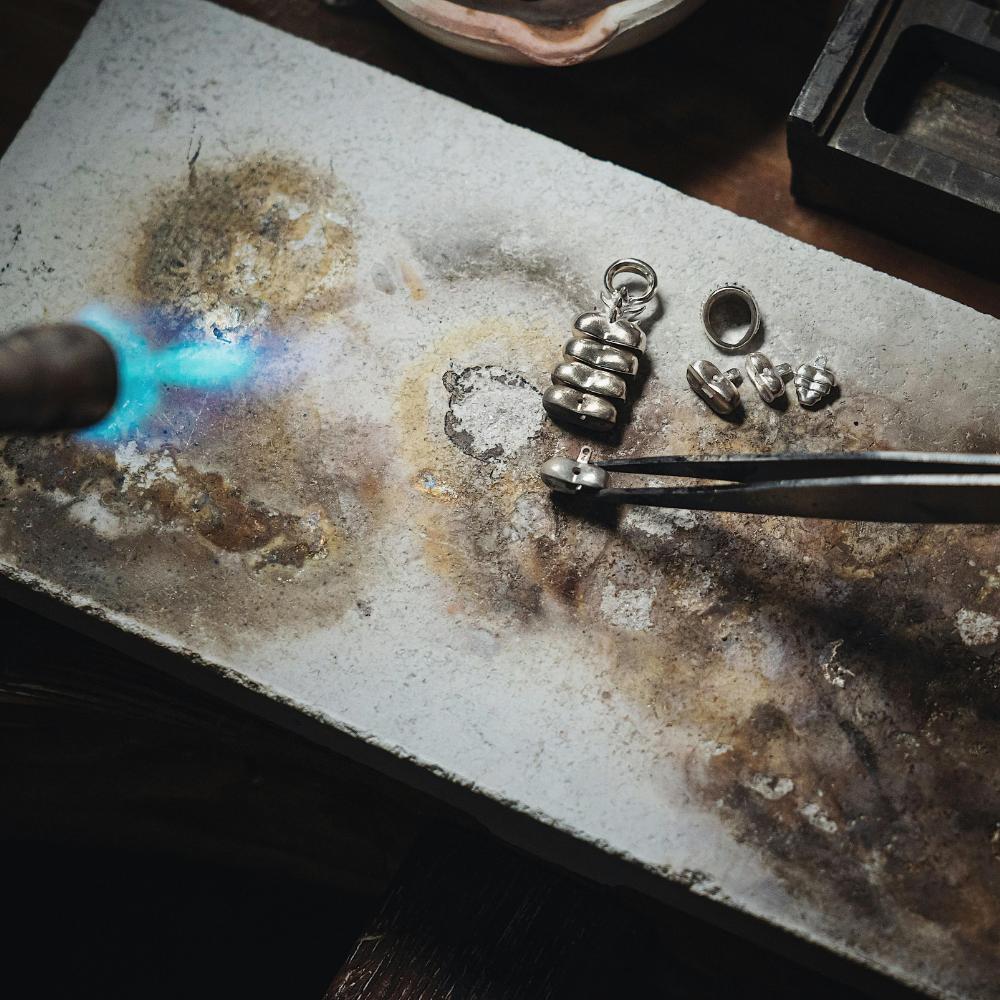
Practical jewellery education builds the confidence and judgement to work safely with heat, tools and precious materials
We believe jewellery education is not a luxury around the edges of the trade. It is where technical knowledge is protected, new ideas are tested, professional networks begin and people without inherited access are given the chance to find out what their hands can do.
No single university is responsible for maintaining an entire national skills base, and degree education is not the only valid route into jewellery. But every closure reduces capacity, weakens regional opportunity and places more pressure on an already fragmented training landscape, so each decision must be judged by its cumulative effect rather than its appearance on one institution’s balance sheet.
Once a programme closes, rebuilding it is not as simple as reopening admissions. Tutors leave, technicians move on, equipment is dispersed and the culture created around a workshop breaks apart, taking decades of accumulated knowledge with it.
If the jewellery industry wants skilled makers, original designers and credible claims to craftsmanship in ten or twenty years, it must defend the places doing that slow and essential work now. Supporting the campaign to save Jewellery and Silversmithing at Edinburgh College of Art is not nostalgia; it is an investment in whether the trade has a future worth inheriting.
Read and sign the petition to save the Craft and Design courses at Edinburgh College of Art
And share it with anyone who believes making should remain part of higher education.
You can also read the university of Edinburgh’s current Jewellery and Silversmithing programme notice and the Heritage Crafts Red List for wider context on the fragility of specialist skills.
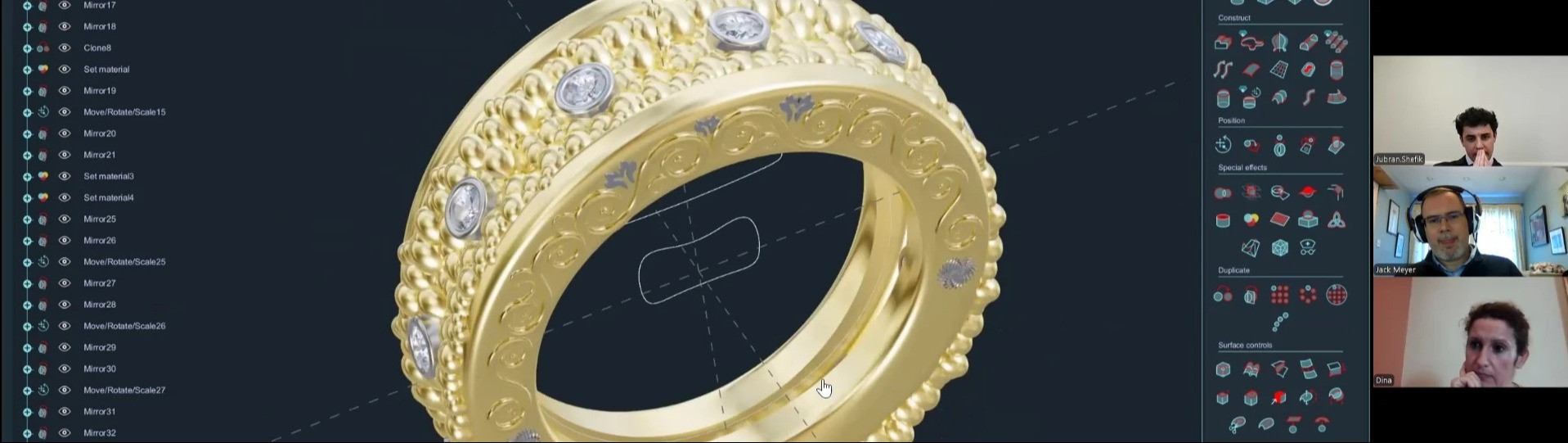
INSIGHTSJUL 18, 2025
Jack Meyer: Shaping the Future of Jewellery CAD Training
Jack Meyer of CAD Jewellery Skills has trained over 1,100 jewellers in CAD. Discover how his approach is transforming UK jewellery design and education.
READ MORE
EDUCATIONJUN 21, 2025
Rethinking the Natural Diamond Industry
As lab-grown disrupts the market and consumer habits shift, it’s time to re-examine how we position natural diamonds—and who we’re really selling to.
READ MORE
INSIGHTSMAR 25, 2026
The Storefront Gap
Why many jewellers’ websites fail to reflect the quality of their craft — and how the digital storefront is now shaping trust before a customer ever steps inside
READ MORE