
Don't miss a gem

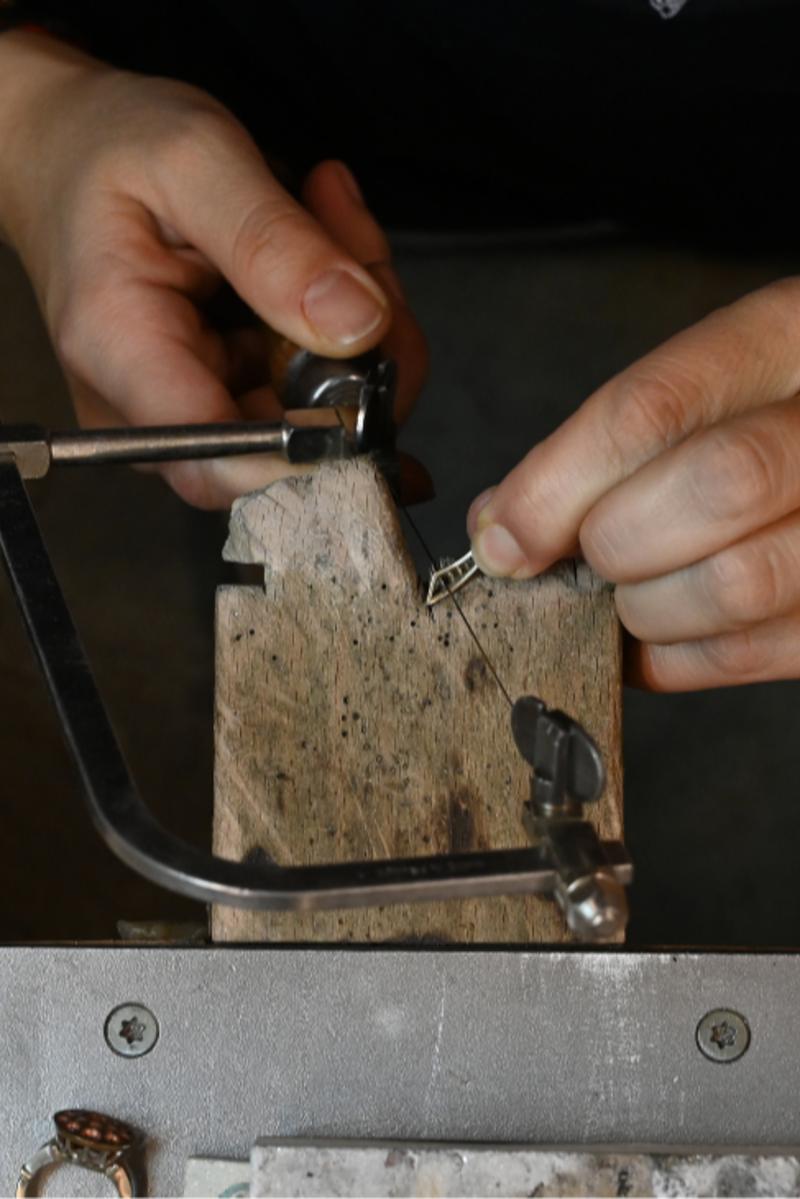
Free Open Days on 28 and 29 October will introduce prospective applicants to the ten-month Jewellery Foundation Programme and careers across the trade
Aspiring jewellers can tour the workshops, meet the training team and explore a practical route into the industry

The Goldsmiths’ Centre will open its specialist workshops on 28 and 29 October for two free Open Days introducing prospective applicants to its Jewellery Foundation Programme.
Visitors can tour the jewellery and silversmithing workshops, meet the training team and learn how the ten-month course prepares people aged 18 and over for apprenticeships and entry-level roles.
The value of the initiative lies in making a route into the trade visible. Jewellery is highly visible as a finished product, but the path to a professional bench career can be much harder to see.
A route into the workshop
The Jewellery Foundation Programme is a ten-month, full-time course for people seeking their first professional opportunity within the UK jewellery industry.
Designed with input from employers and industry professionals, the programme combines traditional hand skills, modern production methods and the professional behaviours expected within a working jewellery business.
Trainees develop experience in fine jewellery manufacture and core bench practice. They also learn how to respond to feedback, work accurately and produce consistent results within a professional environment.
There are ten places available, allowing the training to remain focused and closely connected to each person’s development.
The programme is designed primarily as a route into apprenticeships and junior positions. Graduates may pursue opportunities in goldsmithing, diamond mounting, gemstone setting, polishing, production and CAD or CAM.
Some may choose further education, while others can progress towards opportunities including the Goldsmiths’ Company Apprenticeship Scheme.
The Jewellery Foundation Programme: 10 Months in the Workshop
Potential matters more than polish
Applicants are not expected to arrive as accomplished jewellers.
The Centre is looking for people who enjoy practical work, are curious about how objects are made and can demonstrate patience, motivation and an ability to solve problems.
A portfolio does not need to contain jewellery. Its purpose is to show how the applicant thinks, experiments, makes and responds to a challenge.
That distinction is important. Potential craftspeople may assume they need formal jewellery training, an established creative identity or a perfectly presented body of work before approaching the industry.
The Foundation Programme is designed for the stage before that. It identifies practical potential and begins turning it into professional capability.
Lili Capelle, Vocational Curriculum Manager at The Goldsmiths’ Centre, said:
“I believe strongly in vocational education as a bridge to fulfilling careers.”
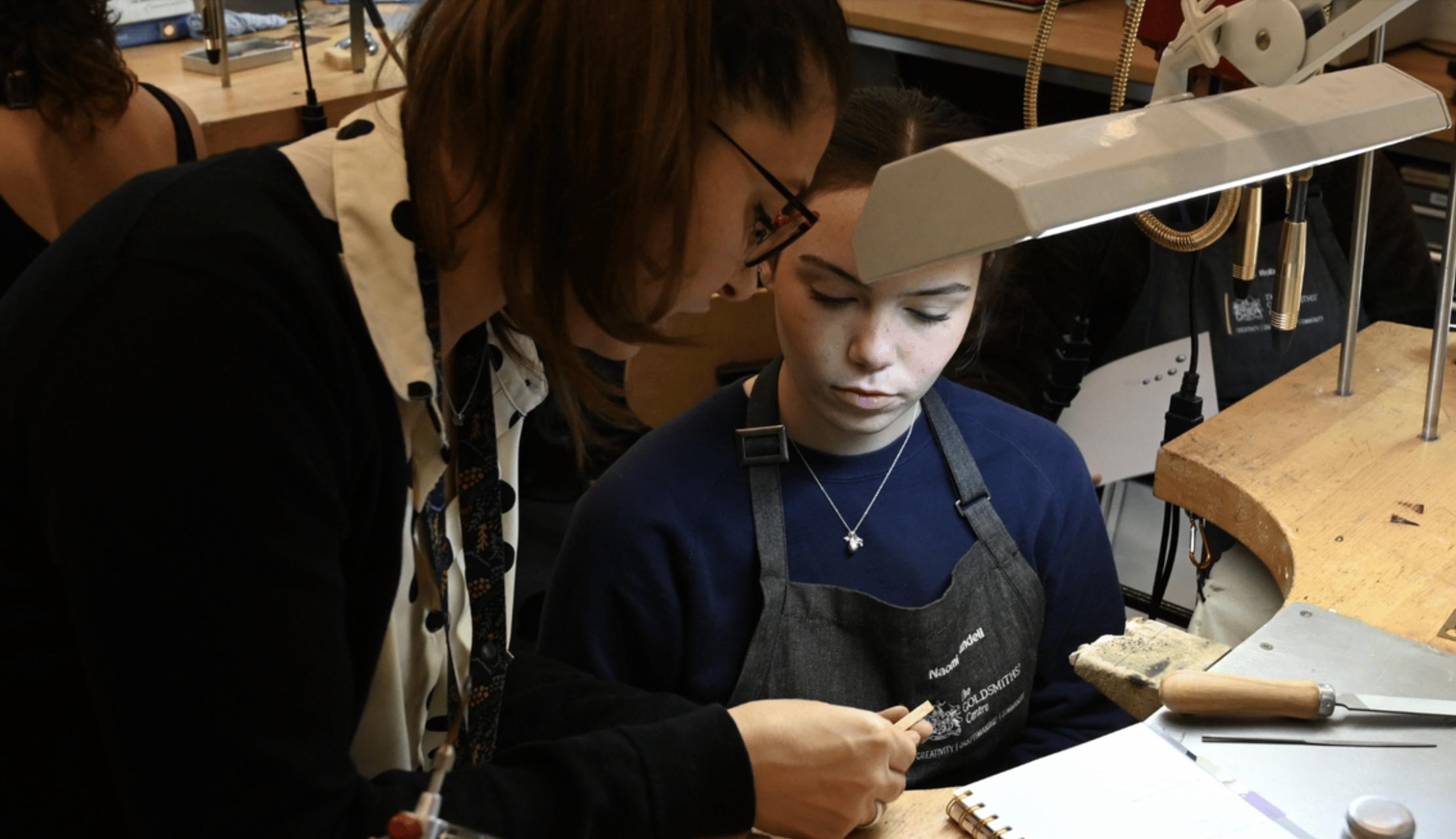 Lili Capelle- Programme Manager for Vocational Training
She explained that the programme enables trainees to develop practical, industry-focused skills while identifying and refining their individual strengths.
The Open Days give prospective applicants an opportunity to see what that education looks like in practice rather than trying to understand workshop training through a course description alone.
Why opening the workshops matters
Customers usually encounter jewellery as a finished product. They rarely see the chain of specialist skills behind it, from mounting and setting to polishing, engraving, CAD and production.
For somebody outside the trade, that hidden structure can make jewellery feel like a closed profession. They may be interested in making but have no family connection, industry contact or clear understanding of where to begin.
Opening the workshops helps remove some of that uncertainty.
Visitors can see the tools, working environment and standards involved. They can ask direct questions about applications, training and employment. They can also decide whether the discipline and repetition of professional workshop life genuinely suit them.
The industry benefits from that honesty. Successful recruitment is not simply about attracting more applicants. It is about helping the right people recognise where their abilities could lead.
"As a maker, it all comes down to the foundation you set early on. I can attribute pretty much everything that I've been able to do for my career, from the beginning to this point, to what I've learnt and who I've met at the Goldsmiths' Centre."
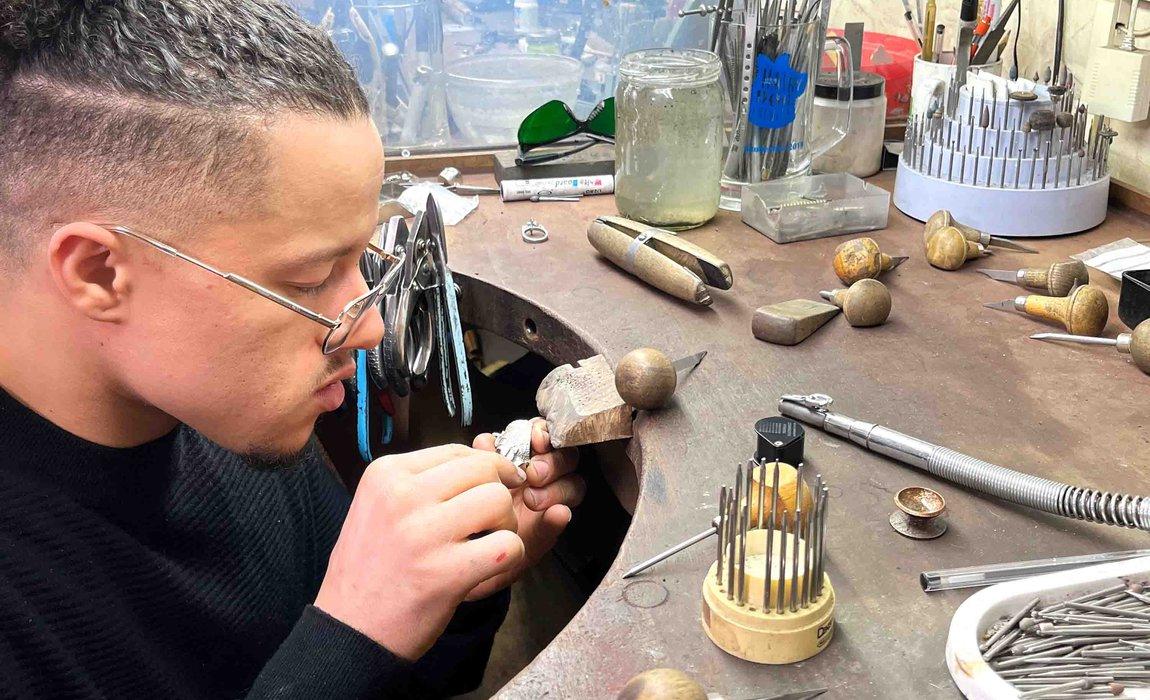 Hugo Johnson, Foundation Programme alumnus and Winner of BBC 2's "All That Glitters" Series 1
Training for employment
The programme’s focus on employability distinguishes it from a recreational course or a short introduction to jewellery making.
It is intensive, full-time and built around the expectations of professional workshops. Technical ability matters, but so do punctuality, accuracy, consistency, communication and the willingness to repeat a task until it reaches the required standard.
Those behaviours are difficult to learn through theory alone.
They develop through working with tools and materials, completing structured projects, responding to criticism and understanding that professional craftsmanship depends upon reliability as much as creative instinct.
Employer involvement is therefore essential. Training must reflect the reality of the roles graduates are expected to enter.
By connecting education with apprenticeships and junior positions, the programme offers a clearer bridge between an individual’s potential and the needs of the trade.
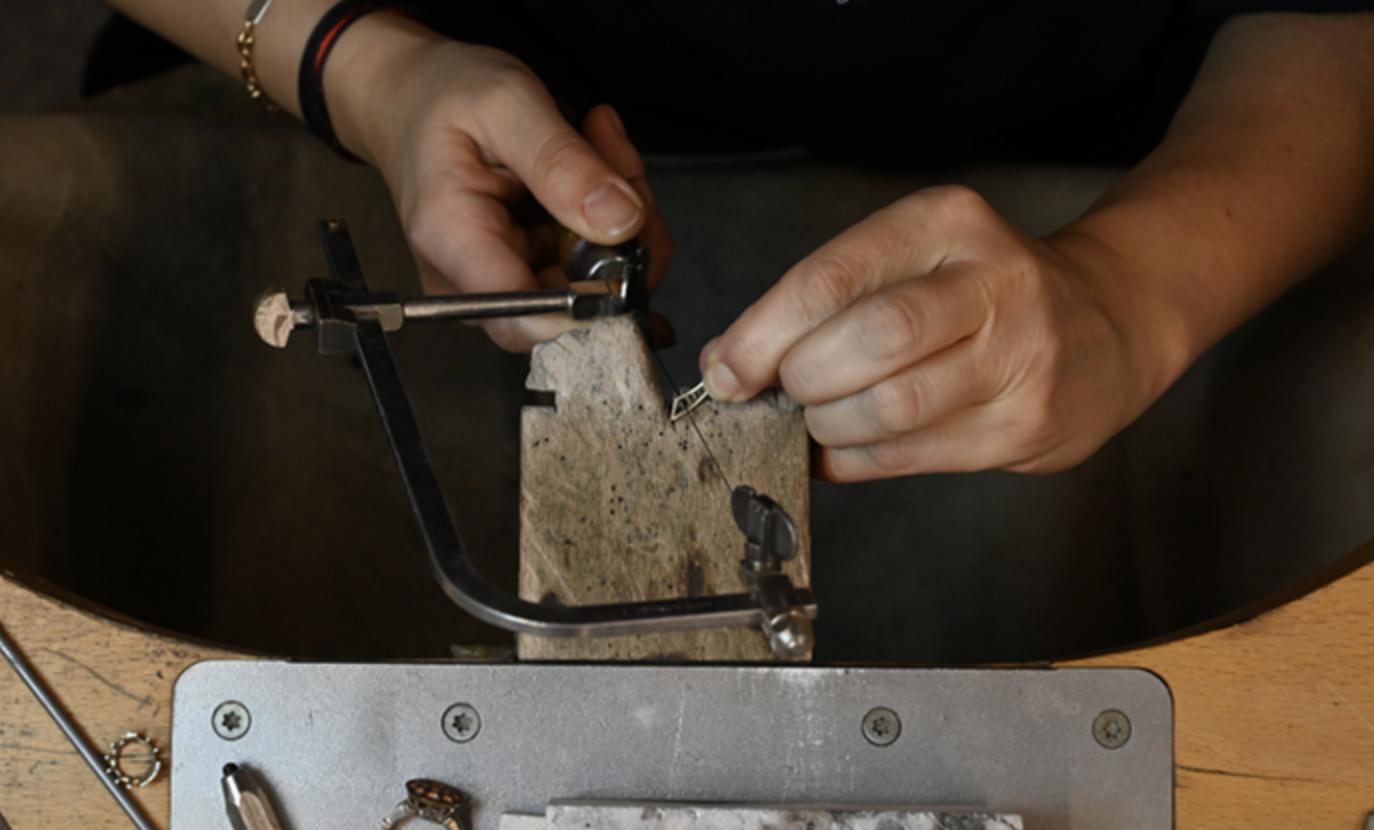
The Jewels Club Take
The British jewellery industry often speaks about protecting heritage skills, but preservation cannot be separated from access.
A skill survives because somebody has the opportunity to learn it, practise it and eventually pass it on.
The Goldsmiths’ Centre’s Open Days matter because they make the beginning of that process visible. They allow somebody who may never have entered a professional jewellery workshop to see the trade from the inside and imagine a place within it.
Ten training places may appear modest against the scale of the wider industry. Yet specialist knowledge has always been transferred person by person, bench by bench and generation by generation.
The future of the trade will depend upon institutions that can identify ability before it becomes experience, then give that ability the time, discipline and support required to grow.
Sometimes the most meaningful step is simply opening the door.
Open Day details
The Jewellery Foundation Programme Open Days take place on Wednesday 28 and Thursday 29 October 2026.
Tours begin at 11am and 2pm, with 25 free places available in each session. Advance registration is required, and attendance is intended for people seriously considering applying to the programme.
The Goldsmiths’ Centre is located at 42 Britton Street, London EC1M 5AD, approximately five minutes from Farringdon station.
Discover More
Explore the Jewellery Foundation Programme and reserve a free Open Day place through The Goldsmiths’ Centre.
Programme information:
https://www.goldsmiths-centre.org/learn-and-upskill/foundation-programme/
Open Day registration:
https://goldsmiths-centre.digitickets.co.uk/category/75276
INSIGHTSJUL 18, 2025
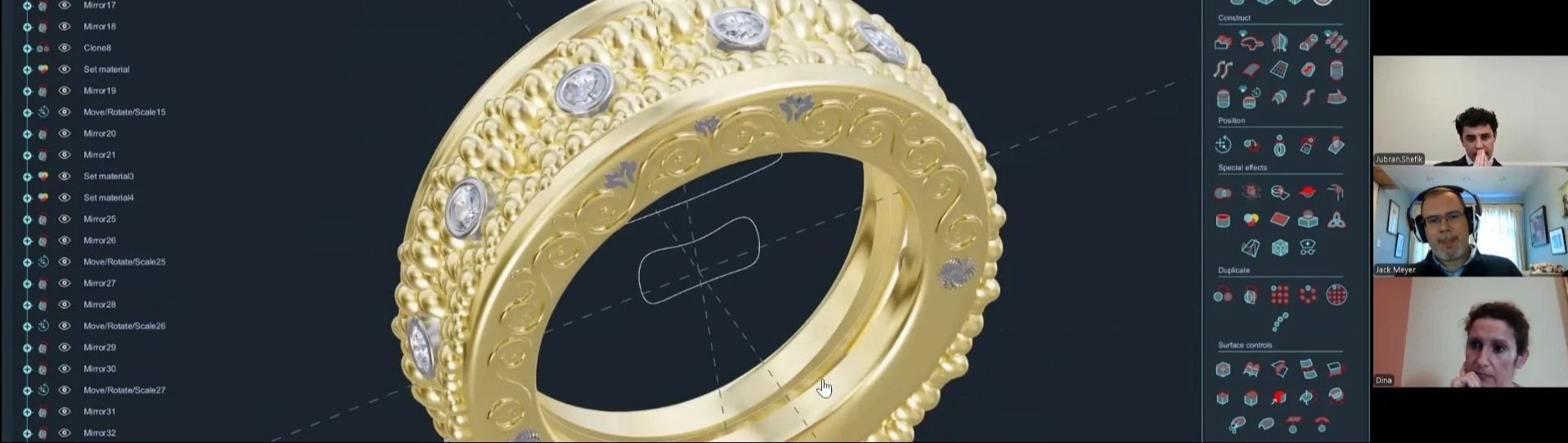
Jack Meyer: Shaping the Future of Jewellery CAD Training
Jack Meyer of CAD Jewellery Skills has trained over 1,100 jewellers in CAD. Discover how his approach is transforming UK jewellery design and education.
READ MORE
EDUCATIONJUN 21, 2025
Rethinking the Natural Diamond Industry
As lab-grown disrupts the market and consumer habits shift, it’s time to re-examine how we position natural diamonds—and who we’re really selling to.
READ MORE
INSIGHTSMAR 25, 2026
The Storefront Gap
Why many jewellers’ websites fail to reflect the quality of their craft — and how the digital storefront is now shaping trust before a customer ever steps inside
READ MORE