






Don't miss a gem
The world’s largest fine jewellery crafting facility adds 60 million pieces of annual capacity while reshaping Pandora’s supply chain, skills base and material strategy
Pandora’s $150 million Vietnam facility is a test of how a global jewellery brand can unite scale, craft, resilience and lower-impact production

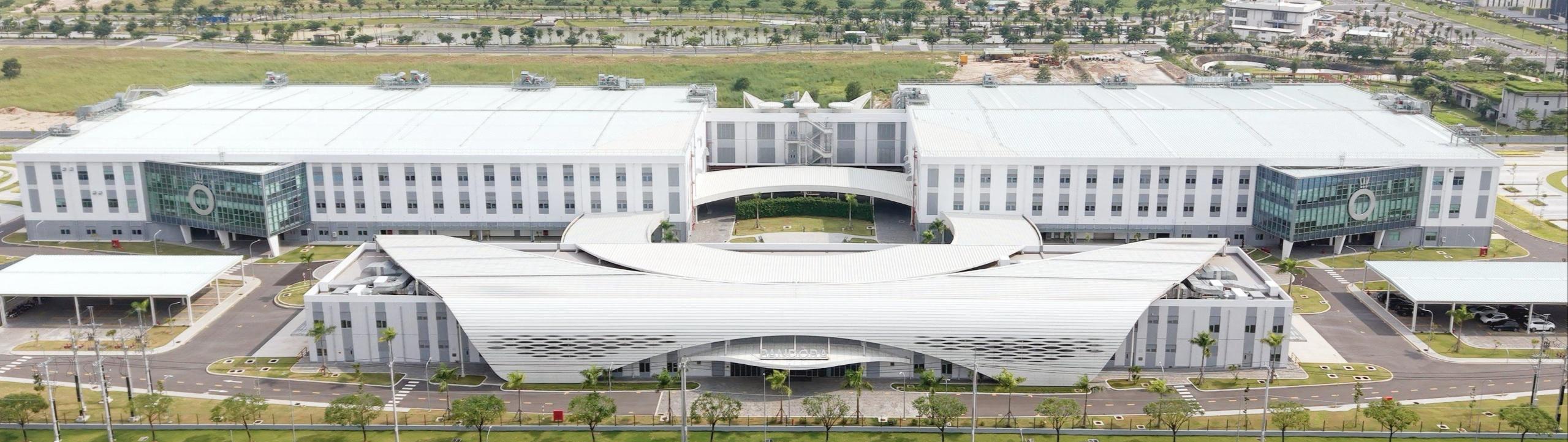
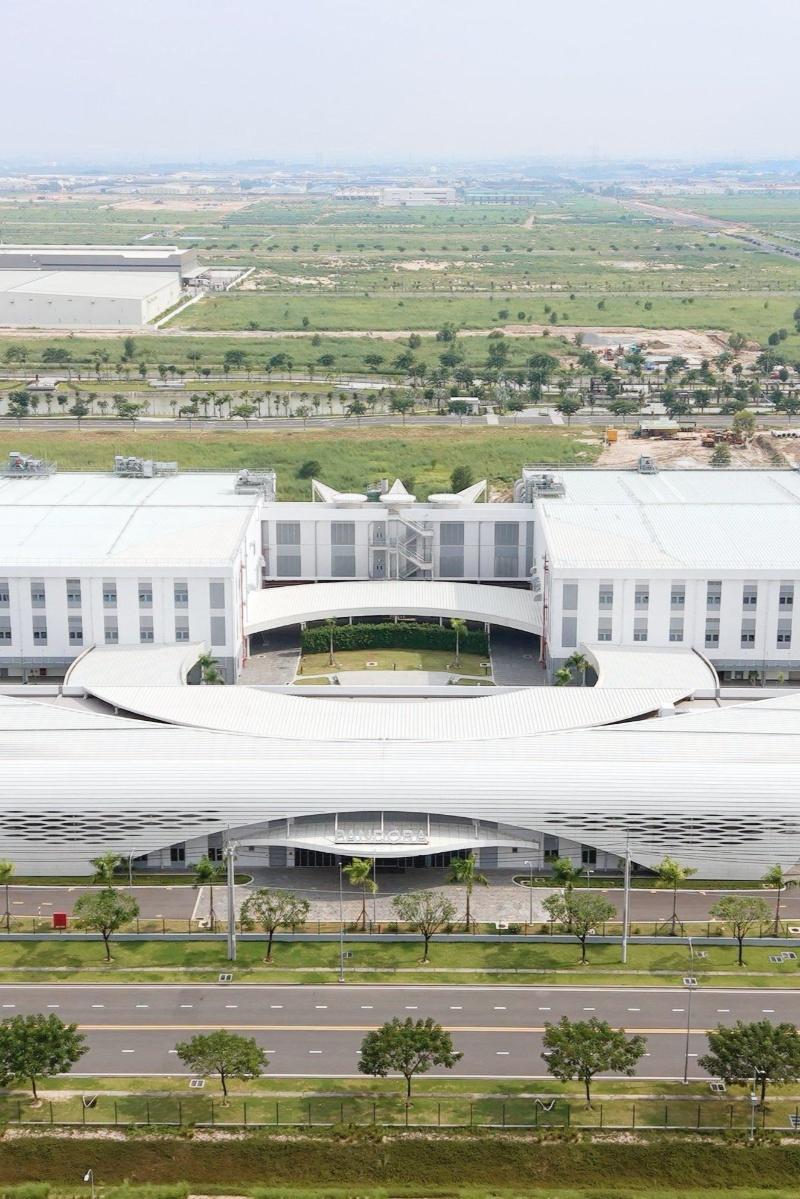
Pandora has opened what it describes as the world’s largest fine jewellery crafting facility, a $150 million site in Ho Chi Minh City capable of producing up to 60 million pieces a year. The first Pandora jewel made in Vietnam was crafted during the opening ceremony on 1 October 2026, beginning a new chapter for a company whose production has until now been concentrated entirely in Thailand.
The numbers are enormous, but this is not only a story about size. The facility will increase Pandora’s manufacturing capacity by around 50 per cent, create as many as 7,000 local jobs when fully operational and support the company’s move into platinum-plated jewellery. It is a statement about how the world’s largest jewellery brand intends to balance growth, supply-chain resilience, material innovation and the human skills on which its products still depend.
Pandora sold 112 million pieces of jewellery in 2025. The Vietnam facility’s annual capacity is therefore equivalent to more than half of the company’s sales volume for that year, although reaching full production will take time and capacity does not automatically translate into demand.
Even so, the investment creates substantial headroom. It allows Pandora to prepare for growth, respond more quickly to shifts in consumer demand and introduce new materials without forcing its established facilities to absorb every additional requirement.
The 7.5-hectare site is Pandora’s fourth crafting facility globally and its first outside Thailand. Describing it as a crafting facility rather than a factory is a deliberate choice, reflecting the company’s insistence that industrial scale and skilled handwork are not opposites.
That distinction deserves attention. Fine jewellery is often imagined through the intimacy of a single bench, yet Pandora operates in a different reality. Its challenge is to reproduce consistent quality across tens of millions of pieces while preserving enough human involvement for the word craftsmanship to remain credible.
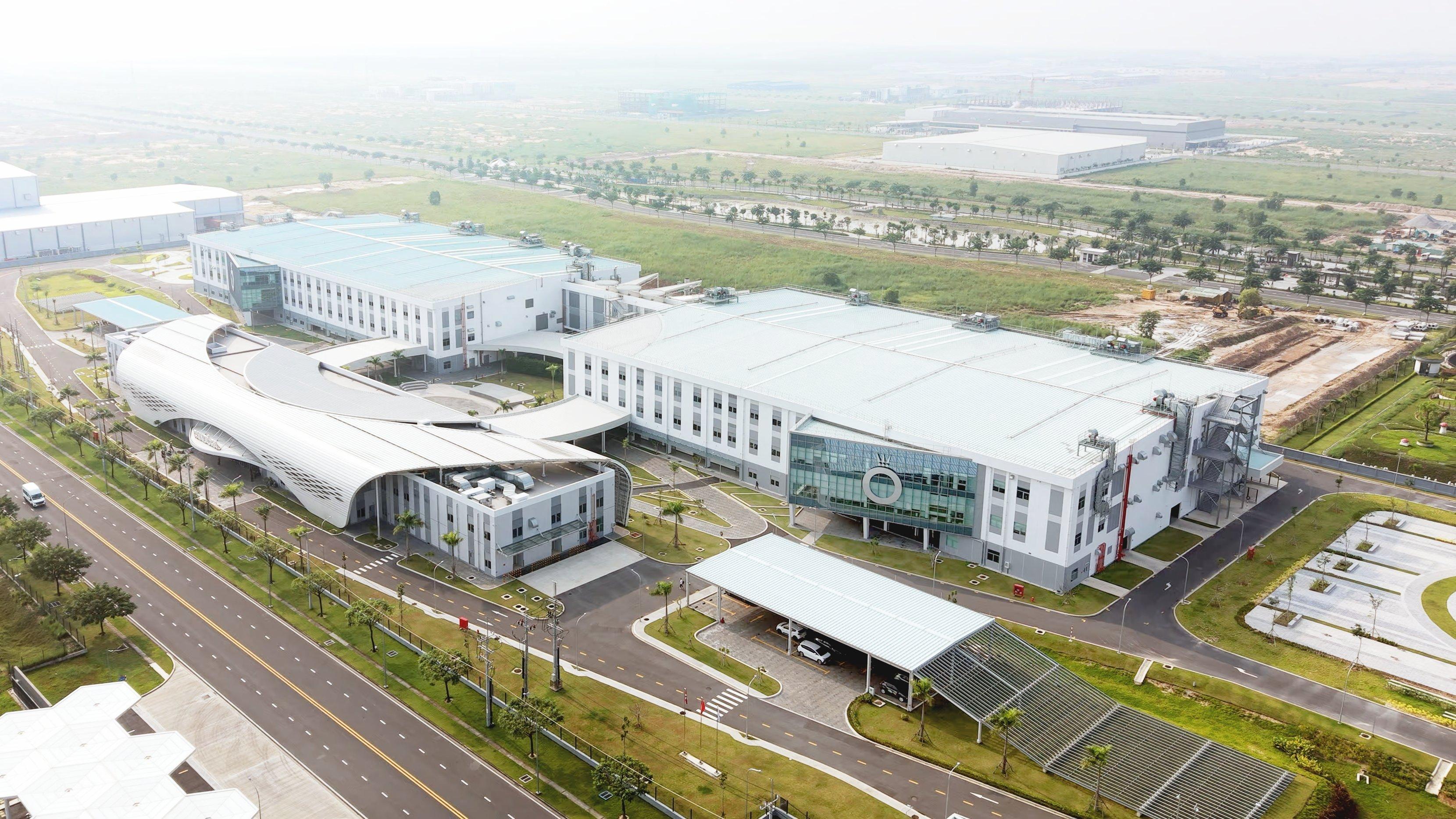
Pandora’s new $150 million jewellery crafting facility in Ho Chi Minh City, Vietnam. Photo courtesy of Pandora
Pandora’s jewellery production grew out of Thailand, where the company has developed its manufacturing expertise over several decades and now employs more than 12,000 people across its crafting operations. Vietnam is not presented as a replacement for that base. It is an expansion of it.
Geographic diversification is one of the clearest reasons for the move. Concentrating production in one country can create efficiency and deep expertise, but it also leaves a business exposed to disruption. A second national manufacturing base gives Pandora greater flexibility if logistics, regulation, labour availability or regional events affect one part of the network.
Vietnam also offers an established manufacturing economy and a large potential workforce. Pandora says its new crafting academy will provide specialist training and support knowledge-sharing between its teams in Thailand and Vietnam. This matters because buildings and machinery can be replicated more quickly than judgement, dexterity and production knowledge.
The academy should be understood as essential infrastructure rather than an accompanying benefit. Pandora is not simply recruiting 7,000 people into an existing jewellery tradition. It must build a shared technical language, transfer standards and create routes through which new craftspeople can develop from trainees into experienced specialists and future trainers.
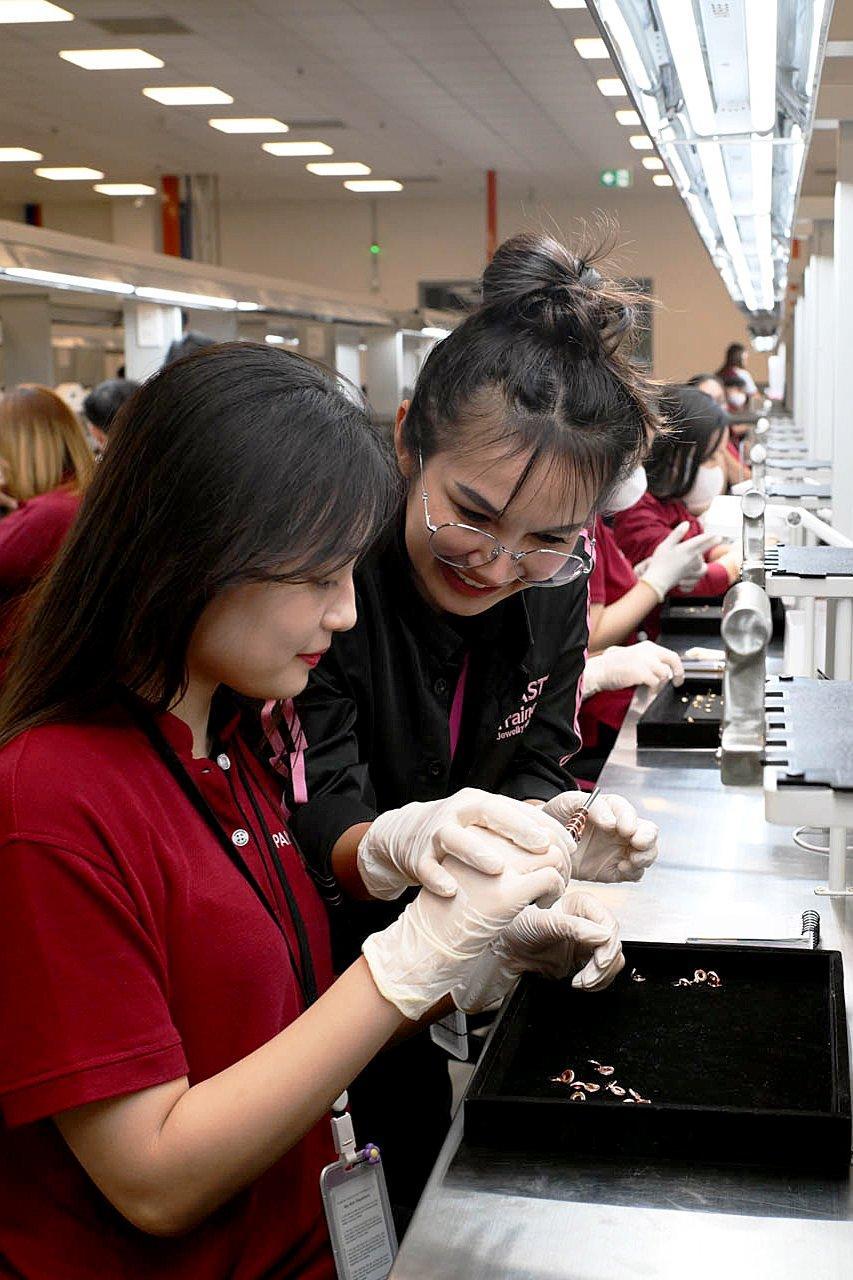
Pandora craftspeople working together inside the company’s new jewellery facility in Vietnam. Photo courtesy of Pandora
The language of craft becomes complicated when production reaches this size. Repetition, automation and tightly controlled processes are necessary for consistency, but jewellery still requires tasks that depend on touch, close observation and trained hands.
Pandora’s vertically integrated model brings design, product development, material preparation, casting, finishing, stone setting, quality control and distribution into a connected system. The company says it can take a piece from design to finished product in approximately four months. That speed does not remove craft. It reorganises craft within an industrial process.
At this level, craftsmanship is not only the ability of one maker to complete an object from beginning to end. It is also the collective ability of thousands of people to perform specialised tasks reliably, recognise faults and maintain a common standard across an immense production run.
There is a risk that the word becomes a softer substitute for manufacturing, particularly when brands use workshop imagery without explaining how their products are actually made. Pandora can avoid that by being specific about which processes are completed by hand, where technology is used and how much training different roles require.
Transparency would strengthen rather than weaken the story. Modern jewellery production does not need to imitate the mythology of the solitary goldsmith to contain meaningful skill.
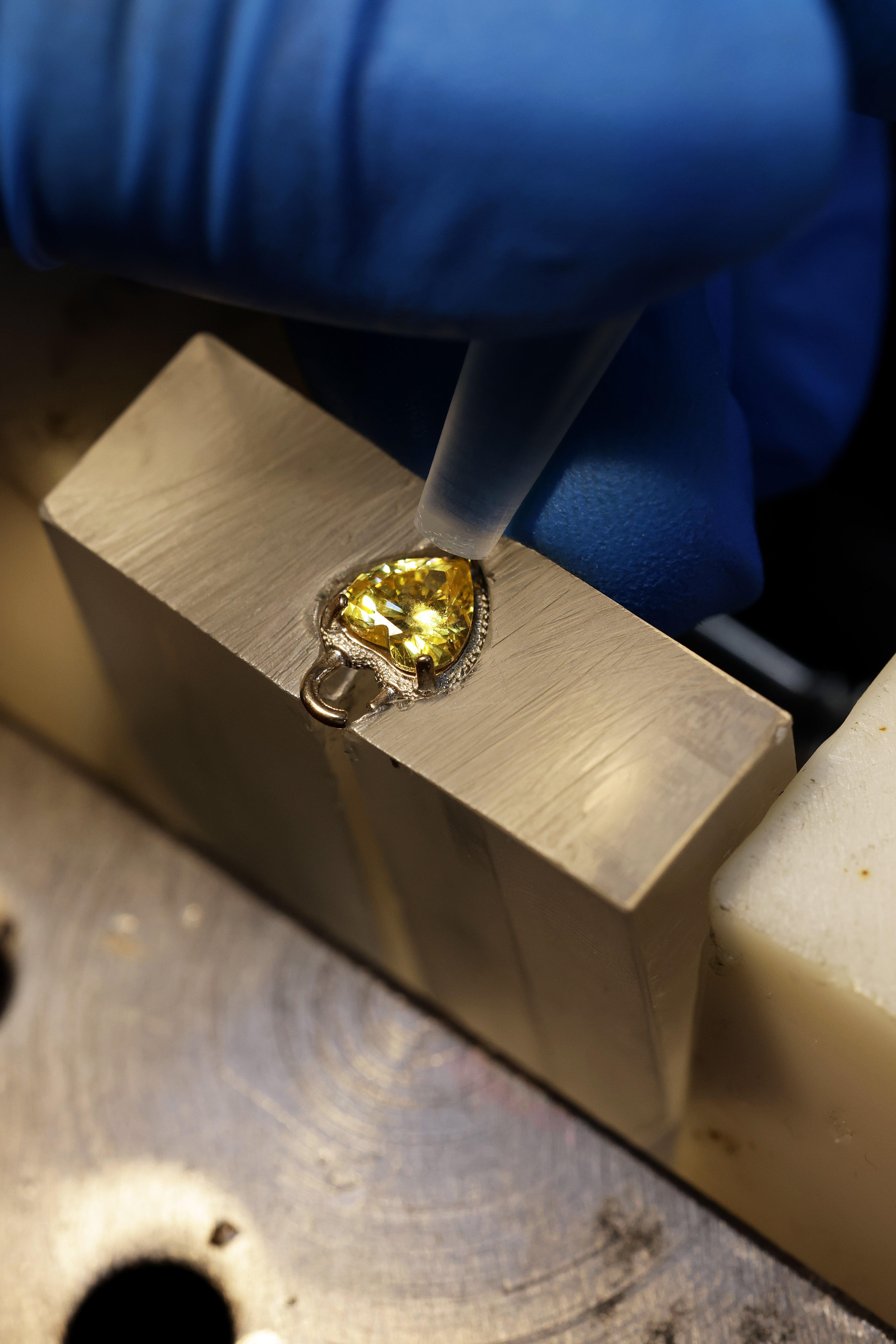
Stone setting at Pandora’s new jewellery crafting facility in Vietnam. Photo courtesy of Pandora
The promise of 7,000 local jobs is one of the most significant elements of the investment. It gives the facility the potential to become an important employer and a substantial centre of jewellery expertise in Vietnam.
Job creation alone, however, is not the complete measure of social value. The quality of those jobs will matter just as much as their number. Training, pay progression, worker representation, health and safety, career development and the ability to move into technical or leadership positions will determine whether the site builds a durable skills base.
Pandora’s crafting academy creates an opportunity to make jewellery production a long-term profession rather than a narrow assembly role. If knowledge is genuinely shared between Thailand and Vietnam, the new site could develop its own community of trainers, engineers, stone setters, quality specialists and production leaders.
The next stage of reporting should therefore move beyond recruitment totals. Retention, promotion, training hours and employee experience will tell us more about the facility’s lasting effect than the headline number alone.
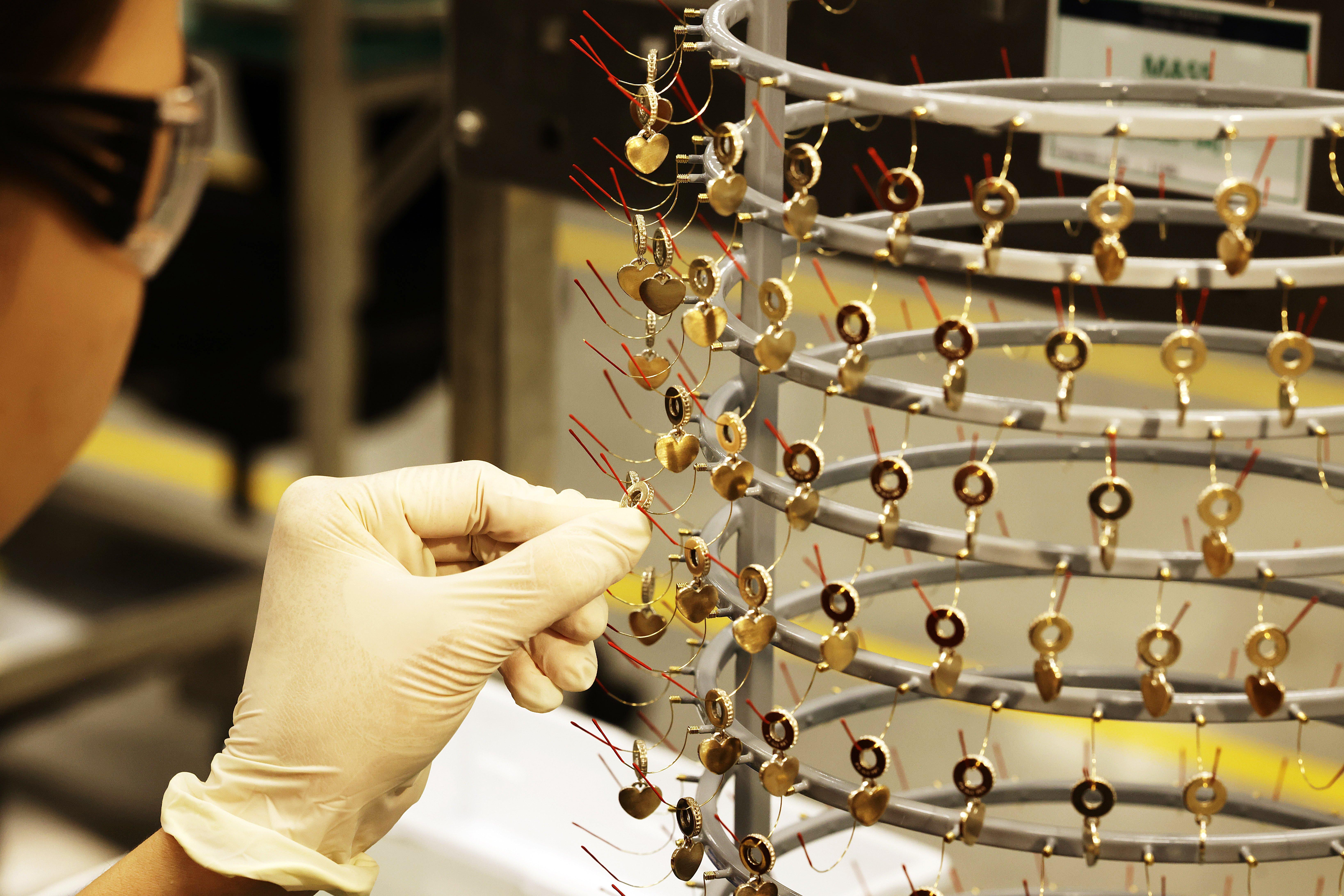
A Pandora craftsperson inspects heart-shaped charms during production at the company’s Vietnam facility. Photo courtesy of Pandora
The Vietnam site is not designed simply to make more of Pandora’s existing silver jewellery. The company says it will play an important role in producing its future platinum-plated collections, making the facility part of a wider shift in what Pandora jewellery is made from.
Pandora introduced platinum-plated pieces in 2026 as a way to broaden its precious-metal offer and reduce its exposure to silver-price volatility. The plating is applied over the company’s existing metal-alloy core and is positioned around durability, tarnish resistance and suitability for everyday wear.
That strategy gives Pandora more control over cost and creates a new product story, but it must be communicated with exceptional clarity. A platinum-plated piece is not solid platinum, just as gold-plated jewellery is not solid gold. Product descriptions, staff training and aftercare information need to ensure that consumers understand exactly what they are buying.
Longevity will be equally important. If platinum plating is presented as a performance benefit, customers will judge it by how it wears, whether it can be restored and how the company responds when the surface eventually changes. Material innovation becomes meaningful when it improves the ownership experience, not merely the production economics.
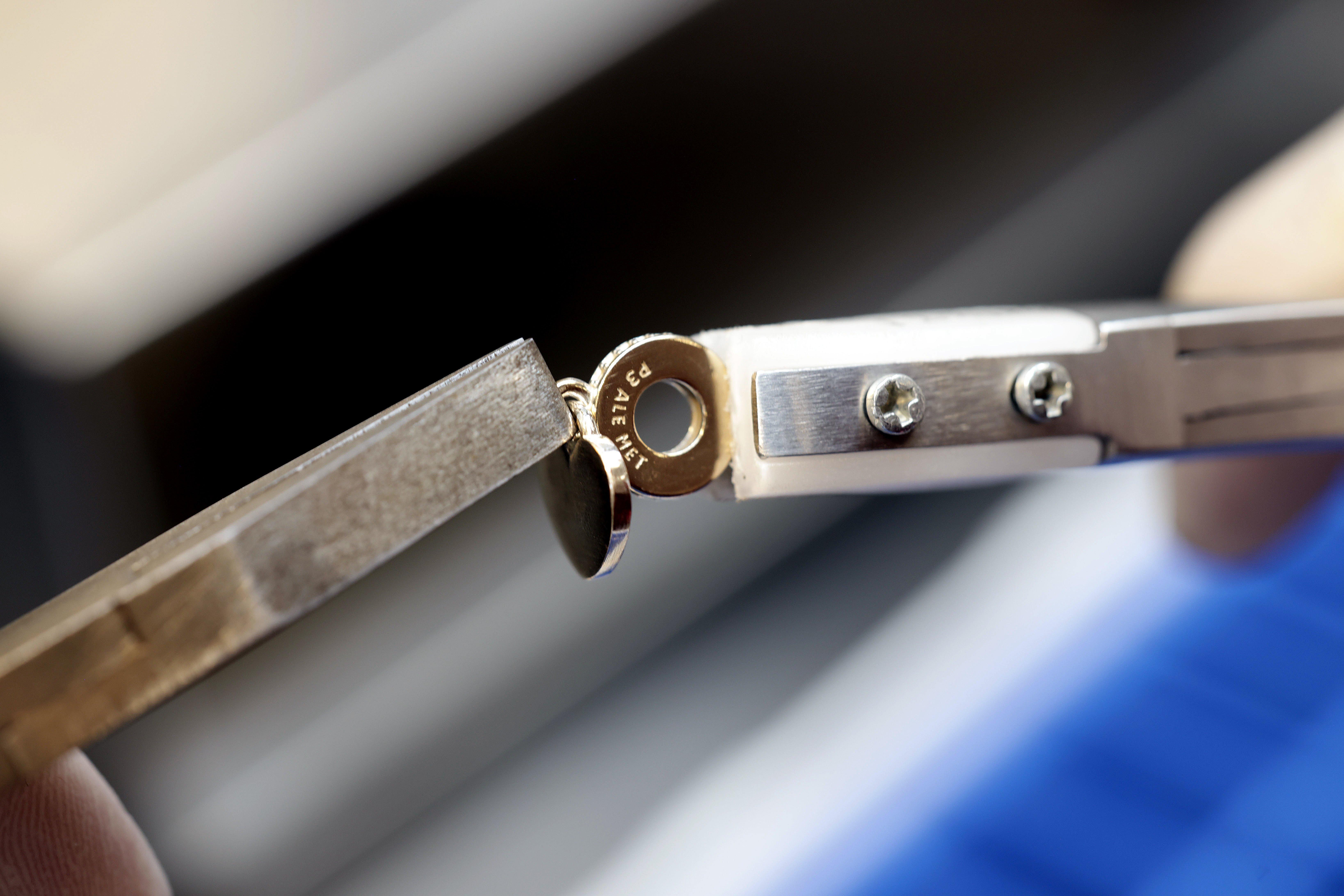
A gloved craftsperson examines rows of gold-coloured heart charms suspended from a circular production rack
Pandora has designed the facility to operate on 100 per cent renewable electricity, use 100 per cent recycled silver and gold and meet LEED Gold building standards. Energy and water-efficiency measures have also been incorporated into the site.
These are substantial commitments, especially for a facility of this size. Pandora reached the point where all new jewellery was crafted exclusively from recycled silver and gold in 2024, and 2025 was the first full year under that model.
The company reported that its total greenhouse-gas emissions fell by 5 per cent in 2025 and stood 17 per cent below its 2019 baseline. It aims to halve emissions across its value chain by 2030 and reach net zero by 2040.
The new facility also illustrates why sustainability cannot be measured by operational electricity alone. Pandora’s own Scope 1 and 2 emissions represented only 0.4 per cent of its total emissions in 2025. Most of the footprint sits across the wider value chain, including materials, transport, retail, marketing, packaging, capital goods and employee travel.
A renewable-powered building is therefore an important foundation, but the fuller test will be what happens as 60 million pieces of potential capacity move through material suppliers, packaging systems, distribution networks and stores. Growth can be cleaner than before without becoming impact-free.
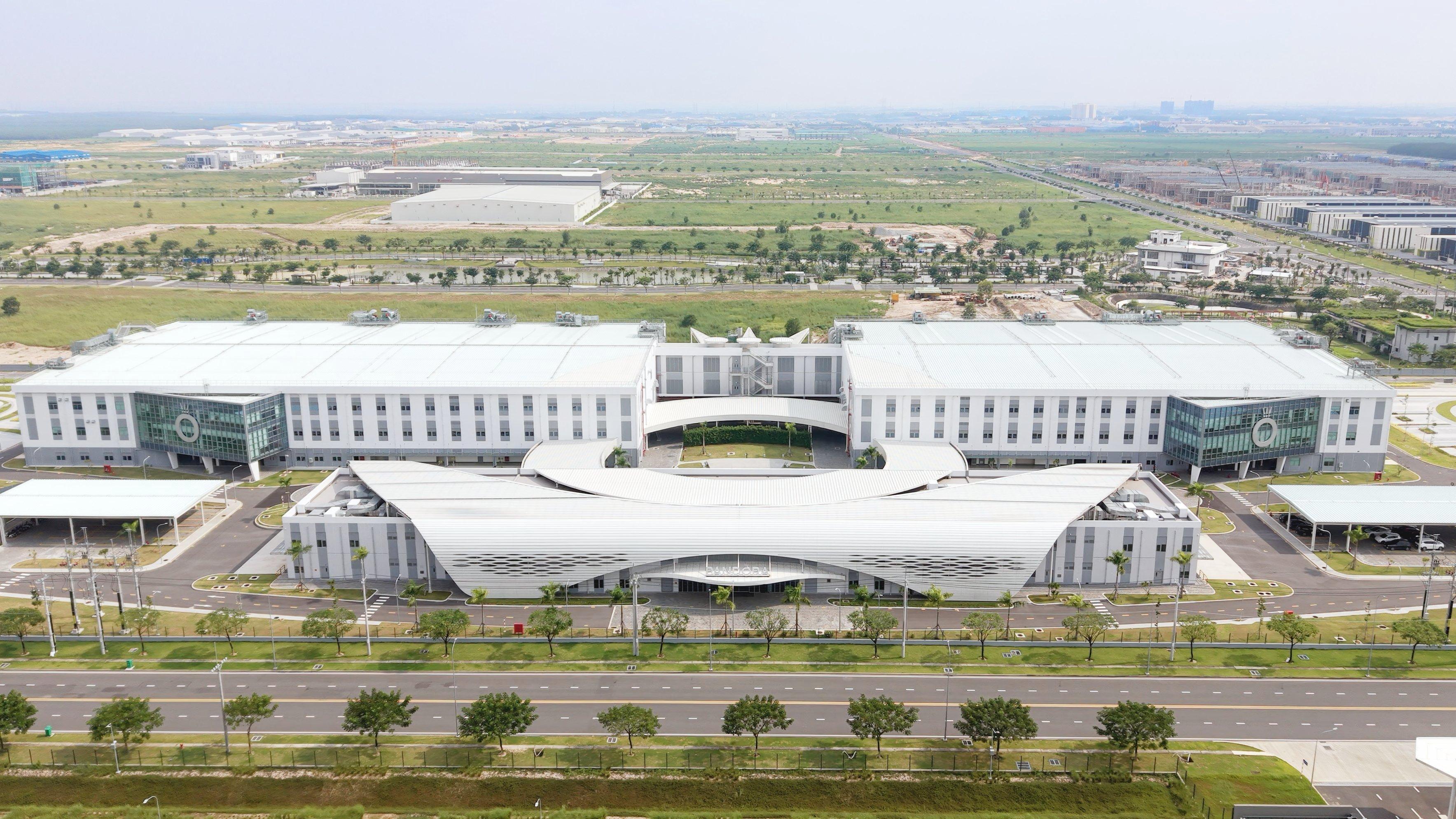
Front view of Pandora’s new 7.5-hectare jewellery crafting facility in Ho Chi Minh City, Vietnam. Photo courtesy of Pandora
The facility strengthens one of Pandora’s most important competitive advantages: control. The company designs, crafts, markets and sells jewellery through a global network that includes around 7,000 points of sale, giving it access to information across the entire journey from product idea to customer purchase.
Adding capacity within its own manufacturing network allows Pandora to protect technical knowledge, adjust production and introduce materials without depending entirely on outside suppliers. It can also connect sales data more closely with production planning and quality control.
That control does not guarantee success. A larger system carries larger risks if forecasts are wrong, quality slips or consumer tastes change. Sixty million pieces of capacity require disciplined decisions about what deserves to be made, not simply confidence that more can be made.
For smaller jewellery businesses, the lesson is not to imitate Pandora’s infrastructure. Few brands could or should. The useful lesson is that manufacturing strategy is part of brand strategy. Knowing who makes a product, how knowledge is retained, where materials come from and how quickly the supply chain can respond are creative and commercial questions as much as operational ones.
The first piece made in Vietnam marks the ceremonial opening, but the facility’s reputation will be built slowly. It must demonstrate consistent quality while production rises, develop thousands of skilled employees and integrate with a system shaped by decades of experience in Thailand.
It must also show that Pandora’s sustainability standards hold as the company grows. Recycled-metal traceability, renewable-energy procurement, waste recovery, water use and transport emissions all need continued scrutiny. LEED Gold recognises the building, but responsible production depends on what happens inside it year after year.
Finally, the site must help Pandora make products people genuinely want to keep. Capacity is commercially useful only when it serves desirable design, and recycled material delivers its greatest value when the resulting jewellery remains in use rather than becoming another short-lived purchase.
Pandora’s new Vietnam facility is one of the clearest physical expressions of what accessible luxury has become: global, technologically advanced, vertically integrated and still dependent on a huge amount of human skill.
The scale is impressive, but scale alone is not the achievement. The more important challenge is whether Pandora can turn that scale into consistency without making craftsmanship feel anonymous, create thousands of jobs with genuine routes for progression and increase production while continuing to reduce the impact of each piece.
The crafting academy may prove just as significant as the production floor. Machinery can increase speed, but trained people protect standards, solve problems and carry knowledge forward. If the transfer between Thailand and Vietnam is handled thoughtfully, Pandora will not simply have opened the world’s largest jewellery facility. It will have created a new centre of jewellery-making expertise.
This opening also asks the wider trade to reconsider what craftsmanship looks like today. It can exist at an individual bench, but it can also exist inside a carefully designed system involving thousands of specialised hands. The word earns its meaning through skill, transparency and respect for the people doing the work, not through the size of the building around them.
Read Pandora’s announcement about the opening of its Vietnam crafting facility. Further information is available through Pandora’s pages on its Vietnam operations, craftsmanship and use of recycled metals.

INSIGHTSJUL 19, 2025
UK Jewellery Sector Demands Government Action for Small Businesses
UK jewellery and allied craft leaders unite to call for urgent government reform, highlighting the structural challenges facing small and microbusinesses.
READ MORE
GJEPCJUL 27, 2025
A Pact Signed in Power — and Sealed in Gold
India–UK FTA signed by Modi and Starmer unlocks $2.5bn trade vision for Indian jewellery exports
READ MORE
INDUSTRY & POLICYAUG 8, 2025
Tariff Shock – What Trump’s 50% Duties Mean for India’s Gold, Jewellery & Diamond Trade
India’s jewellery and diamond industries face unprecedented pressure as US tariffs jump to 50%, prompting official backlash and rapid readjustments in trade strategies.
READ MORE