






Don't miss a gem
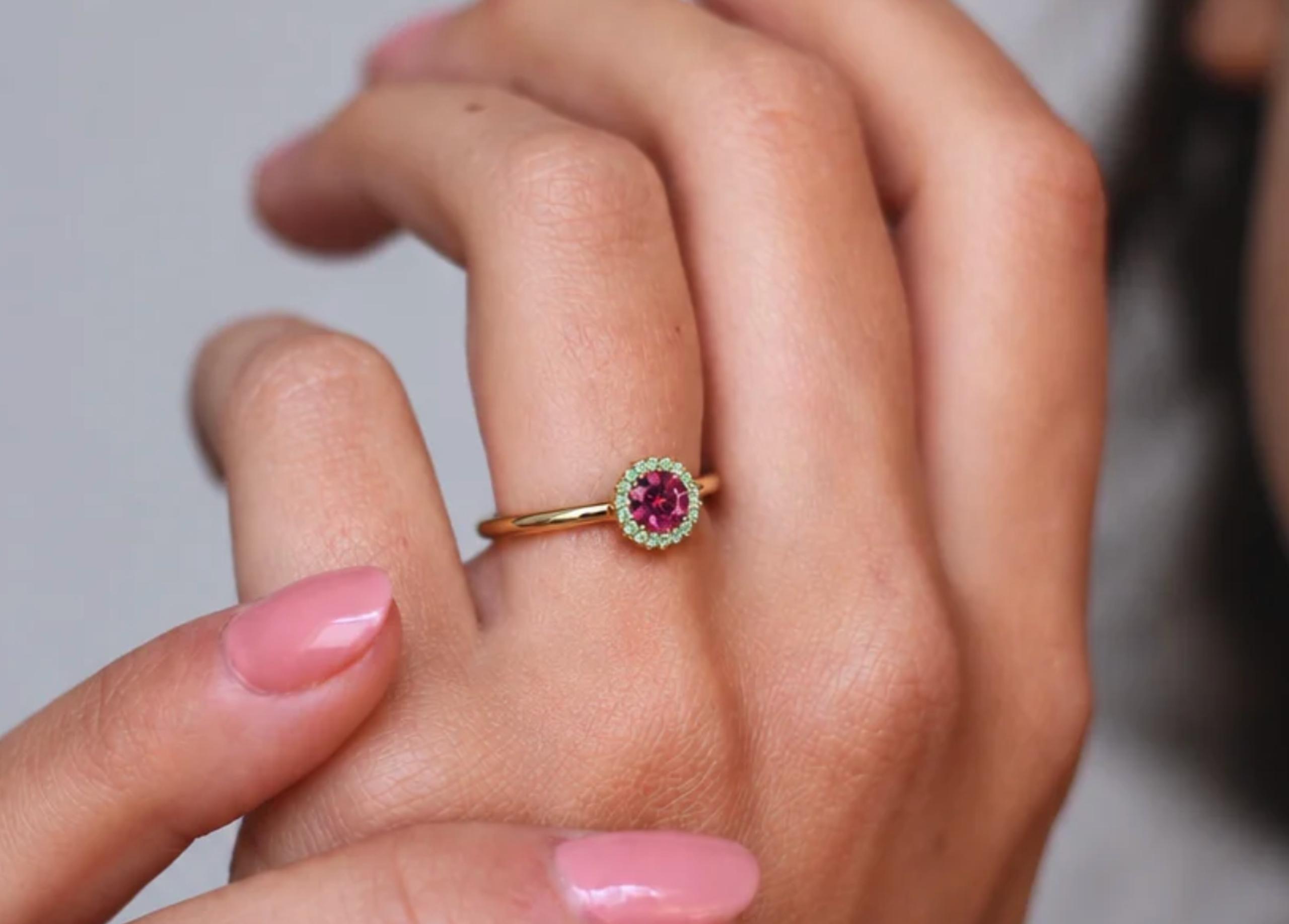
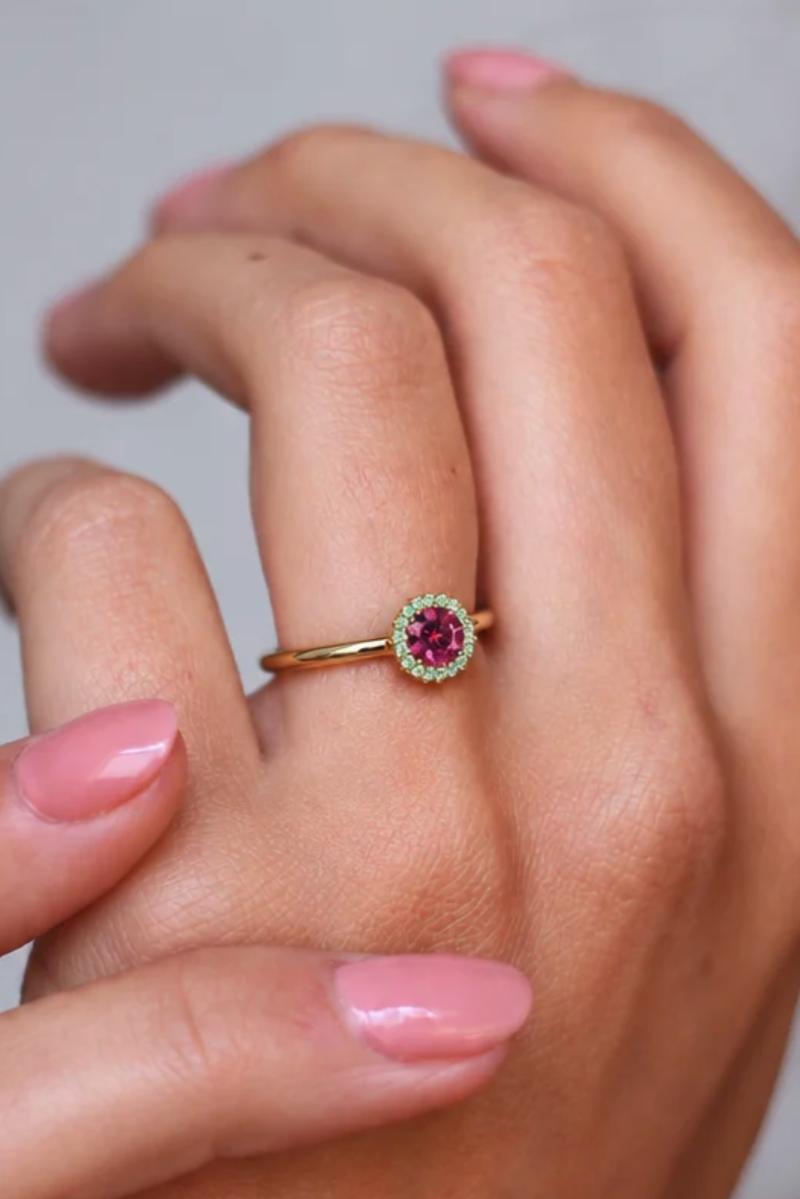
Eight expressive centre stones and carefully edited halos transform Andrew Geoghegan’s signature Cannelé ring into a considered study of colour
Cannelé Couleur brings eight gemstones to Andrew Geoghegan’s sculptural halo ring, pairing contrast, tonal depth and diamond light with British craftsmanship

Colour in jewellery is often discussed as though it were a finishing touch: a bright addition to a familiar setting or a personal alternative to the traditional diamond. Andrew Geoghegan’s Cannelé Couleur proposes something more deliberate.
Launching publicly on Friday 11 September, the collection brings together eight natural gemstone centres, each accompanied by a carefully edited selection of coloured gemstone or diamond halos. Rather than offering an unlimited menu of combinations, Geoghegan has treated every pairing as a complete composition.
Amethyst, spessartite garnet, two shades of blue sapphire, tsavorite, rubellite, pink sapphire and chocolate-coloured diamond form the collection’s central palette. Some rings create energy by placing opposing colours together. Others use closely related tones to draw the eye deeper into the centre stone. A third group uses diamonds to introduce clean, colourless light.
The result is not simply Cannelé offered in more colours. It is a closer examination of how gemstones communicate with one another, and how dramatically the character of a ring can change when the relationship between its centre and halo is reconsidered.
Cannelé has become one of Andrew Geoghegan’s most recognisable designs, but its story began far from the conventional jewellery studio.
The first sketches were made during an unhurried Christmas in Gensac, south-west France, in 2012. Sitting beside an open fire with a pencil and sketchbook, Geoghegan began exploring the geometry of the halo ring.
The intention was not to make the centre stone appear larger, as halos are often employed to do. Instead, he wanted to create finesse around the stone while giving equal consideration to the structure beneath it.
That hidden architecture became the design’s defining feature. Sculptural flutings descend from the setting and sweep inward until they meet at one precise point of convergence. Much of this workmanship disappears when the ring is on the hand, revealing itself only when the piece is viewed from the side or removed.
It reflects the influence of Victorian and Art Deco jewellery, in which the reverse of a jewel could receive almost as much attention as its face. Cannelé combines that traditional consideration with a softer, more contemporary silhouette.
More than a decade later, Cannelé Couleur preserves the original architecture while allowing gemstones to shift its mood.
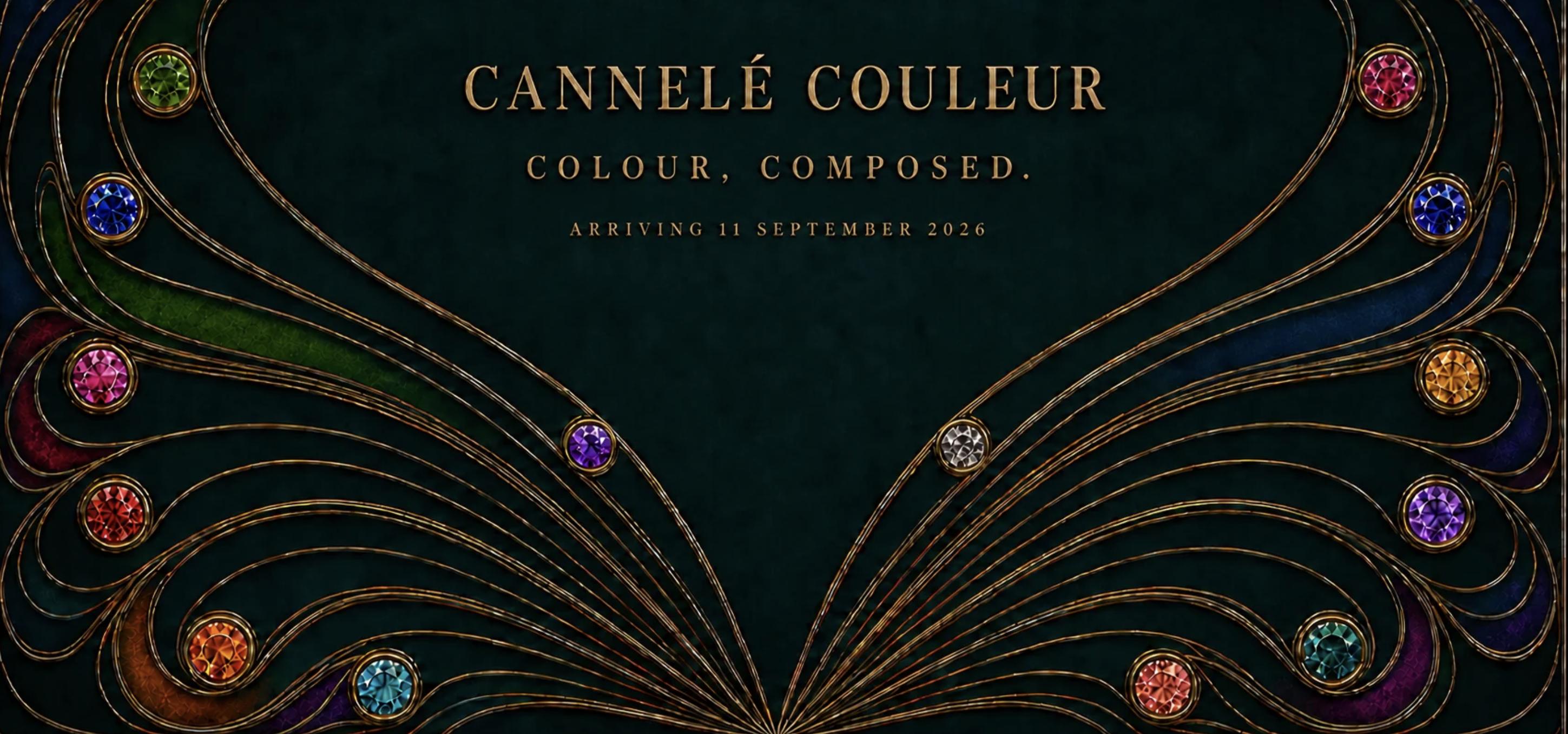
Cannelé Couleur by Andrew Geoghegan celebrates eight natural gemstone centres through a carefully composed palette of contrasting, tonal and diamond halos
Each version begins with the personality of its centre stone.
Violette centres on amethyst, accompanied by a choice of tsavorite, amethyst or diamond halo. Soleil uses the warmth of spessartite garnet with either yellow sapphire or diamonds.
Two shades of blue sapphire offer markedly different possibilities. Minuit places a rich blue sapphire beside tsavorite, matching blue sapphires or diamonds. Rivage begins with a lighter, medium-blue sapphire and can be surrounded by yellow diamonds, blue sapphires or white diamonds.
Nymphe combines a tsavorite centre with pink sapphire, tsavorite or diamond, while Grenadine places rubellite beside tsavorite, pink sapphire or diamond.
Rosée begins with pink sapphire, offering either tsavorite, pink sapphire or diamond around it. Chocolat completes the collection with a chocolate-coloured diamond centre encircled by yellow diamonds, pale cognac diamonds or white diamonds.
The names help communicate the emotional temperature of each composition. Some are luminous and fresh; others feel deeper, warmer or more nocturnal. They encourage an instinctive response before the technical specifications enter the conversation.
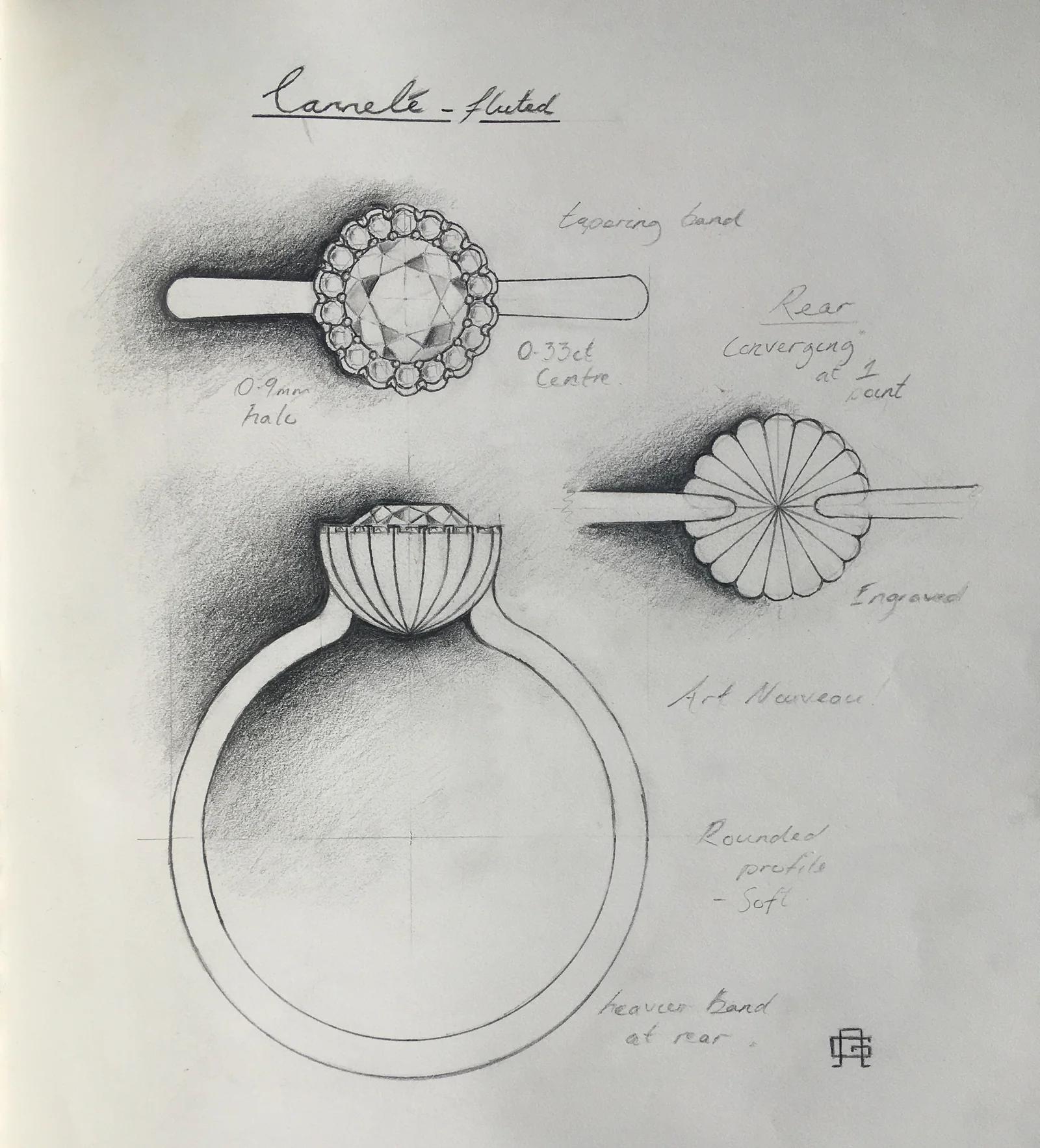
Andrew Geoghegan’s original Cannelé design sketches, drawn in France, reveal the halo setting, rounded band and signature fluting converging beneath the centre stone
Cannelé Couleur is built around three distinct approaches to combining stones.
A contrasting halo creates the most immediate energy. A medium-blue sapphire surrounded by yellow diamonds, for example, allows each colour to intensify the other. The coolness of blue appears richer beside the warmth of yellow, while the yellow becomes brighter against the saturated centre.
A closely toned halo produces a quieter effect. Pairing a chocolate-coloured diamond with pale cognac diamonds creates a gradual movement through related shades rather than a sharp visual boundary. The halo becomes an echo of the centre, extending its colour without competing with it.
The diamond option offers clarity. A diamond halo does not remove colour from the composition; it frames and sharpens it. Against clean white brilliance, an amethyst appears more decisively violet and a rubellite more intensely red.
These are subtle distinctions, but they influence how a ring feels on the hand. Contrast can appear bold and contemporary. Tonal combinations bring richness and depth. Diamonds provide a more traditional brightness while retaining the individuality of a coloured centre.
By limiting the available combinations, Geoghegan protects the visual balance of the design. Personal choice remains important, but it happens within a structure shaped by the designer’s understanding of proportion, saturation and light.
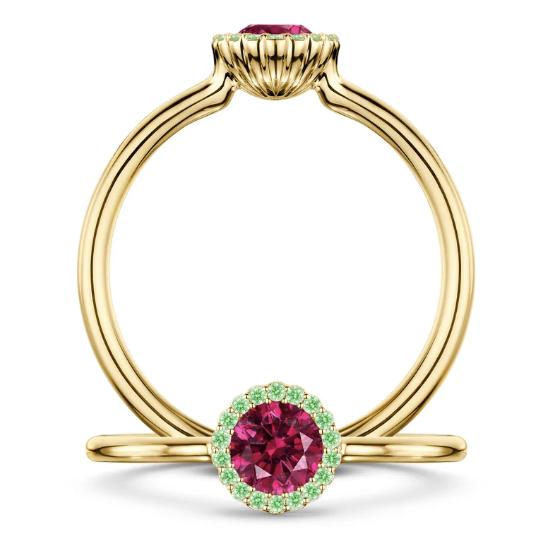
The Cannelé Couleur Grenadine ring by Andrew Geoghegan combines a vibrant rubellite centre with a fresh tsavorite halo in 18-carat yellow gold
The coloured gemstone engagement ring has moved decisively beyond the role of an unconventional alternative.
Colour can carry personal meaning, evoke a place or memory, complement the wearer’s complexion or simply create an immediate emotional response. A client may choose a stone for its symbolism, but an equally compelling reason is that they love living with its colour.
Cannelé Couleur recognises that an engagement ring does not have to follow a prescribed visual code. The collection can mark an engagement, anniversary or personal milestone, but it does not depend on an occasion to justify itself.
That freedom is especially evident in the more adventurous combinations. Tsavorite and pink sapphire, rubellite and green tsavorite, or blue sapphire and yellow diamond feel celebratory without becoming frivolous.
They also demonstrate why designing with colour requires restraint. Adding more gemstones does not automatically create greater richness. The success of each ring depends on the exact balance of hue, stone size, metal and setting.
Here, colour has been edited rather than accumulated.
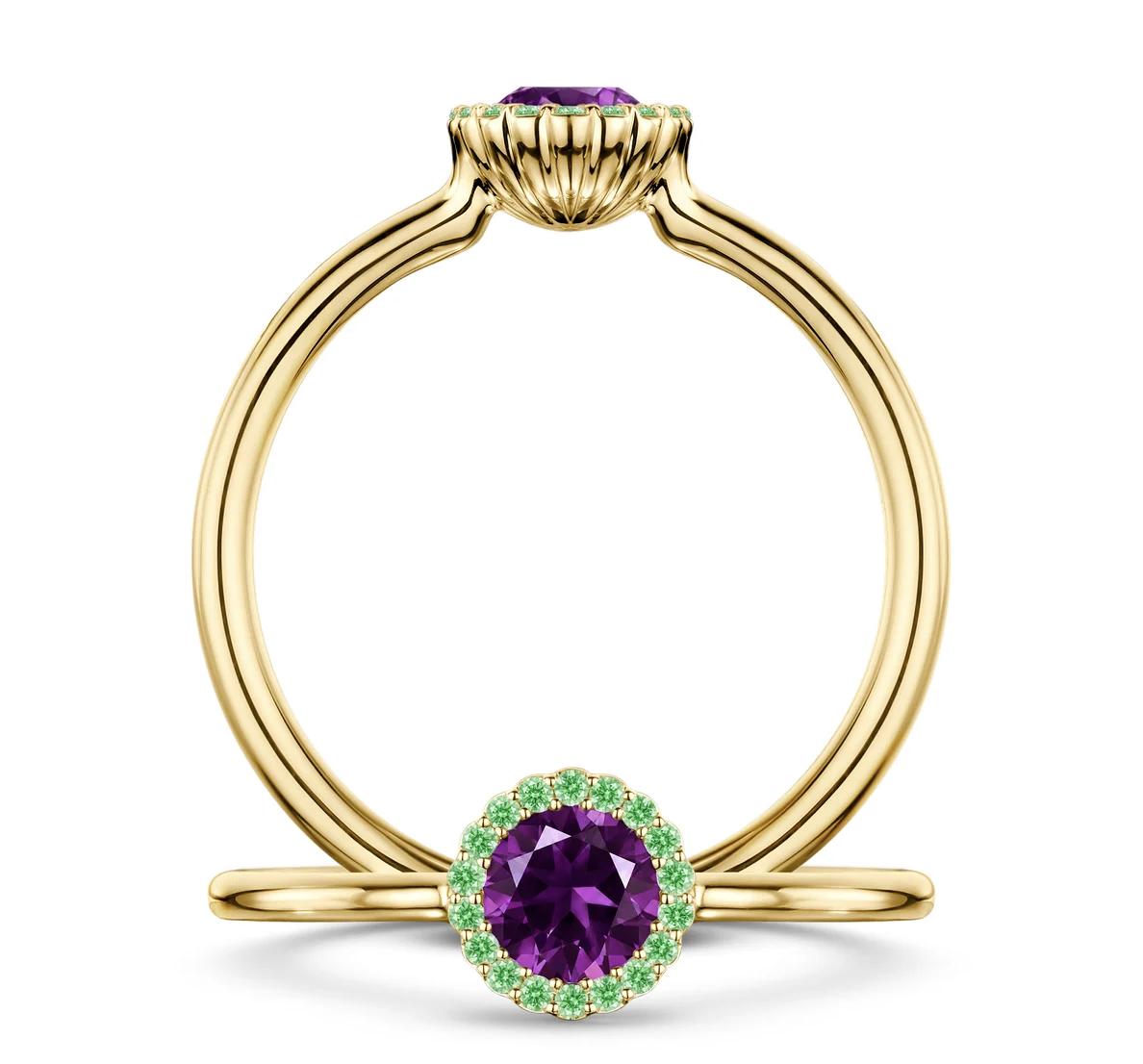
The Cannelé Couleur Violette ring by Andrew Geoghegan pairs a rich amethyst centre with a vivid tsavorite halo in 18-carat yellow gold
The centre stone and halo will naturally command attention, but Cannelé has never been only about its face.
Turn the ring and the fluted structure appears. The metal moves beneath the halo with the controlled rhythm of architectural moulding before resolving into its point of convergence.
This attention to the underside gives the ring a sense of completeness. It also introduces an intimate detail known most fully to the owner. Someone looking across a table might see the colour and brilliance; the wearer understands the sculptural work holding it all together.
The name Cannelé—French for fluted—refers directly to this structure. It also carries an association with the small ridged pastry of Bordeaux, connecting the form to the French landscape in which Geoghegan first drew it.
In Cannelé Couleur, those flutings do more than support the setting. Their polished surfaces catch and reflect the tones of the gemstones above, allowing colour to continue into the architecture of the ring.
Gemstones behave differently in a display case than they do in daily life.
On the hand, they encounter changing light, movement, skin tone, clothing and the colours of the surrounding environment. A sapphire that appears almost midnight blue indoors may reveal brighter flashes outside. Tsavorite can move between deep forest green and sharp, vivid brilliance. Rubellite may carry red, raspberry or pink undertones depending on the light.
The Cannelé setting supports that movement. Its soft, rounded band is designed for comfort, while the tapered fluting draws the eye towards the centre without overwhelming it.
Each version is made to order with either a 4.5mm or 5mm centre stone. The rings are offered in platinum or 18-carat gold, allowing the metal to become another element within the composition.
Yellow gold can amplify warmth, rose gold can soften and enrich related tones, while platinum provides a cooler, more neutral framework. Choosing the metal is therefore not simply a question of preference; it affects how the entire palette is perceived.
Each centre stone and halo is cut for the individual ring, with an expected completion time of approximately four to six weeks. Prices range from £2,250 to £5,800, depending on the chosen gemstones, dimensions and precious metal.
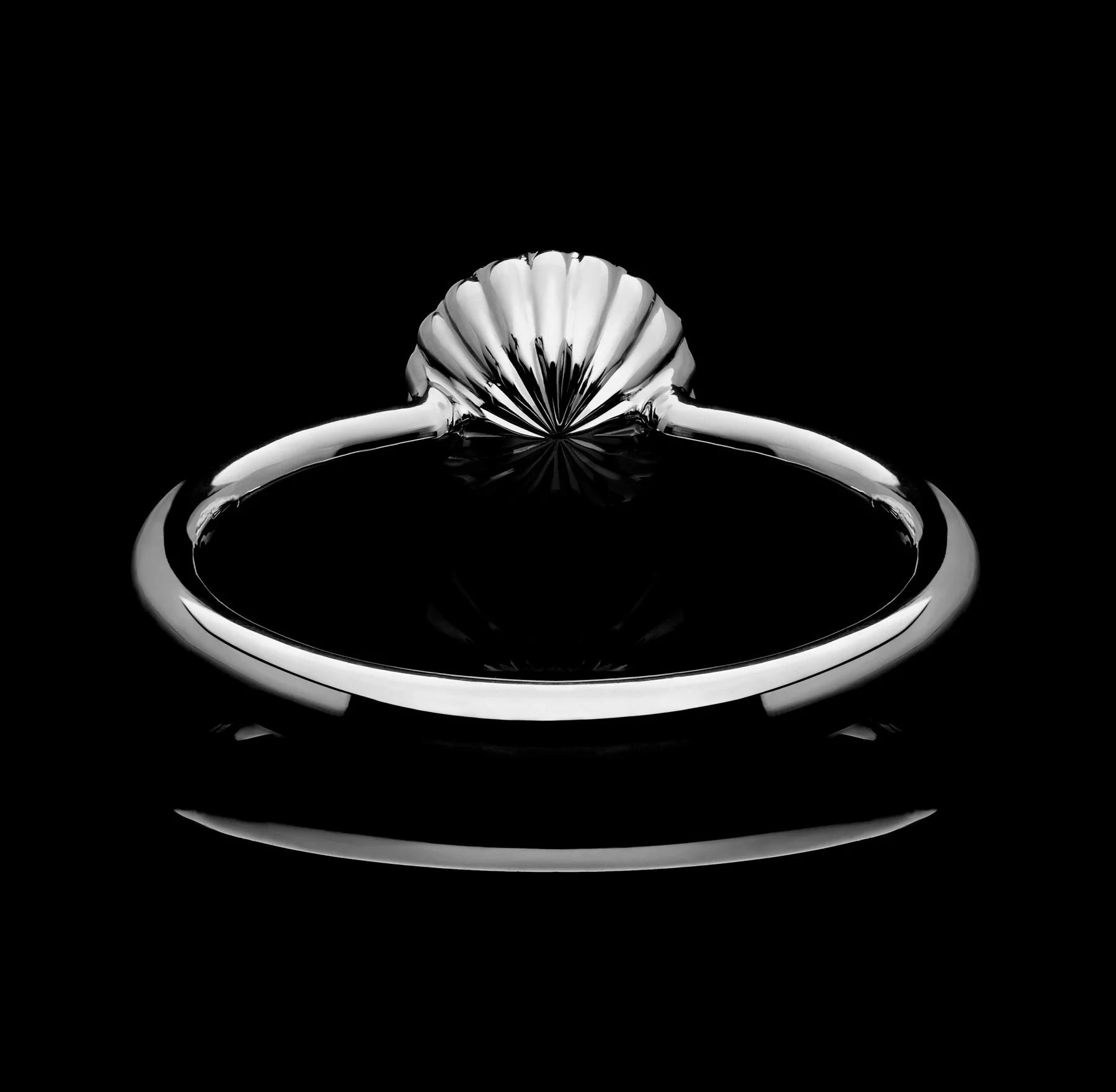
The rear view of Andrew Geoghegan’s platinum Cannelé ring reveals its signature sculptural fluting, converging at a single precise point beneath the setting
To mark the launch, the first eight clients to order a Cannelé Couleur ring will also receive an original A5 hand-painted portrait of their finished piece.
It is a thoughtful extension of the collection’s premise. Every completed ring will have its particular combination of centre stone, halo and metal translated into another medium, creating a permanent visual record of the client’s choices.
The painting also returns the jewel to the world of drawing from which it emerged. Cannelé began as an exploration on paper; the first eight Cannelé Couleur rings will complete their journey by becoming artworks on paper once again.
In an increasingly digital buying environment, the gesture feels especially personal. The portrait is neither packaging nor a conventional certificate. It is a companion to the ring and a reminder that the piece was designed and made specifically for its owner.
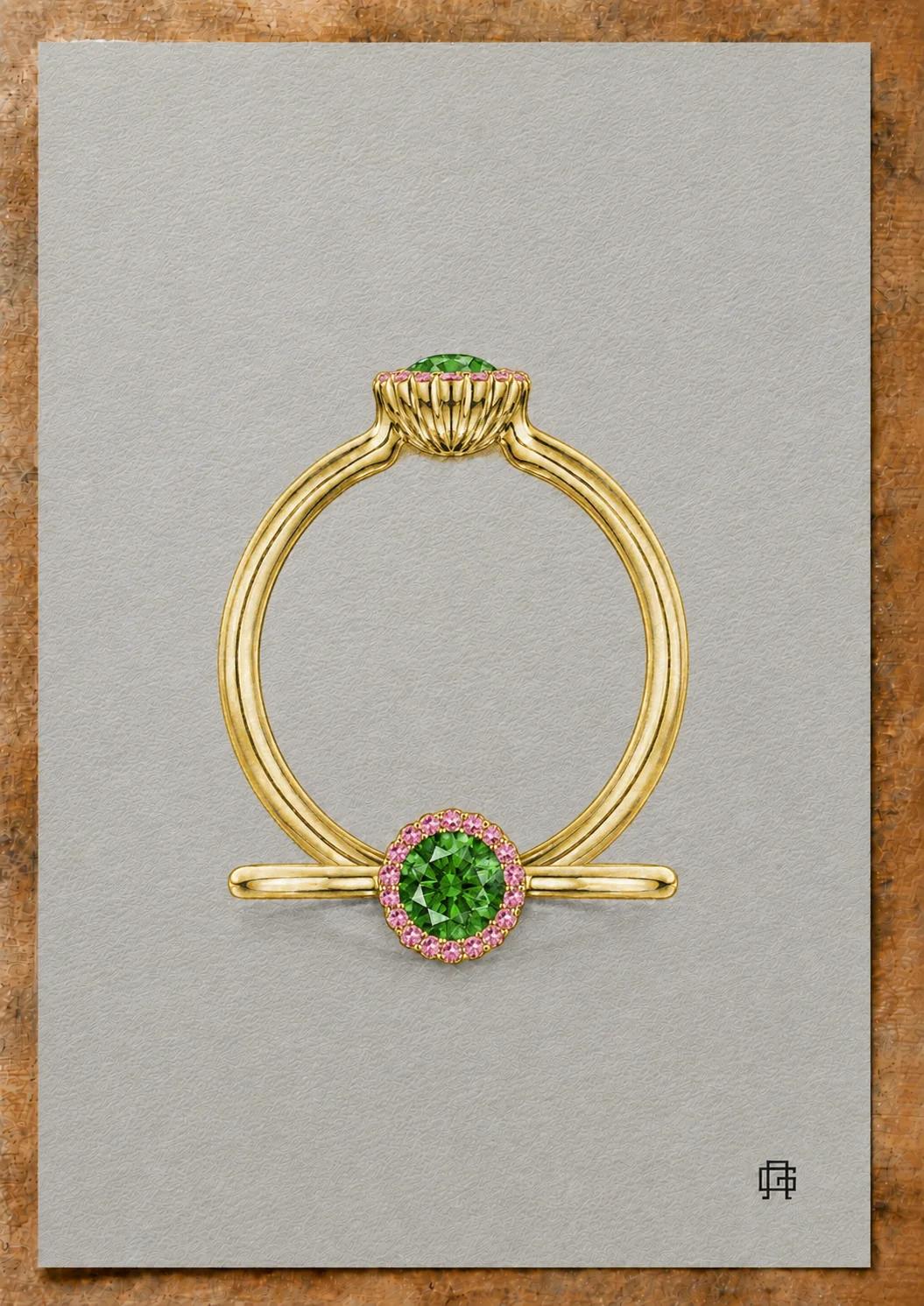
An example of the original hand-painted A5 portrait offered to the first eight Cannelé Couleur clients, capturing the ring’s individual gemstone, halo and metal combination
Geoghegan has been designing jewellery since 1998, building a practice distinguished by technical precision and a willingness to approach familiar jewellery forms from unexpected directions.
His collections often begin with an external point of fascination—architecture, astronomy, the landscape or an archaeological discovery—but their success ultimately depends on how those ideas are resolved at jewellery scale.
Cannelé is an especially clear example. From above, it offers the familiarity and elegance of a halo ring. From the side and beneath, it reveals a more individual piece of engineering.
The collection is handmade in Britain and hallmarked in the United Kingdom, with traditional goldsmithing and stone-setting skills used to execute its finely controlled details.
Cannelé Couleur builds on that established identity without disrupting what made the original convincing. Its innovation comes from changing the conversation around the design rather than replacing the design itself.
The most compelling aspect of Cannelé Couleur is its discipline.
Eight centre stones create an impressive spectrum, yet the collection never feels like colour for colour’s sake. Every halo has been selected according to the relationship it creates: contrast, tonal continuity or the brightness of diamonds.
That distinction elevates the collection beyond a list of customisation options. Geoghegan is still designing rather than handing the design process entirely to the client.
There is also something refreshing about a collection that encourages people to begin with an emotional response. Which colour holds your attention? Which combination feels instinctively yours? Does the eye seek the tension between blue and yellow, the richness of red and green, or the calm of one tone flowing into another?
Fine jewellery is often introduced through carat weight, rarity and certification. Those details matter, but they rarely explain why someone falls in love with a jewel.
Cannelé Couleur begins with that less measurable moment—the pull of colour—and supports it with thoughtful proportion, precise construction and a setting designed to reward closer inspection.
The result is expressive without becoming excessive and personal without losing the unmistakable hand of its designer.
Andrew has been a good friend of mine for many years and remains one of my favourite British jewellery designers. Beyond the strength of his work, I have always admired his curiosity, warmth and determination to find an original answer rather than simply follow an established formula.
Cannelé Couleur captures so much of what makes his jewellery distinctive. It takes a recognisable form, looks beyond the obvious view and introduces character through details that reveal themselves gradually.
Seeing Andrew revisit such an important design through colour feels both natural and exciting. I am delighted to share this new chapter with The Jewels Club and look forward to seeing which of these beautifully considered combinations speaks most strongly to collectors.
Cannelé Couleur launches publicly at 6pm GMT on Friday 11 September 2026, with early access for Friday Edit subscribers from Thursday 10 September.
Preview the collection at Andrew Geoghegan
Follow the designer on Instagram.
HIGH JEWELLERYAPR 22, 2026
Chopard Caroline’s Garden: A Personal Vision In Full Bloom
Chopard’s Caroline’s Garden transforms nature into high jewellery through bold gemstones, innovative settings and a deeply personal creative vision
READ MORE
FINE JEWELLERYAPR 23, 2026
Chopard Ice Cube ‘Be Cube’: A Shift in How the Cube Is Seen
Chopard introduces “Be Cube”, a new chapter within its Ice Cube collection, refining the motif into a more sculptural and considered form
READ MORE
HIGH JEWELLERYAPR 25, 2026
Tiffany & Co. Blue Book 2026: Hidden Garden
Tiffany’s Blue Book 2026 collection, Hidden Garden, explores nature through movement and construction, with a more controlled approach to high jewellery
READ MORE



0 Comments
You must be logged in to comment. Click here to login.