






Don't miss a gem

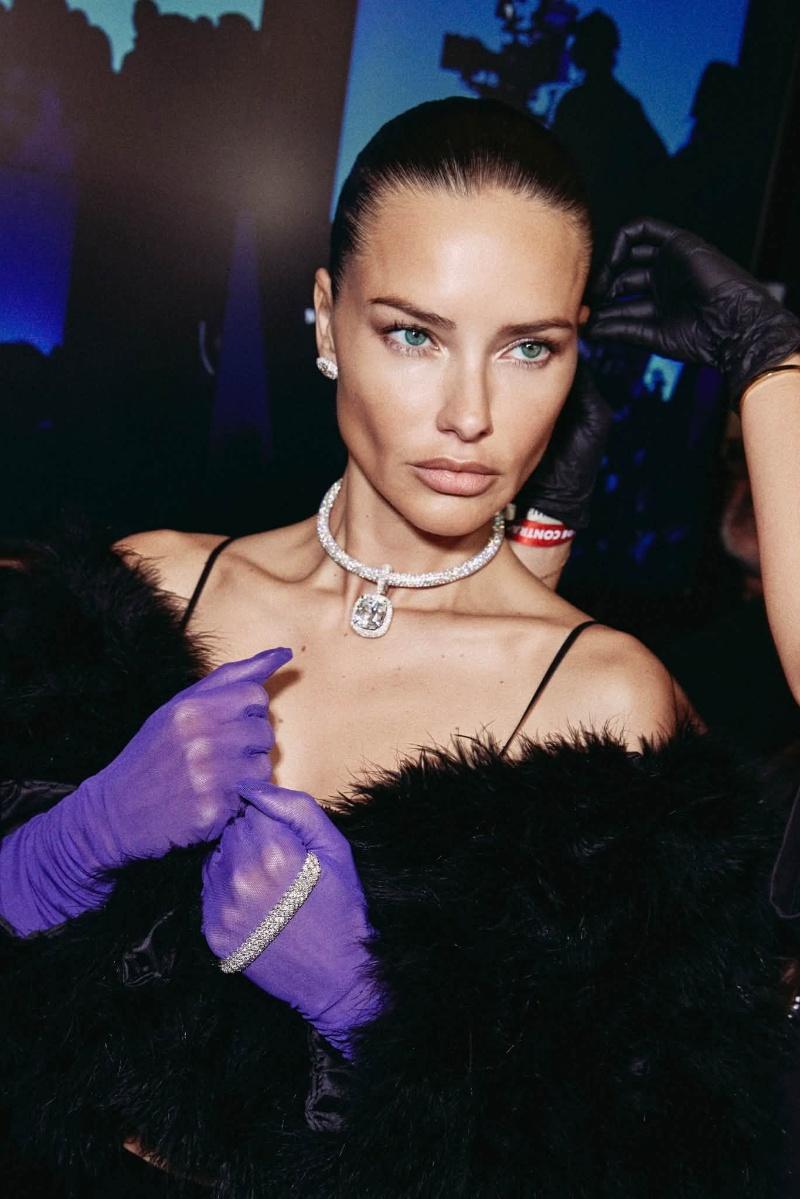
Botswana’s landscapes inspire Messika’s bold new chapter in colour
Messika translates Botswana’s waterways, deserts and salt pans into fluid high jewellery, culminating in the 20.46-carat Okavango Blue diamond
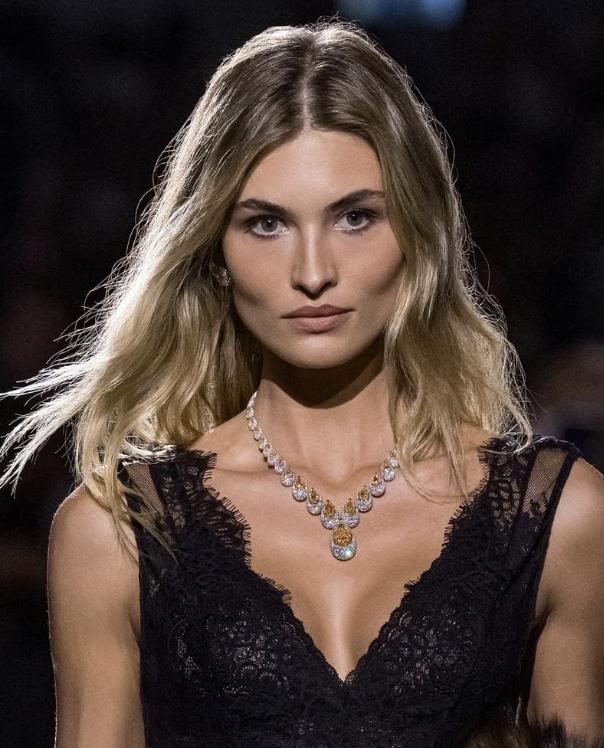
Irina Shayk walked beneath the great glass roof of the Grand Palais wearing a blue diamond that had taken eight years to reach this moment.
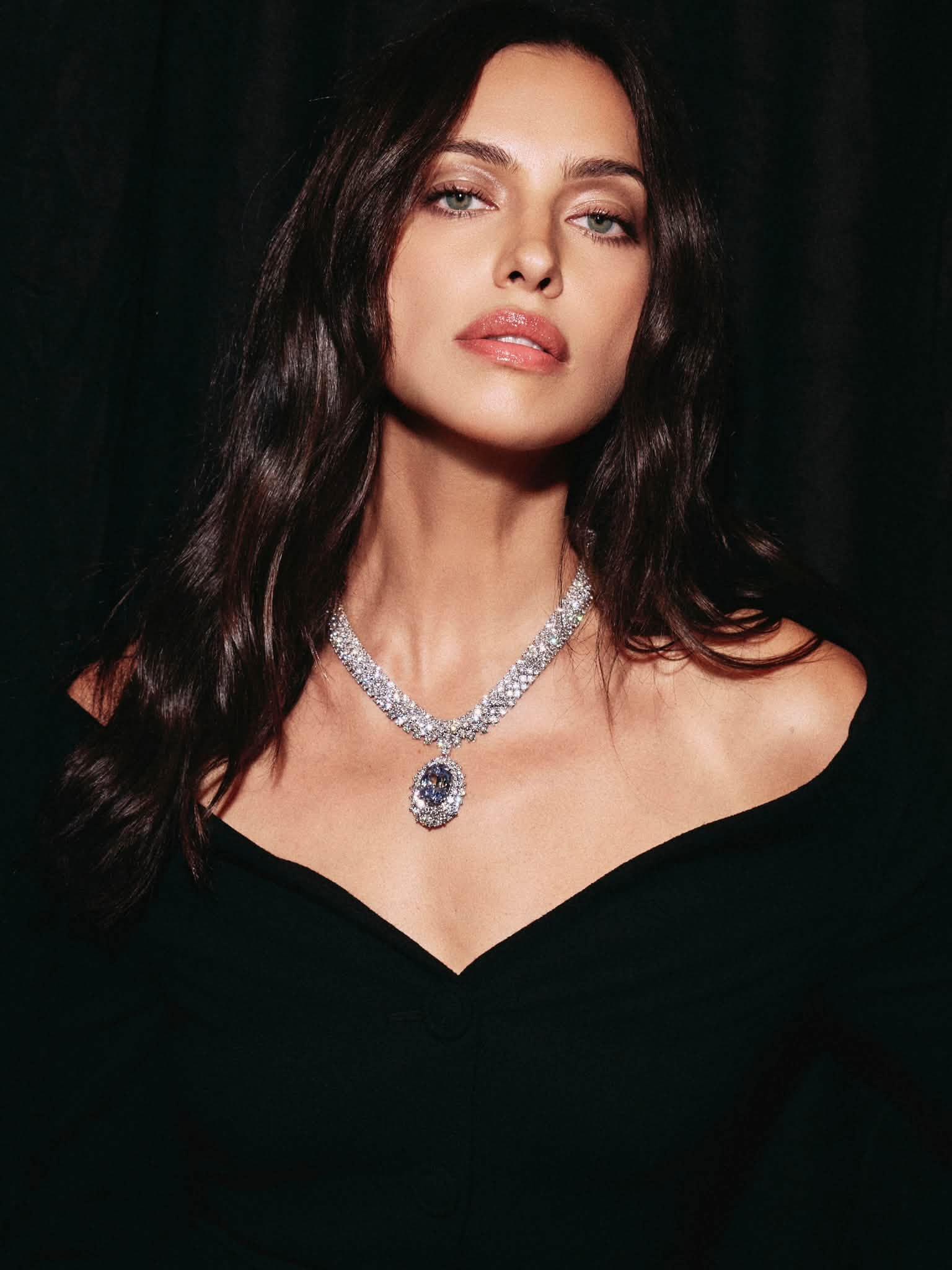
The stone began as a 41.11-carat rough discovered at Botswana’s Orapa mine in 2018. Cut to 20.46 carats, graded Fancy Deep Blue with VVS1 clarity, it became the Okavango Blue: the largest blue diamond found in the country and the centrepiece of Messika’s new Terres de Contrastes collection.
Its unveiling brought the maison’s Paris Fashion Week presentation to a fitting close. The collection had spent the evening exploring Botswana through water, desert, wildlife and mineral colour. The final jewel returned that story to the country’s most precious geological material.
Yet the significance of Terres de Contrastes lies beyond a single exceptional stone. The collection reveals a house learning to use colour with growing confidence while retaining the movement, flexibility and relationship with the body that have always distinguished Valérie Messika’s work.
Terres de Contrastes continues the creative journey Messika began with Terres d’Instinct in 2025.
That earlier collection marked the maison’s twentieth anniversary and represented an important departure. A house largely defined by diamonds introduced sapphires, emeralds, spinels, garnets, onyx and other coloured materials into its high-jewellery vocabulary, using the landscapes and wildlife of Namibia as its starting point.
Botswana provides the second chapter, but the approach has changed. Colour no longer feels like an experiment within a diamond house. It has become part of the architecture.
Valérie Messika divided the new collection into three distinct environments: the deep blues and fertile greens of the Okavango Delta, the scorched ochres and reds of the Kalahari Desert, and the mineral whites of the Makgadikgadi salt pans beneath skies turning pink and violet at dusk.
These landscapes are not treated as literal scenes. Their colours, textures and natural rhythms become decisions about stones, volume and movement.
The Okavango Delta is defined by contradiction. A river travels across Southern Africa without reaching the sea, dispersing instead into the sands of the Kalahari and creating a vast inland wetland.
Messika responds to this movement in Delta Sacré, a necklace composed of more than 600 diamonds in marquise, brilliant, pear and oval cuts. Their changing proportions suggest channels splitting, converging and moving around islands.
A 12.81-carat pear-shaped emerald hangs at the centre, its concentrated green interrupting the diamond surface like a fertile island within the water. The composition is intricate, but its success depends on fluidity. The necklace follows the body rather than sitting upon it as a rigid landscape.
Féroce finds a darker character in the same environment. Inspired by the crocodile, the necklace uses pointed triangular volumes to evoke serrated teeth without becoming a conventional animal jewel.
Mirror-polished gold and pavé diamonds alternate around a 16.98-carat Australian black opal. Blue, green and electric flashes move across the stone, giving the centre of the necklace a depth that appears aquatic and almost nocturnal. The crocodile is present through tension and geometry rather than a sculpted head or recognisable silhouette.
It is one of the collection’s most convincing ideas. Messika takes the physical quality of an animal — its armour, danger and ancient stillness — and translates it into a contemporary structure.
The Makgadikgadi salt pans offer a very different palette. Their dry white expanses fracture into natural geometric patterns, while the setting sun brings temporary washes of pink and violet.
Python Rubellite captures that meeting of mineral whiteness and evening colour.
Five rows of marquise-cut diamonds create the suggestion of overlapping scales. They have been engineered to move together, allowing the necklace to coil closely around the collarbone rather than holding a fixed ceremonial shape.
At its centre is a 13.54-carat oval rubellite. Its saturated pink-red colour breaks through the diamonds like the last intensity of sunset against the salt.
The serpent is a familiar high-jewellery subject, but Messika avoids relying on its head or eyes. The reference comes through anatomy: repetition, articulation and the sense of a body capable of changing direction.
That emphasis on movement is important. Terres de Contrastes contains exceptional stones, yet it remains rooted in Messika’s belief that high jewellery should respond to the wearer. Flexibility is not hidden engineering added after the design; it is part of the visual idea.
For the presentation on 1 October 2026, Messika transformed the Galerie Courbe of the Grand Palais into a sequence of chromatic territories.
Sweeping arches recalled the crested dunes of the Kalahari, while the historic curve of the gallery offered a natural sense of movement. The setting did not attempt to reproduce Botswana. It created an abstracted landscape of colour and scale through which the jewellery could travel.
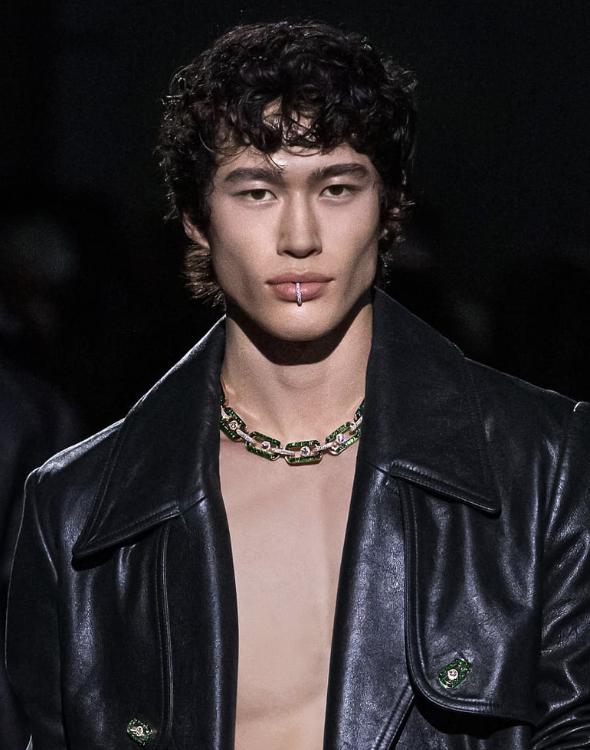
Carine Roitfeld styled the show around a sensual, pared-back vision of the contemporary Parisienne. Looks from Atelier Biser, Fifi Chachnil, Seconde Vue, Atsuko Kudo, Vettese and Jitrois left shoulders, necklines and the upper body largely unobstructed, giving the necklaces space to move.
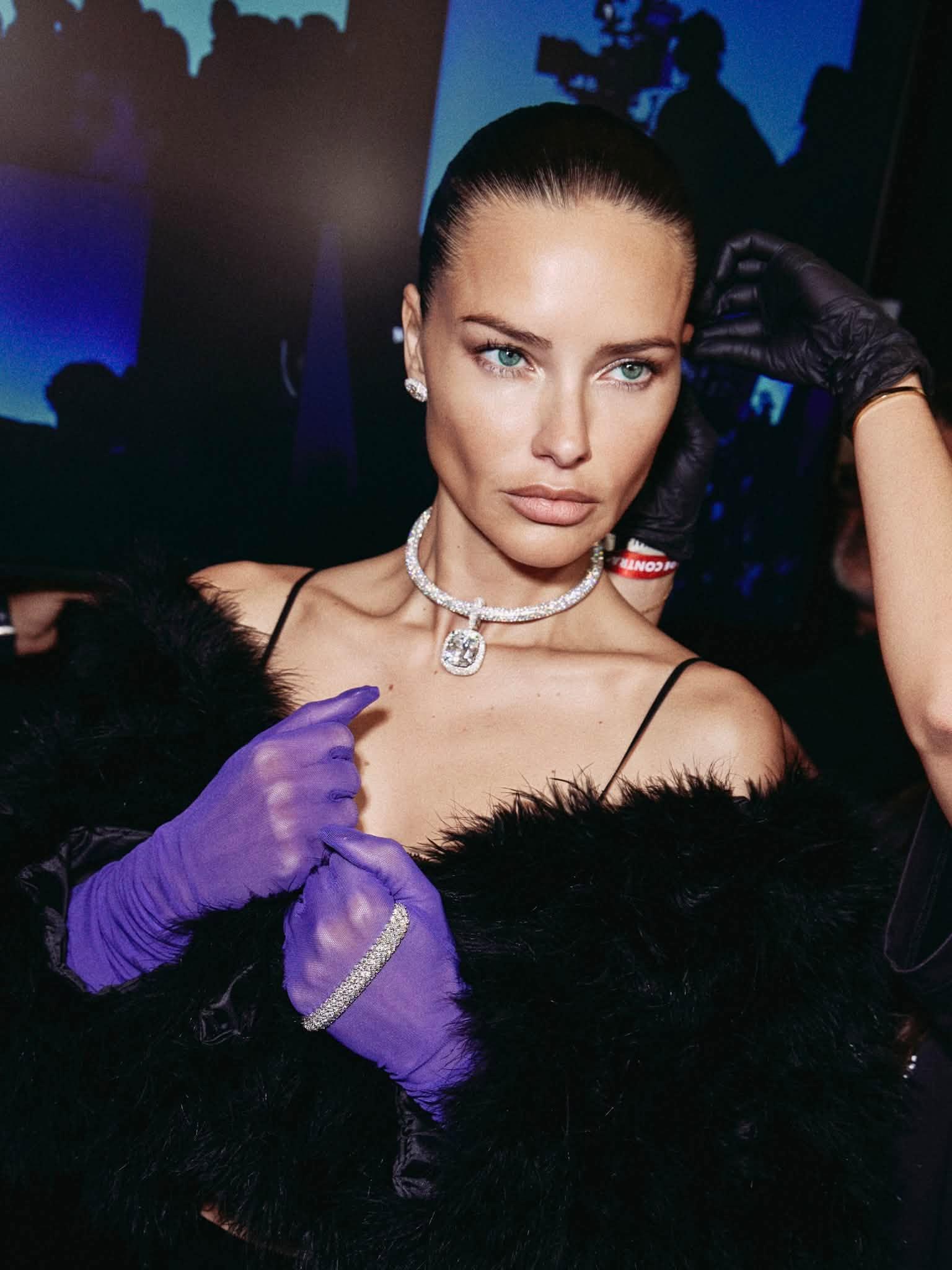
Adriana Lima opened the presentation wearing Divine Enigma. Grace Elizabeth appeared in Girafe, while Irina Shayk closed the show with the Okavango Blue. Hair by Sam McKnight and make-up by Tom Pecheux maintained the focus on the jewellery rather than competing with it.
The format reflects Messika’s longstanding desire to remove high jewellery from static presentation. A runway reveals how a necklace settles, how articulated gold behaves during a turn and how stones change under shifting light. For a maison so invested in motion, the body remains the most persuasive display case.

The final appearance changed the atmosphere of the show because the Okavango Blue carries a significance that extends beyond rarity.
Messika describes the jewel as the result of a partnership with the Government of Botswana. The country’s Minister of Minerals and Energy, Bogolo Joy Kenewendo, attended its first presentation as a finished high-jewellery creation.
The diamond has a distinct grey undertone beneath its saturated blue, giving it a character that is deep rather than overtly electric. Valérie Messika resisted the temptation to surround it with a complicated narrative design. The necklace is disciplined, fluid and centred entirely on the stone.
A domed medallion holds the diamond within a graduated composition of white diamonds. Messika’s atelier reportedly worked through 30 versions to refine the proportions and the path of light around the blue centre.
The medallion is suspended by a single oval diamond from a rivière constructed with concealed, interlocking links. Gold behaves almost like woven fabric, allowing the necklace to curve naturally around the collarbone.
This technical softness prevents an extraordinary gemstone from becoming a museum object. The stone remains monumental, but the jewel around it feels contemporary and wearable.
Its provenance must remain equally visible. Botswana cannot function merely as a palette of blue water, red earth and white salt. The Okavango Blue comes from the country’s geology, while its presentation has been framed through a direct relationship with its government. That connection gives the jewel a specificity that a generic story of “African inspiration” could not provide.
The strength of the next chapter will depend on how carefully Messika continues to acknowledge that origin.
Terres de Contrastes represents a notable evolution for Messika because colour is no longer used simply to punctuate a diamond composition.
In Féroce, the opal determines the mood and the surrounding gold develops its sense of danger. In Delta Sacré, the emerald gives the diamond waterways their destination. In Python Rubellite, the central stone changes the emotional temperature of the entire necklace.
Diamonds remain essential, but their role has shifted. They carry water, suggest salt, describe scales and direct the eye towards colour. Brilliance becomes a material for building landscape rather than the collection’s only subject.
This is a more expansive language for the maison. It allows Messika to preserve the clarity and physical freedom of its established work while moving into a richer world of atmosphere, symbolism and gemstone character.
The most memorable moment of the Grand Palais presentation was inevitably the Okavango Blue, but Terres de Contrastes should not be reduced to its headline diamond.
The collection’s real achievement is the way colour and movement have begun to work together. Messika does not place important stones into stiff, reverential settings. It constructs jewels that flex, coil, fall and change as the wearer moves.
That freedom gives the collection its modernity.
The Botswana narrative is strongest where landscape becomes structure: branching diamond channels in Delta Sacré, the sharpened geometry of Féroce and the articulated scales of Python Rubellite. These designs move beyond illustration and find jewellery solutions for natural ideas.
The Okavango Blue raises a larger question about stewardship. Its rarity is undeniable, but its meaning also depends on origin. Messika has given the diamond an elegant and technically accomplished setting. The responsibility now is to ensure that Botswana remains central to the story as the jewel travels through the international world of high jewellery.
Handled with that care, Terres de Contrastes becomes more than a collection inspired by place. It marks the moment Messika’s diamond language opened fully to colour, landscape and provenance.
Explore Terres de Contrastes, discover the story of the Okavango Blue and watch Messika’s 2026 Grand Palais presentation.
HIGH JEWELLERYAPR 22, 2026
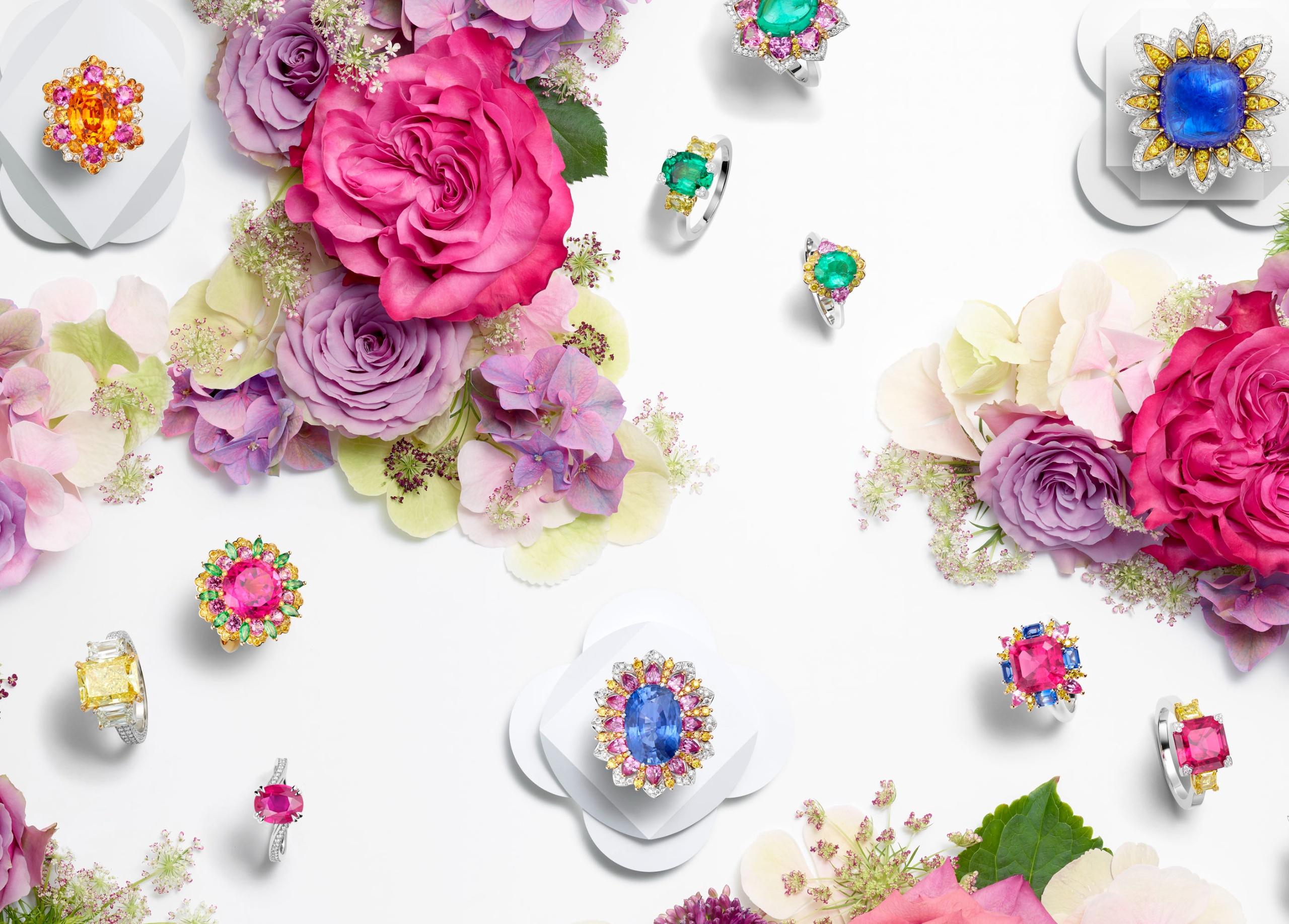
Chopard Caroline’s Garden: A Personal Vision In Full Bloom
Chopard’s Caroline’s Garden transforms nature into high jewellery through bold gemstones, innovative settings and a deeply personal creative vision
READ MORE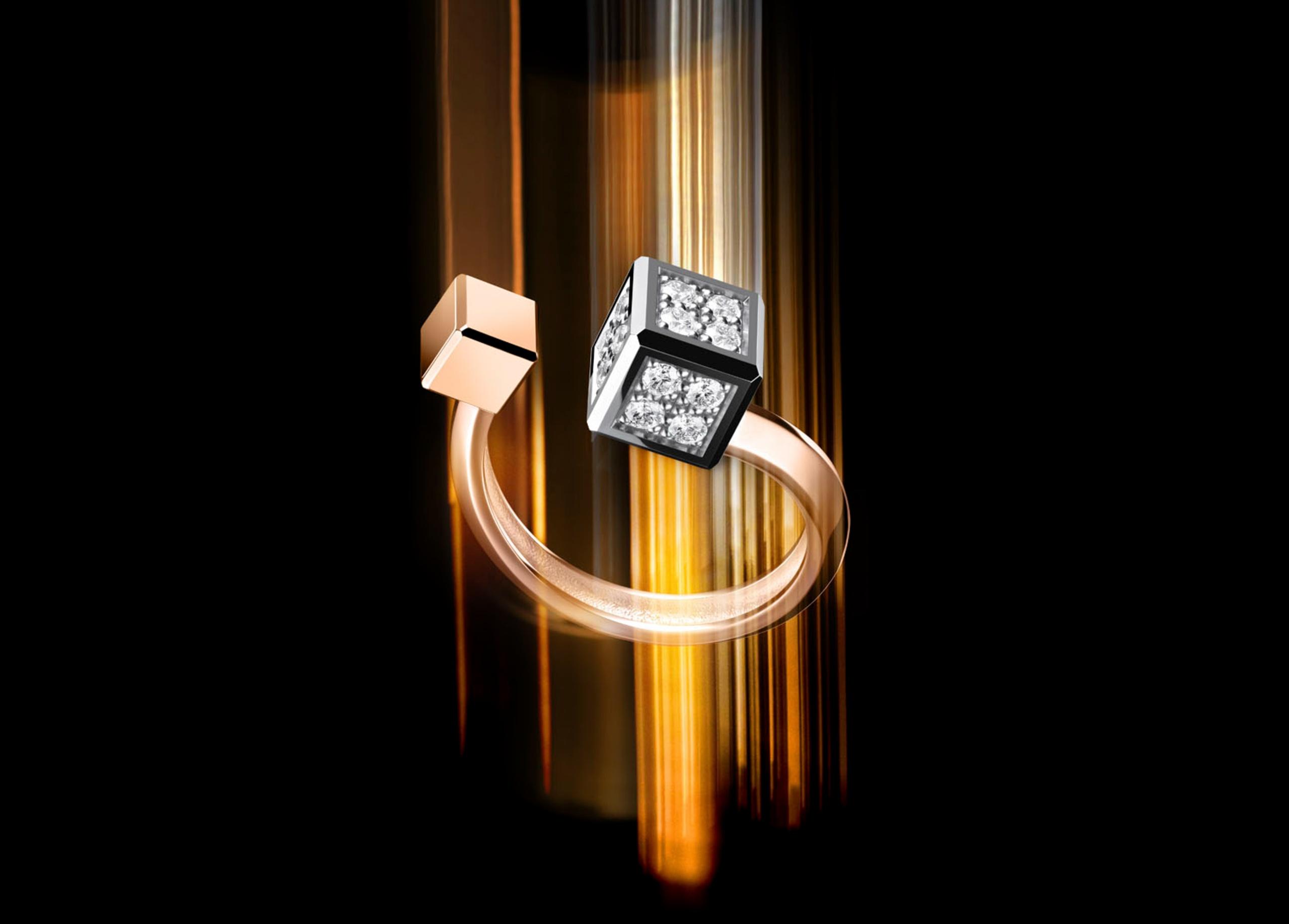
FINE JEWELLERYAPR 23, 2026
Chopard Ice Cube ‘Be Cube’: A Shift in How the Cube Is Seen
Chopard introduces “Be Cube”, a new chapter within its Ice Cube collection, refining the motif into a more sculptural and considered form
READ MORE
HIGH JEWELLERYAPR 25, 2026
Tiffany & Co. Blue Book 2026: Hidden Garden
Tiffany’s Blue Book 2026 collection, Hidden Garden, explores nature through movement and construction, with a more controlled approach to high jewellery
READ MORE



0 Comments
You must be logged in to comment. Click here to login.