






Don't miss a gem
Fabergé is drawing on its extraordinary past to build something new, from the №1 Egg Pendant to a 51st egg and a new generation of collectors
Under new ownership, Fabergé is rethinking what one of jewellery’s most famous names can become, using its archives not simply to revisit its past but to shape what comes next
There are jewellery houses that spend generations trying to create an icon. Fabergé begins with the opposite challenge. Its name is already attached to one of the most recognisable objects in the history of decorative arts, with the Fabergé egg carrying associations of Imperial Russia, extraordinary craftsmanship, enamel, gemstones, hidden mechanisms and some of the most celebrated objets d’art ever created.
That level of recognition is an extraordinary advantage, but it can also make moving forward more difficult. When a house has a history as powerful as Fabergé’s, every new creation inevitably finds itself in conversation with the past. The question facing Fabergé today is therefore not whether people remember the name, but whether the house can give a new generation a reason to become interested in what it is making now.
It is a question that has become particularly relevant following a change of ownership and a wider repositioning of the business.
Founded in 1842, Fabergé became inseparable from the work of Peter Carl Fabergé and the Imperial Easter Eggs created for the Russian Imperial family. The first, commissioned in 1885 by Emperor Alexander III for Empress Maria Feodorovna, established an idea that would become central to the house.
Its white enamel exterior appeared relatively restrained, but inside was a gold yolk containing a multicoloured gold hen and further surprises. The importance of the object was not simply the precious materials involved. It was the combination of craftsmanship, imagination and discovery.
That distinction matters when considering what Fabergé can become today.
In August 2025, investor and technology entrepreneur Sergei Mosunov acquired Fabergé after Gemfields agreed to sell Fabergé Limited to SMG Capital for a total consideration of $50 million. The transaction returned the house to independent ownership and began another chapter in a history that has already undergone considerable change.
The strategy emerging since the acquisition appears to be less about simply trading on the Fabergé name and more about rebuilding a distinctive jewellery house around it. That includes greater control over product, a growing direct retail presence, a refreshed identity and, perhaps most importantly, a renewed examination of the original Fabergé archives.
Historical material acquired following the change in ownership included a catalogue documenting work from the original house. This has helped inform a new creative framework called Mysteries & Wonders, drawing attention back to something that can sometimes be lost beneath the value and mythology surrounding historic Fabergé: Peter Carl Fabergé was an extraordinarily inventive designer.
His objects opened, moved, concealed things and rewarded curiosity. Precious materials were certainly important, but they were used in service of ideas. That provides modern Fabergé with something much more valuable than an instantly recognisable egg shape. It provides a creative principle that can potentially be interpreted rather than simply reproduced.
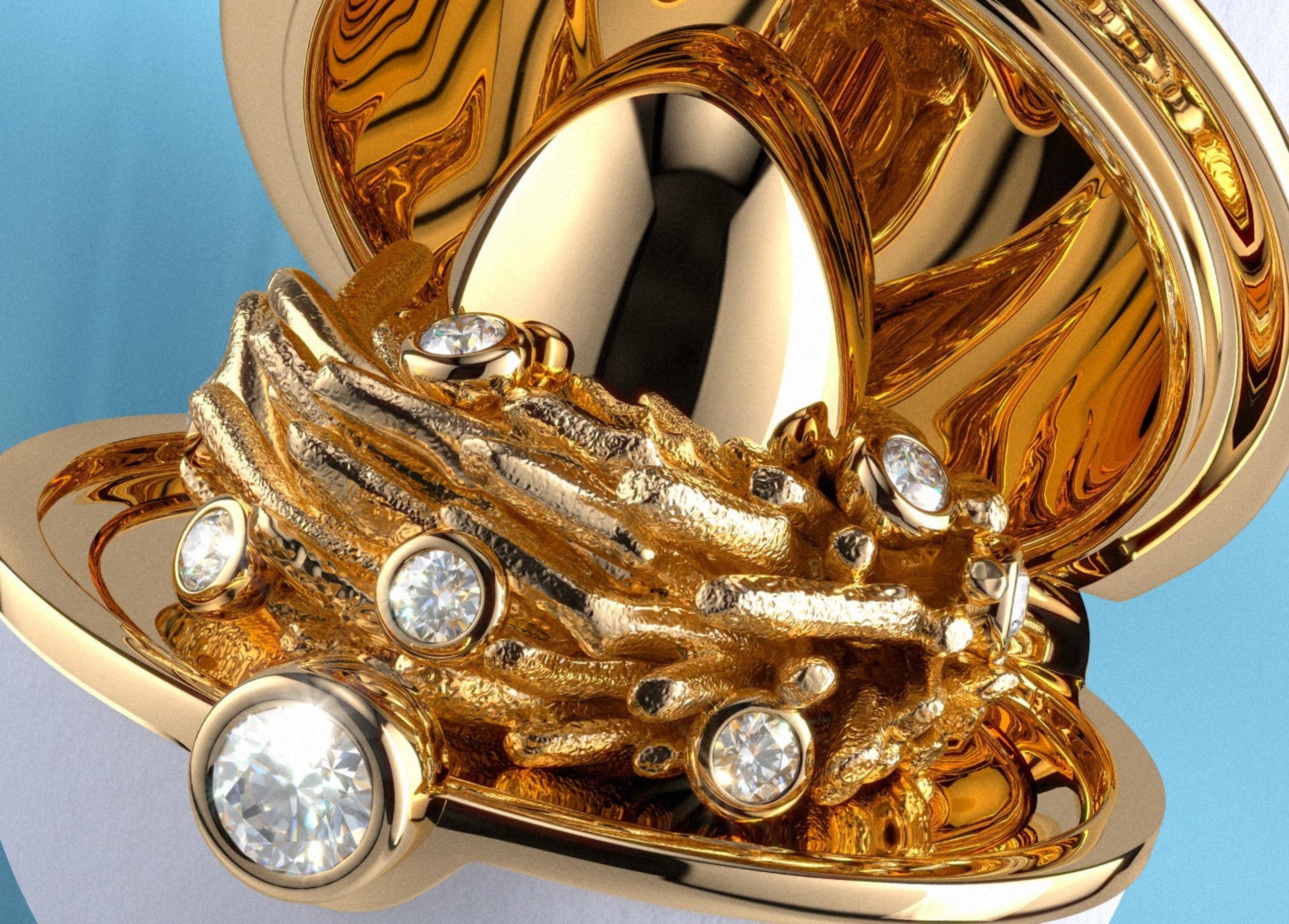
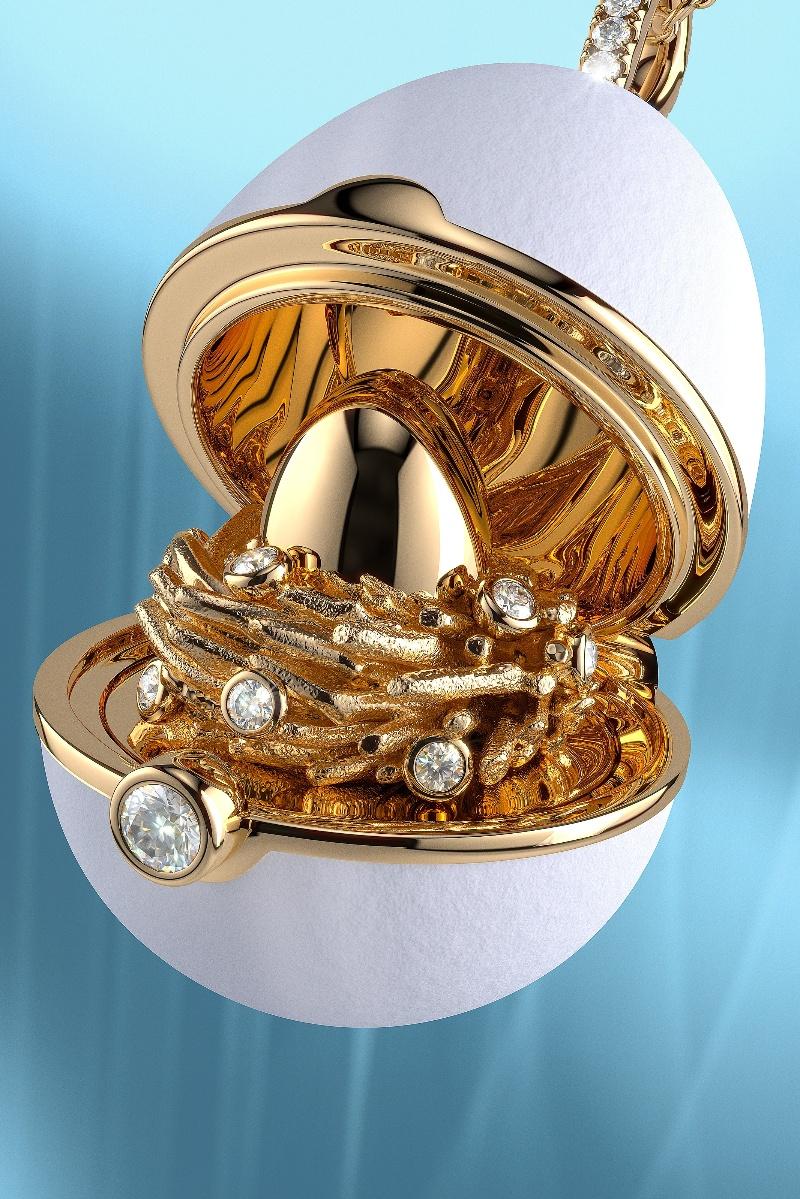
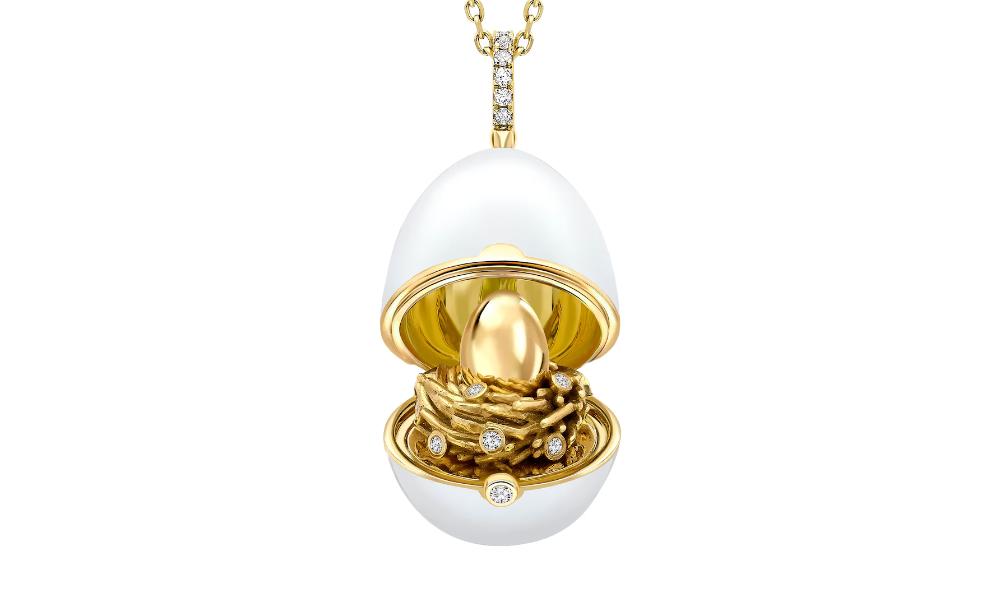
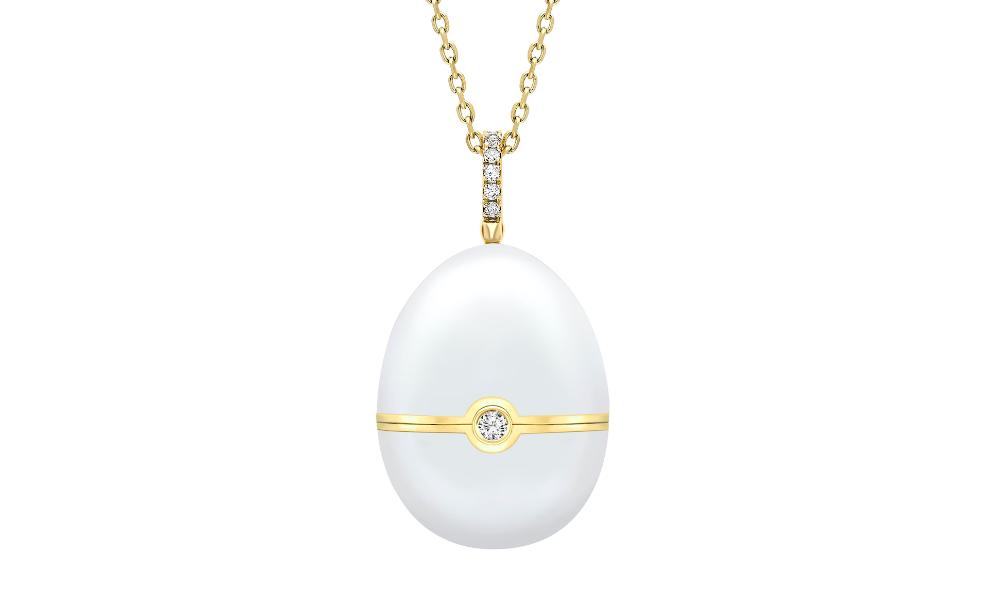
Perhaps the clearest expression of that approach so far is the Fabergé №1 Egg Pendant, a contemporary jewel based on the first Imperial Egg of 1885.
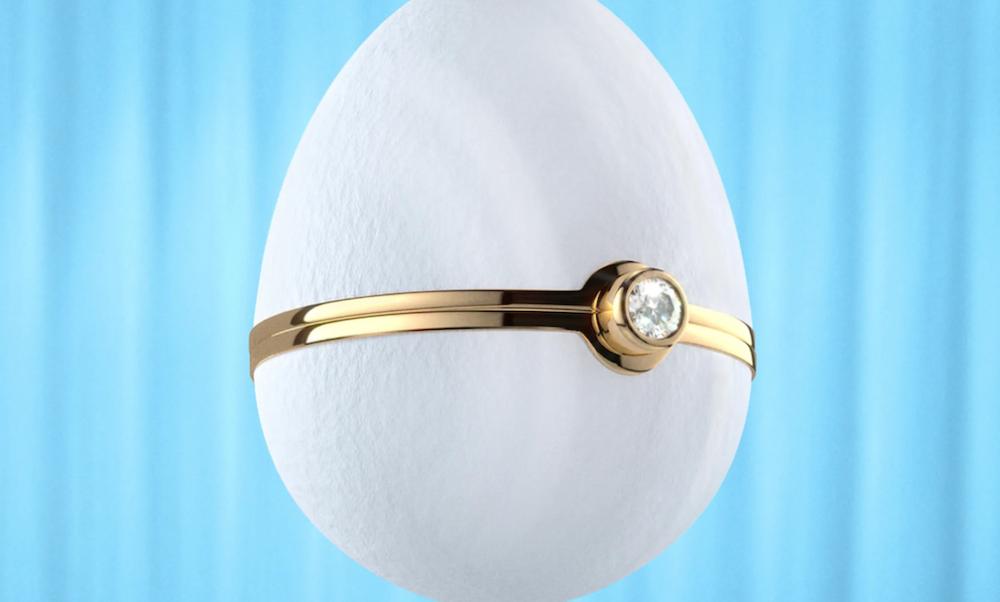
At first glance, the connection is obvious. The pendant is made in 18 carat yellow gold and finished with matt white enamel, created through multiple applications to achieve its surface. White diamonds are used sparingly across the exterior, adding light without overwhelming the simplicity of the egg.
The more interesting detail appears when the pendant is opened. Inside is another small golden egg sitting within a delicate nest, turning the piece into a miniature version of the experience that made the original Imperial creations so intriguing.
It would have been easy for Fabergé to create a reduced reproduction of an historic object and rely on the strength of the name to sell it. №1 does something more considered. It takes the principle behind the original egg and translates it into a piece of jewellery designed to be worn.
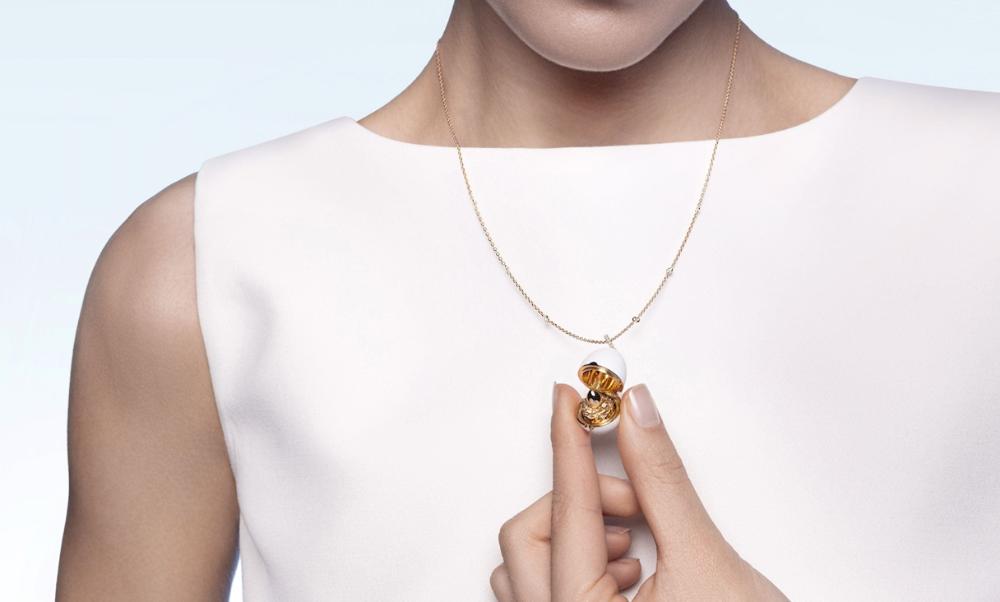
That changes the relationship with Fabergé considerably. Historic Imperial Eggs are objects most people will only ever encounter in museums, exhibitions, books or auction reports. A pendant is personal. It sits against the body and its hidden element belongs primarily to its wearer rather than an audience looking through glass.
Measuring approximately 20mm by 15.35mm excluding the bail, with 0.10 carats of diamonds, the pendant is currently priced at £11,040 in the UK. Those details place it firmly within fine jewellery, but its significance to the wider Fabergé strategy is less about carat weight or dimensions than what it represents. The house is taking one of the most famous symbols in jewellery history and attempting to turn it into a contemporary design language.
Strip away the Imperial associations and what remains is surprisingly clear: enamel, gold, craftsmanship, concealment, discovery and an element of surprise. If Fabergé can build around those ideas rather than simply repeating its archive, its history becomes a creative resource rather than a limitation.

At the other end of the scale, Fabergé is also preparing something considerably more ambitious. Fifty Imperial Eggs were originally created for the Russian Imperial family. The contemporary house is now creating No. 51, known as the Garden of Light Egg.
Created in connection with Fabergé’s Abu Dhabi boutique and inspired by the Sheikh Zayed Grand Mosque, the object reportedly required more than 1,145 hours of work. Its materials include lapis lazuli, blue lace agate, yellow jasper, red agate and malachite, while inside is a miniature interpretation of the mosque created in 18 carat gold with enamel detailing. Its removable pedestal also transforms into a table for the miniature structure.
The decision to call it No. 51 is significant because Fabergé is not presenting the object as merely an homage to its past. It is deliberately placing a contemporary creation into the sequence of works for which the house is most famous.
That is an ambitious position to take. The Imperial Eggs are among the most scrutinised and celebrated decorative objects ever made, so adding another number to that story invites direct comparison. Yet there is also something appropriate about the confidence of the gesture. A serious revival of Fabergé cannot forever exist beneath the achievements of Peter Carl Fabergé. At some point, the modern house has to produce objects on which its own reputation can be judged.
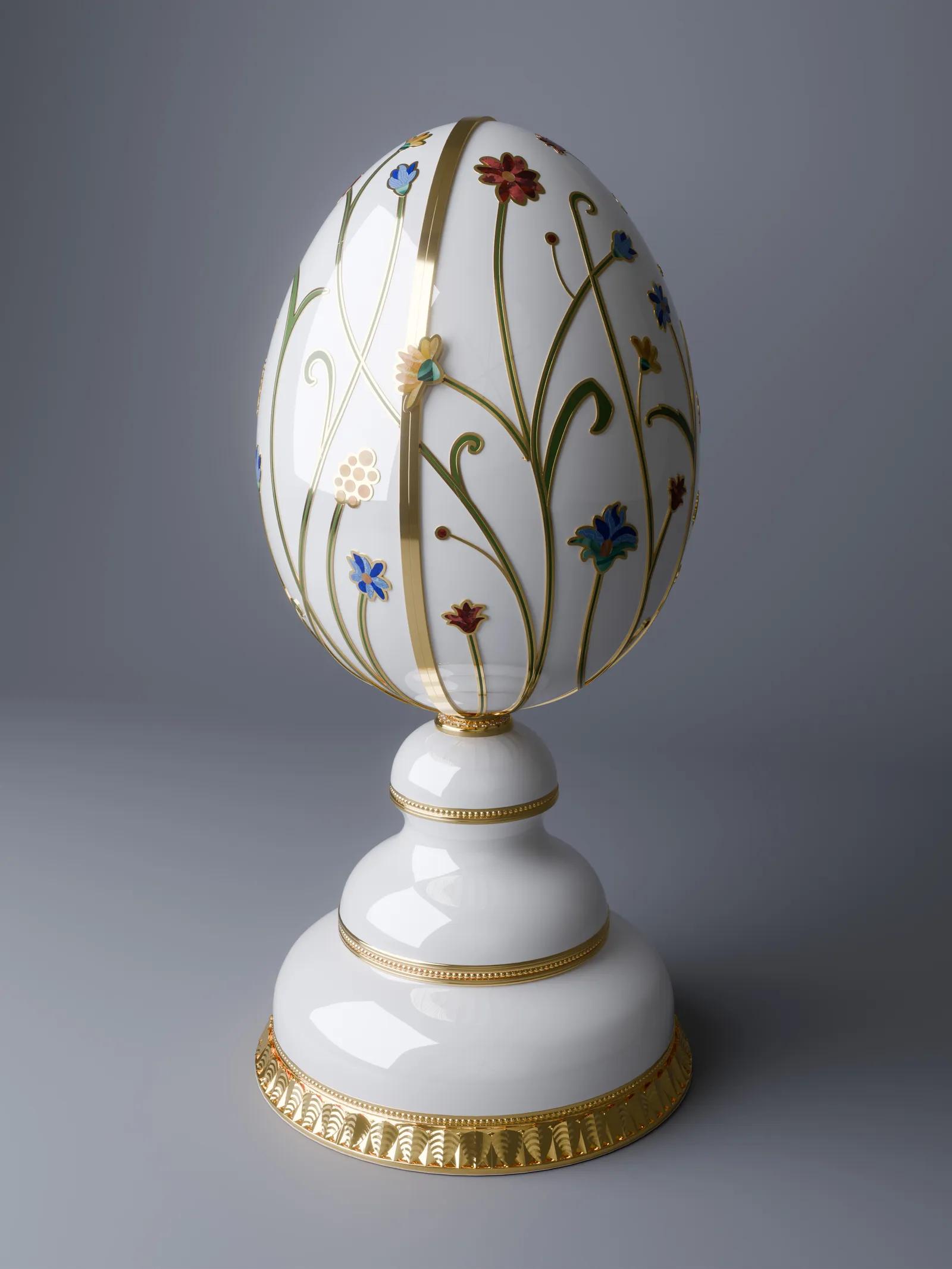
The Garden of Light Egg, Fabergé’s No. 51, draws inspiration from Abu Dhabi’s Sheikh Zayed Grand Mosque and marks an ambitious new chapter for the house
The changes extend beyond jewellery. Fabergé says more than 70% of sales now come through direct channels, with the business developing its own retail presence in locations including Abu Dhabi, Shanghai and Chengdu. London is also set to gain a flagship in Burlington Arcade in Mayfair.
For a house such as Fabergé, a more controlled retail strategy makes sense. This is unlikely to be a brand that benefits from being available everywhere. Its historical appeal has always involved rarity, craftsmanship and access to objects that feel unusual, and direct boutiques allow the company to control not only what is sold but how the wider Fabergé world is presented.
There is also a larger commercial opportunity behind that strategy. The objective cannot simply be to sell recognisable egg jewellery to people already familiar with the Fabergé story. The more interesting challenge is whether the house can create collectors again: clients who follow new work, commission important pieces and regard contemporary Fabergé as something worth collecting in its own right.
That will ultimately determine whether this is a genuine creative revival or simply a successful repositioning of an historic name.
Luxury brands frequently talk about heritage, but Fabergé has more of it than most. The difficulty is knowing when heritage is an asset and when it begins to dictate too much of what comes next.
The early signs of this new chapter are interesting because Fabergé does not appear to be trying to distance itself from the egg or pretend its most famous creation no longer matters. Instead, it is examining why those objects mattered in the first place.
The Fabergé №1 pendant is a good example. Its importance is not that it resembles an Imperial Egg, but that it retains the pleasure of discovery that sat at the heart of the original. The decision to create No. 51 goes further still, suggesting that the house wants eventually to contribute to its history rather than simply curate it.
There is risk in that approach. Every contemporary Fabergé creation carries the weight of a name associated with some of the greatest decorative objects ever produced. But endlessly reproducing recognisable motifs would carry a different risk: turning one of jewellery’s most inventive names into a souvenir of itself.
Fabergé already has the history, the recognition and an icon that almost everyone understands. What it now needs are contemporary pieces capable of building their own reputation.
That will take more than a new logo, new boutiques or a clever use of the archive. It will depend on design, craftsmanship and the willingness to surprise people again.
If the original Fabergé story was built around the unexpected things hidden inside beautiful objects, perhaps the most interesting question now is what the house has yet to reveal.

The Garden of Light Egg, Fabergé’s No. 51, draws inspiration from Abu Dhabi’s Sheikh Zayed Grand Mosque and marks an ambitious new chapter for the house
Fabergé’s next chapter is already taking shape, from contemporary interpretations of its most recognisable codes to ambitious new objets that look beyond the house’s Imperial past.
Explore the Fabergé №1 Egg Pendant, discover the house’s latest jewellery and high jewellery collections, and follow the evolution of a name that is once again asking what Fabergé can mean for a new generation.
Discover Fabergé: faberge.com
Explore the Fabergé №1 Egg Pendant: faberge.com/products/faberge-1-egg-pendant-4335
Follow Fabergé on Instagram: @officialfaberge
Scroll the gallery below to see more
The Jewels Club will be watching closely to see what comes next.
HIGH JEWELLERYAPR 22, 2026
Chopard Caroline’s Garden: A Personal Vision In Full Bloom
Chopard’s Caroline’s Garden transforms nature into high jewellery through bold gemstones, innovative settings and a deeply personal creative vision
READ MORE
FINE JEWELLERYAPR 23, 2026
Chopard Ice Cube ‘Be Cube’: A Shift in How the Cube Is Seen
Chopard introduces “Be Cube”, a new chapter within its Ice Cube collection, refining the motif into a more sculptural and considered form
READ MORE
HIGH JEWELLERYAPR 25, 2026
Tiffany & Co. Blue Book 2026: Hidden Garden
Tiffany’s Blue Book 2026 collection, Hidden Garden, explores nature through movement and construction, with a more controlled approach to high jewellery
READ MORE


0 Comments
You must be logged in to comment. Click here to login.