






Don't miss a gem
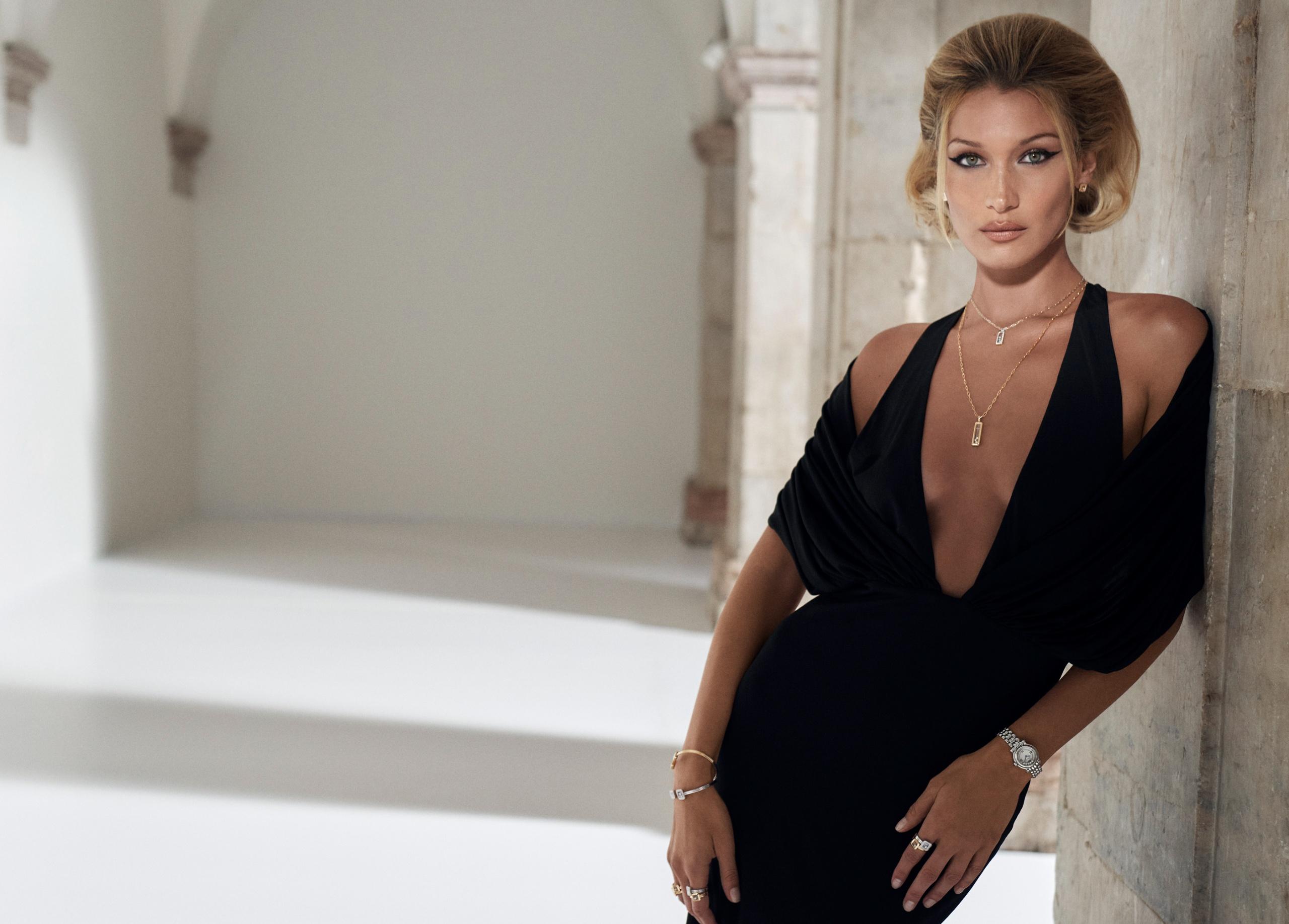
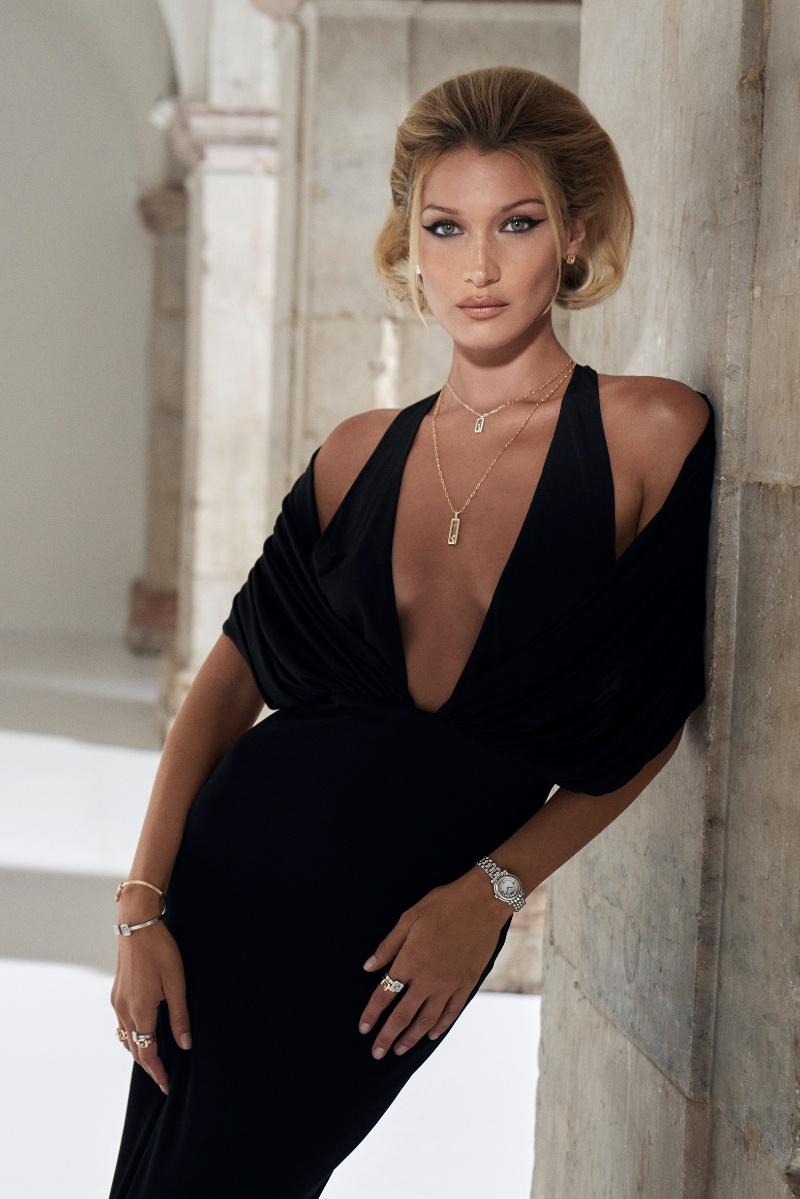
A diamond normally sits still. Chopard built an entire design language by allowing it to move
The story of how Chopard’s free-moving diamonds became a lasting jewellery signature, from their 1976 debut to Happy Sport and the new Heritage collection
A diamond is usually admired at rest, held in a setting that controls every angle of light. In 1976, Chopard chose another path, placing diamonds between two sapphire crystals and allowing them to move freely with the person wearing them. Happy Diamonds replaced formality with an unexpected sense of play.
Fifty years later, the wearer still completes the design, with every turn of the wrist creating a new arrangement. As Chopard marks the anniversary with Heritage pieces, new Happy Diamonds creations and a campaign starring Bella Hadid and Liu Wen, The Jewels Club looks back at the idea that gave diamonds permission to dance.
The original idea is traced to the sight of sunlight breaking across the spray of a waterfall in Germany’s Black Forest. Chopard translated that fleeting movement into a piece of watchmaking, creating diamonds that could respond directly to the person wearing them.
Karin Scheufele gave the concept its enduring line: “Diamonds are happier when they are free.”
It is easy to remember the phrase and overlook the intelligence behind the construction. The diamonds are not decorative additions moving around an otherwise finished watch. Their movement is the design. Until the wearer lifts a wrist, turns a hand or walks across a room, the composition remains incomplete.
That relationship between jewel and wearer is what gives Happy Diamonds its emotional pull. No two moments look exactly alike because the stones refuse to remain in one position.
Happy Diamonds Campaign
Many celebrated jewellery collections are identified by a particular shape or motif. Happy Diamonds is recognised by what it does.
That distinction gave Chopard room to develop the concept without losing its identity. The moving stones could inhabit watches, pendants, hearts and playful figurative pieces while retaining the same essential character.
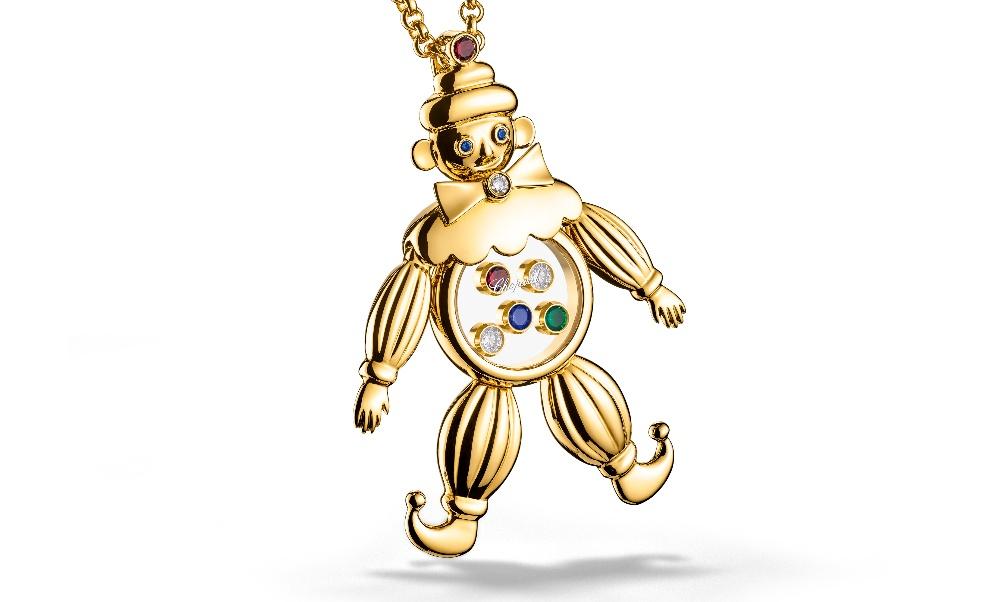
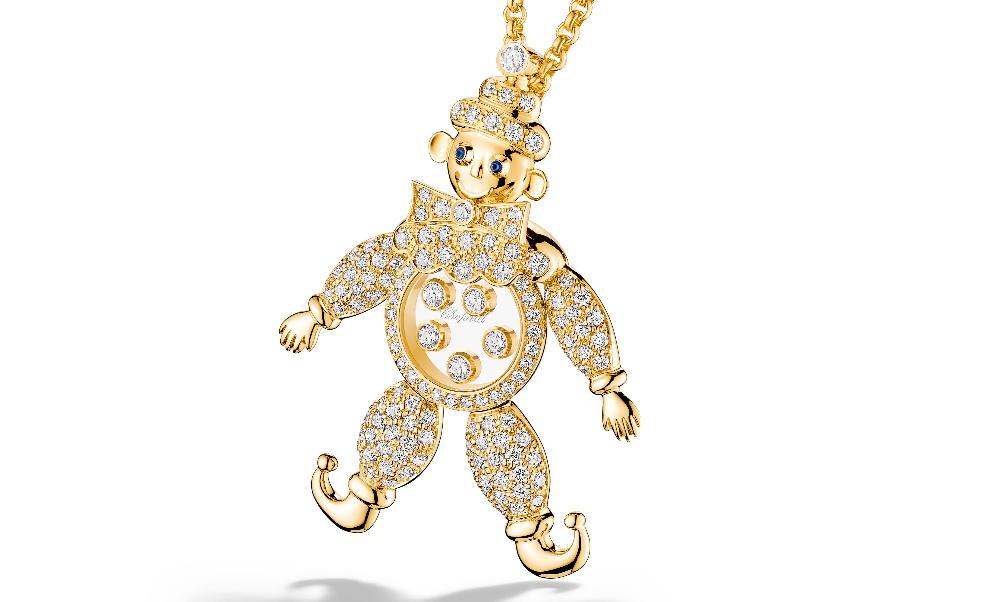
In 1985, Caroline Scheufele sketched the Happy Clown, its body filled with diamonds and coloured gemstones. The design became Chopard’s first jewellery collection and showed that technical ingenuity could also carry humour.
The clown returns for the anniversary in two new interpretations. One combines diamonds, ruby, sapphire and emerald within an articulated yellow gold figure. Another uses five Happy Diamonds surrounded by pavé. Its moving head, arms and legs extend the original idea beyond the gemstones themselves.
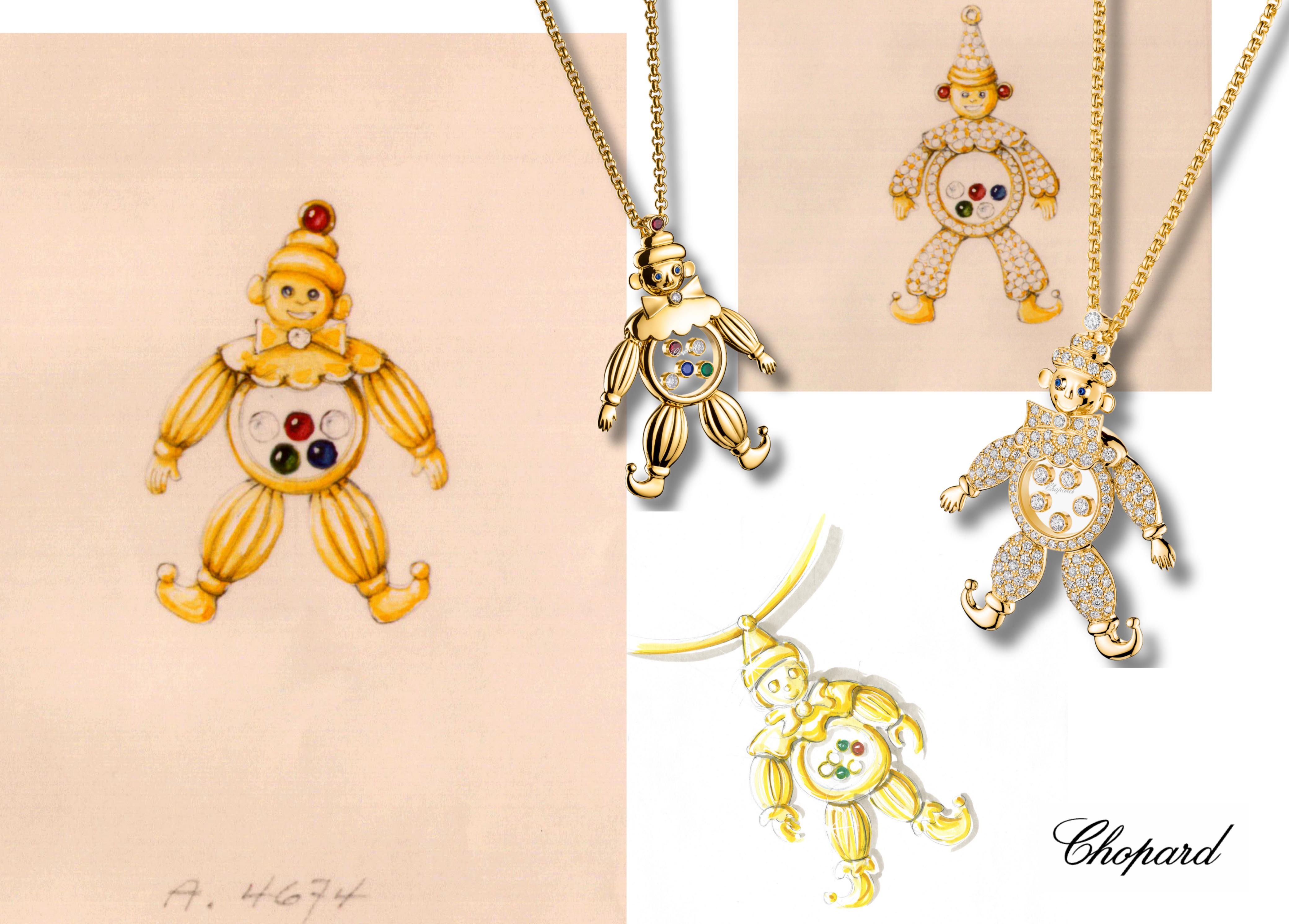
From sketch to finished jewel: archival drawings of Chopard’s 1985 Happy Clown appear alongside the two 2026 anniversary pendants, one animated with coloured gemstones and the other set with pavé diamonds. Courtesy of Chopard
Happy Sport arrived in 1993 with a different proposition.
Caroline Scheufele wanted a watch that could move between the tennis court, the working day and dinner. Her decision to combine diamonds with steel challenged the established separation between precious jewellery and practical sports watches.
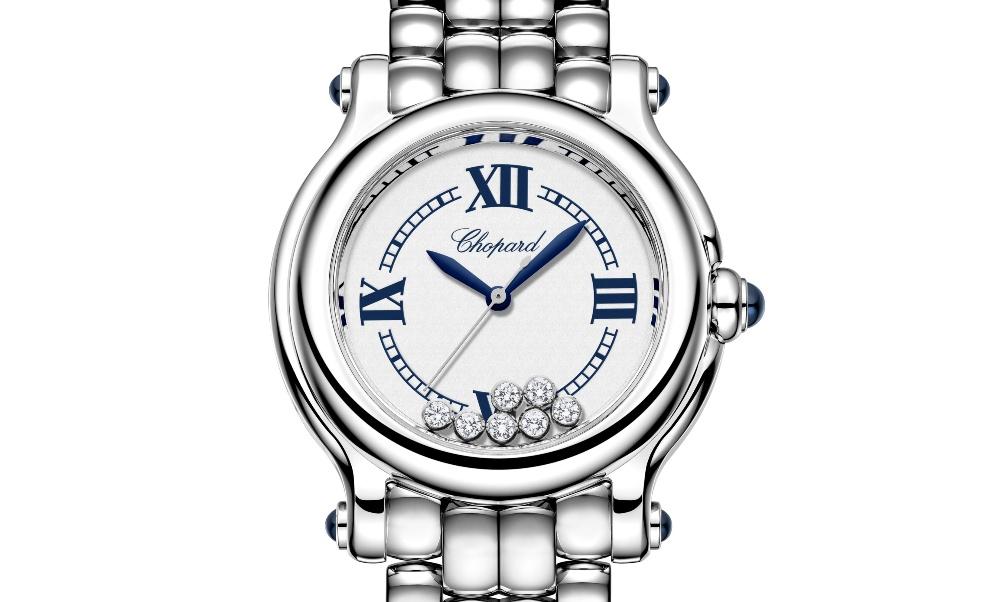
The original model placed seven moving diamonds directly above the dial, accompanied by cabochon sapphires and a flexible pebble-link bracelet. According to Chopard, the workshop manager initially declared the idea impossible and promised Caroline a rose for every watch sold. Its success eventually earned her an entire rosebush. Chopard’s history of Happy Sport
The anecdote is charming, but the watch’s real achievement was cultural. It gave diamonds permission to become part of ordinary life. They no longer required a formal occasion, an evening dress or a velvet jewellery box.
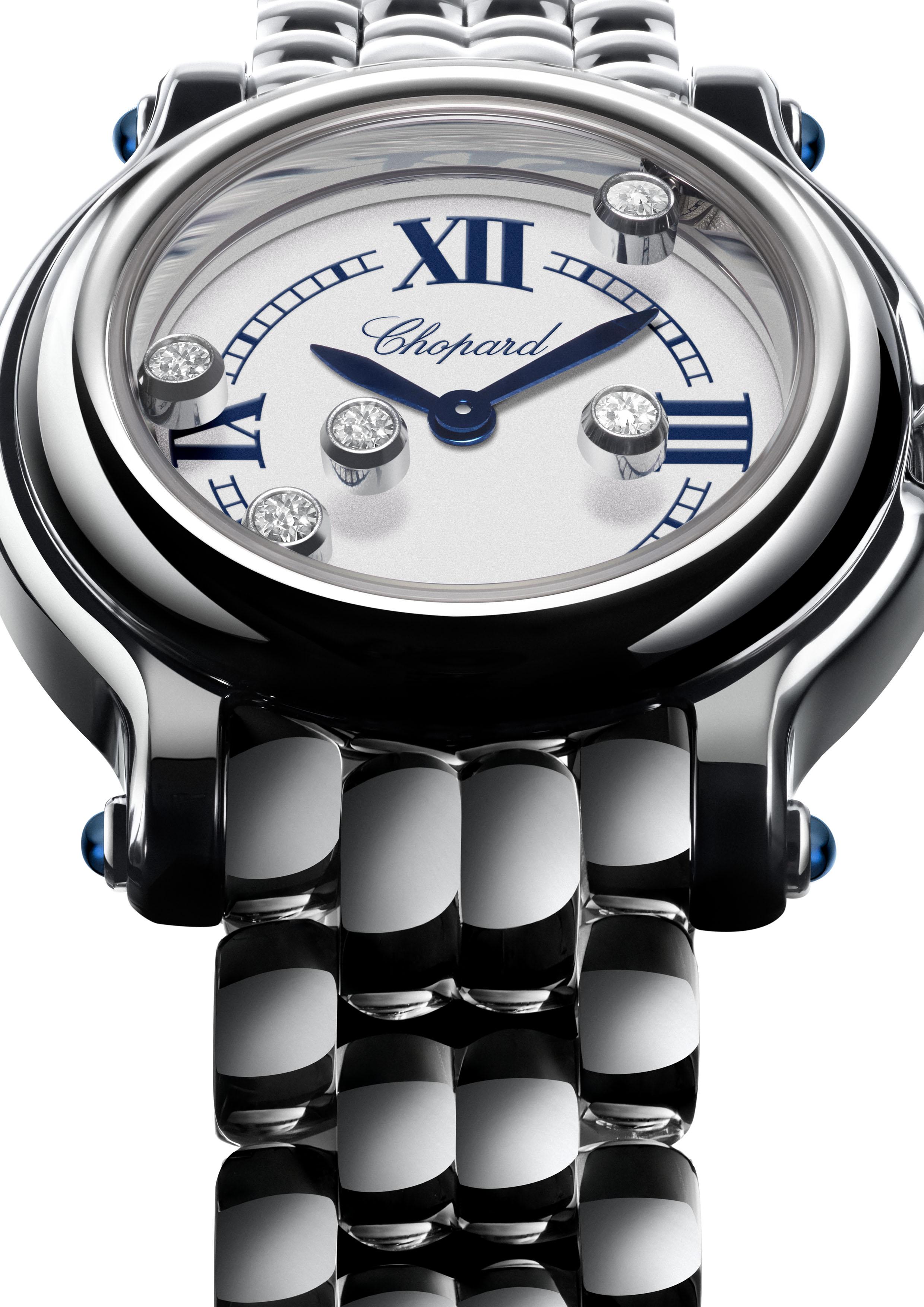
Close-up of Chopard’s Happy Sport The First, a faithful reinterpretation of the 1993 watch combining Lucent Steel, cabochon sapphires and freely moving diamonds. Photograph by Fédéral-Studio, courtesy of Chopard
For the 50th anniversary, Chopard has looked back to the earliest Happy Diamonds watches through its new Heritage collection.
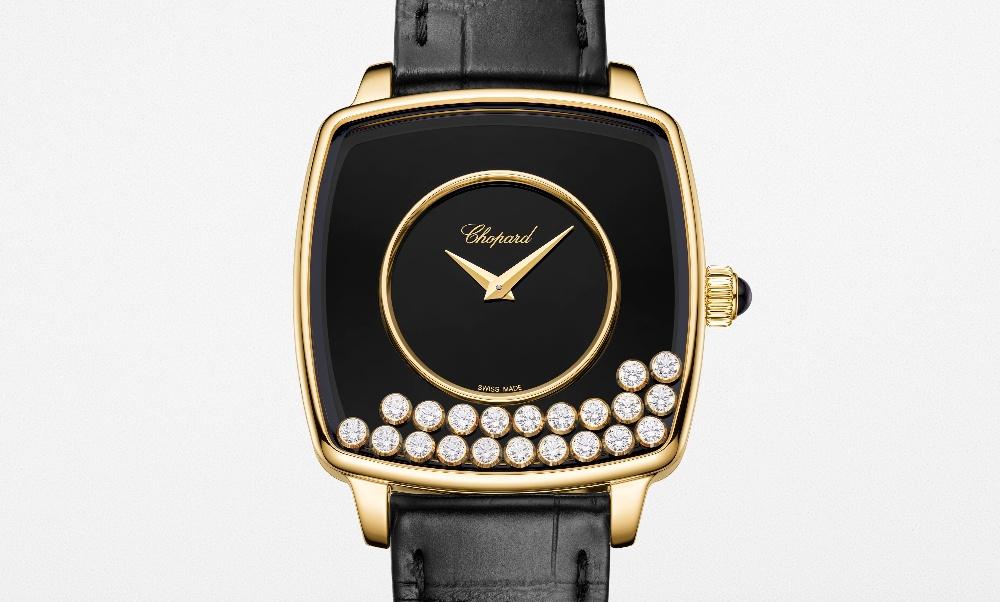
Two cushion-shaped timepieces revisit the graphic character of the 1976 originals. Their black onyx dials absorb the surrounding light, creating a dark stage across which the diamonds can travel.
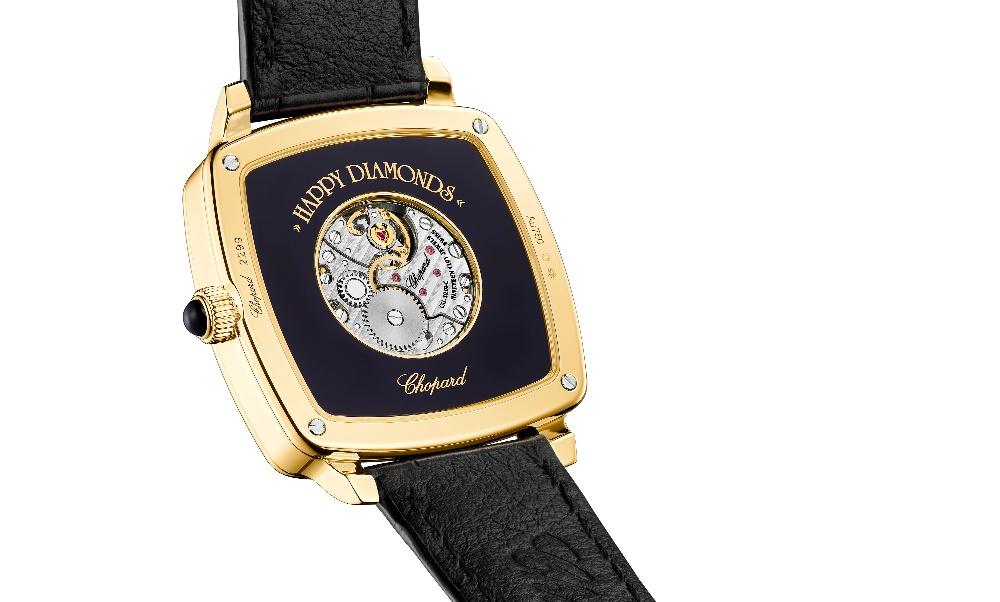
The 34 mm model is made in 18-carat ethical yellow gold and contains 21 moving diamonds. It is powered by Chopard’s hand-wound 10.01-C movement, visible through the caseback. A smaller 24 mm interpretation carries nine diamonds and a quartz movement.
Rather than disguising their age, the watches embrace the strong geometry of the 1970s. The cushion cases and black onyx feel specific to their period, yet the movement of the stones prevents them from becoming static exercises in nostalgia.
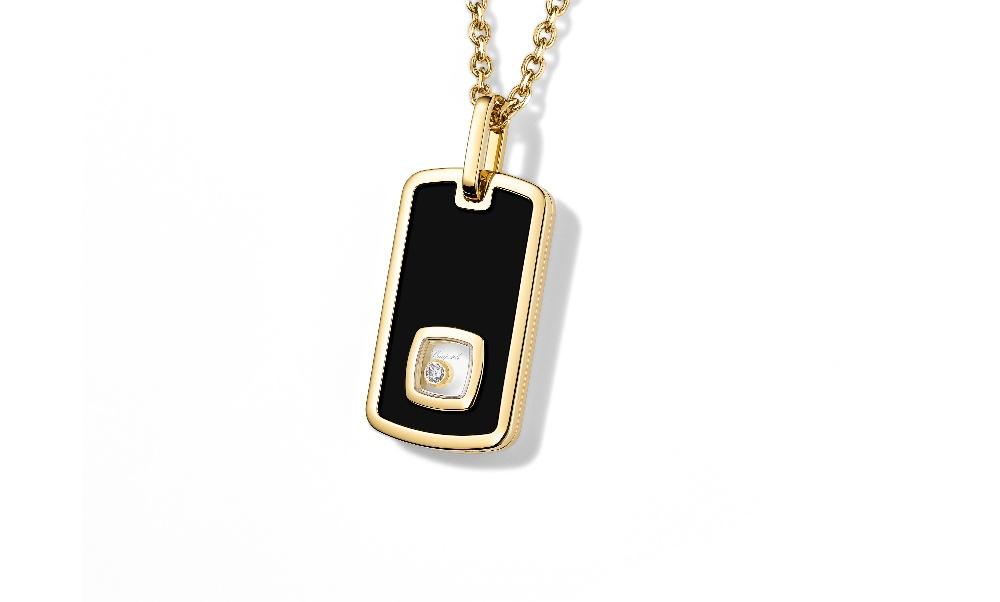
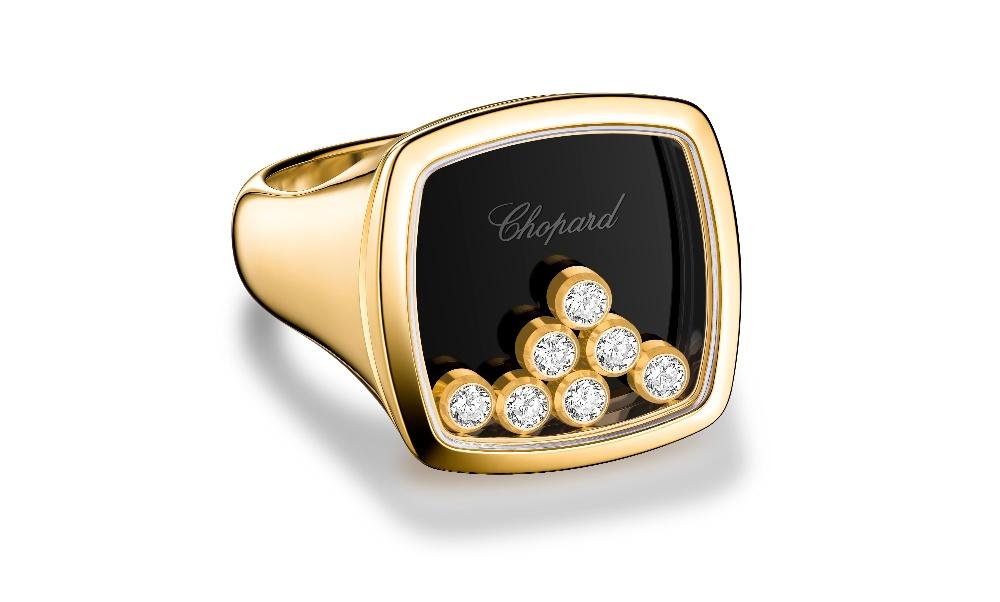
The accompanying jewellery reduces the same design to its clearest elements. A signet ring, cufflinks, a tie pin that can also be worn as a brooch, and a pendant bring together yellow gold, black onyx and freely moving diamonds.
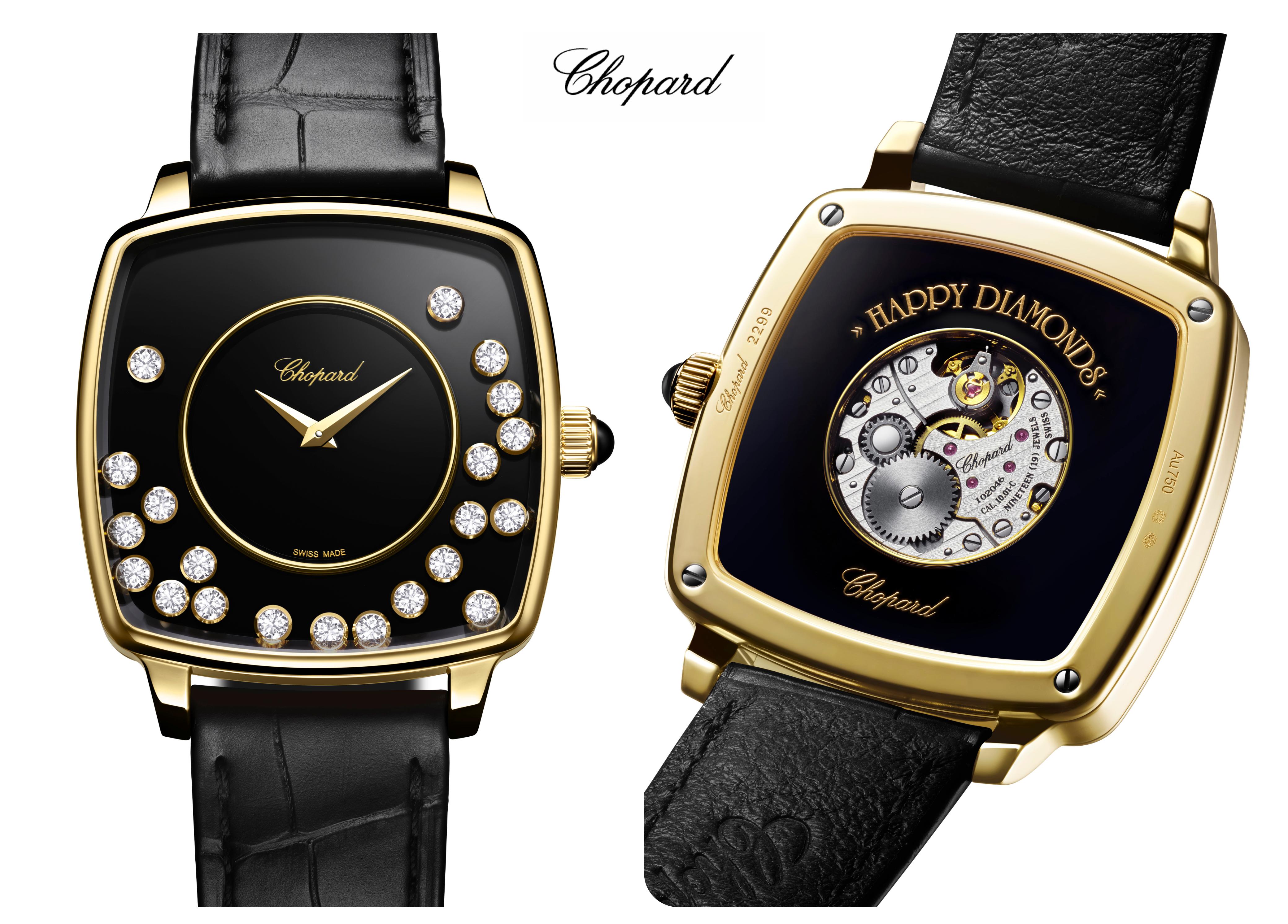
Chopard’s 34mm Happy Diamonds Heritage watch in ethical yellow gold and black onyx, shown from the front and reverse. Twenty-one freely moving diamonds surround the dial, while the exhibition caseback reveals the hand-wound movement.
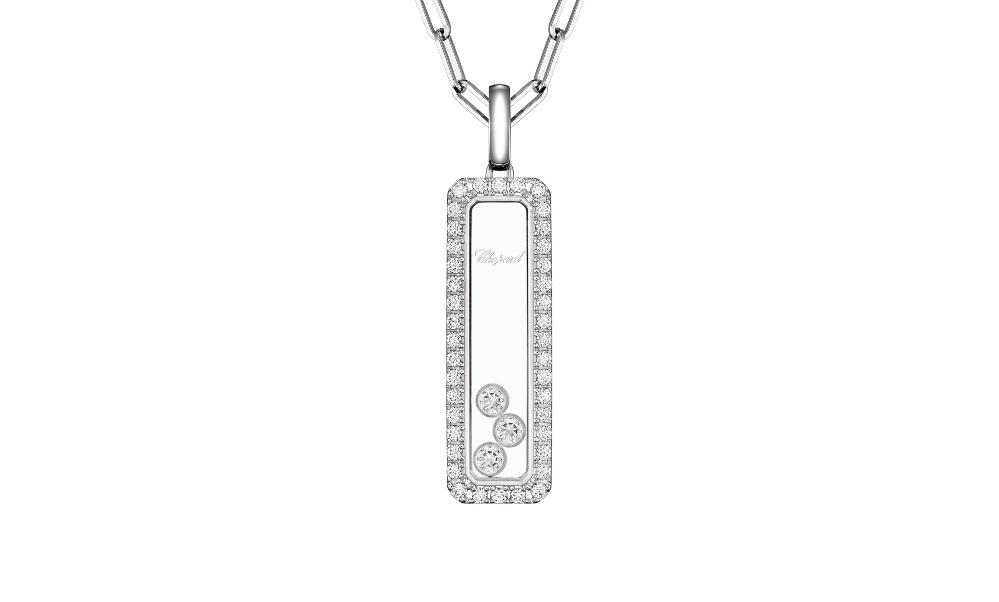
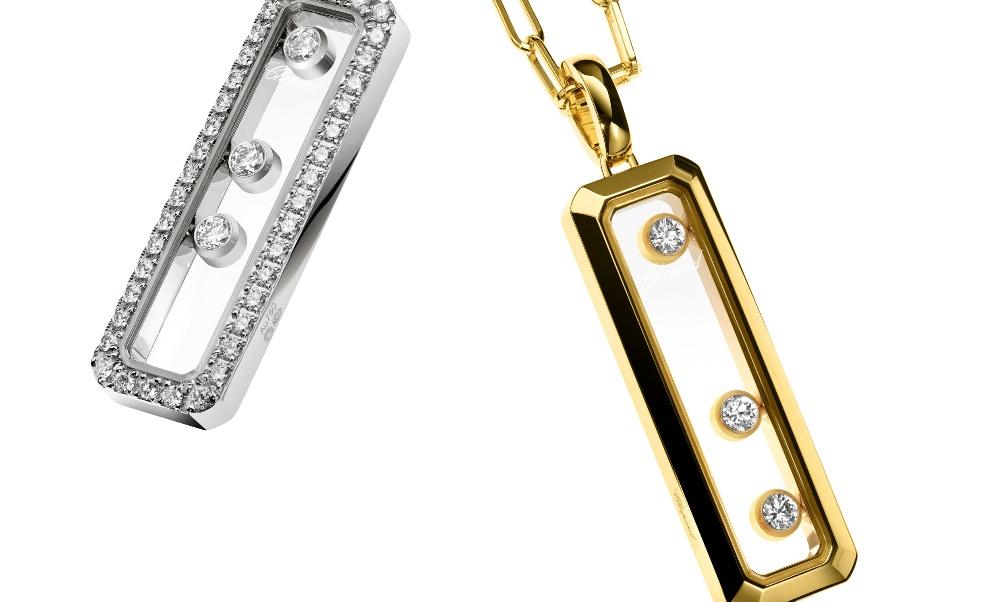
The anniversary collection also includes new rectangular Happy Diamonds pendants inspired by a Chopard design introduced in 2006.
Made in ethical yellow, rose or white gold, the open rectangular forms give their three diamonds more room to travel. The proportions are controlled and architectural, leaving the movement to provide the personality.
These pieces demonstrate why the concept has lasted. Chopard does not need to reinvent the moving diamond every season. It can alter the scale, material or surrounding structure while preserving the physical reaction that makes the jewellery recognisable.
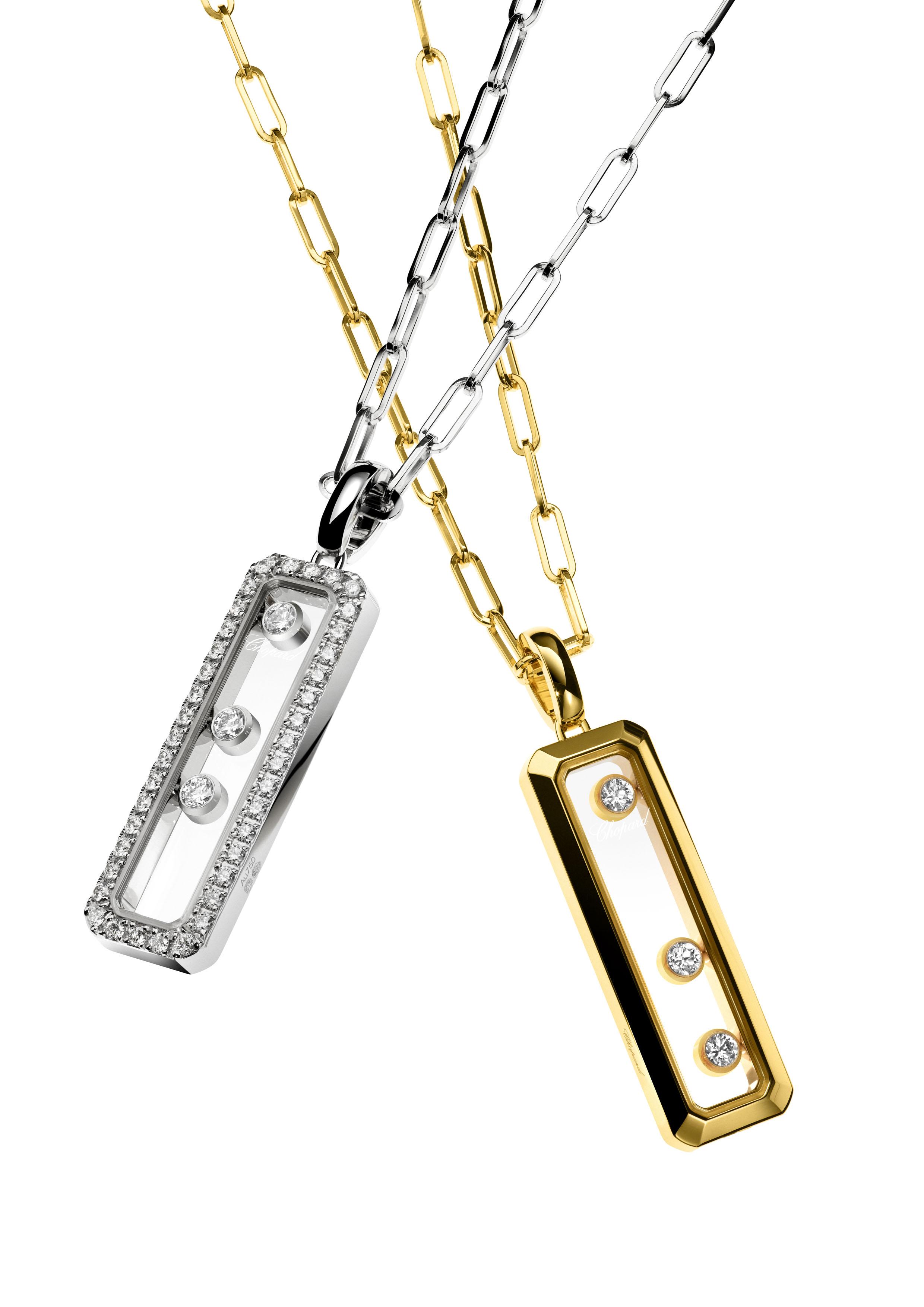
Chopard’s new rectangular Happy Diamonds pendants in ethical yellow and white gold, each animated by three freely moving diamonds. The white gold version is framed with pavé diamonds. Photograph by Fédéral-Studio, courtesy of Chopard
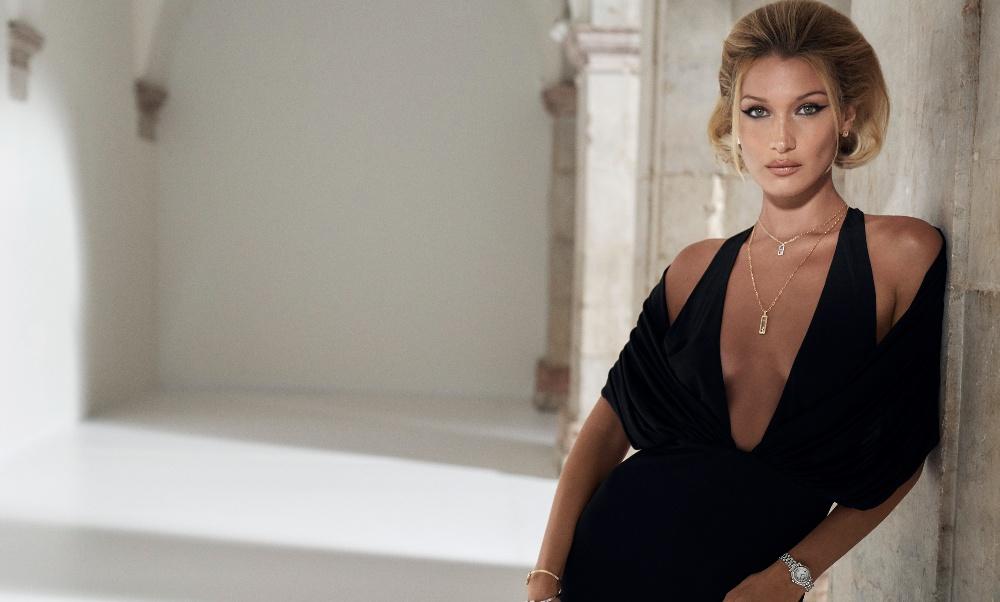
Chopard marked the anniversary during New York Fashion Week with a celebration at Casa Cipriani, attended by Co-President and Artistic Director Caroline Scheufele and campaign ambassadors Bella Hadid and Liu Wen.
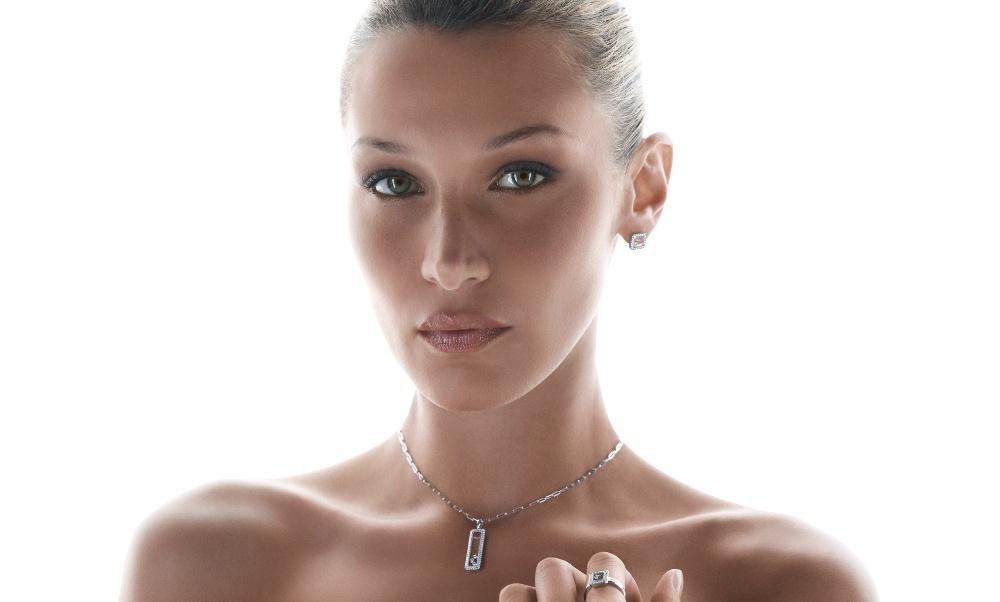
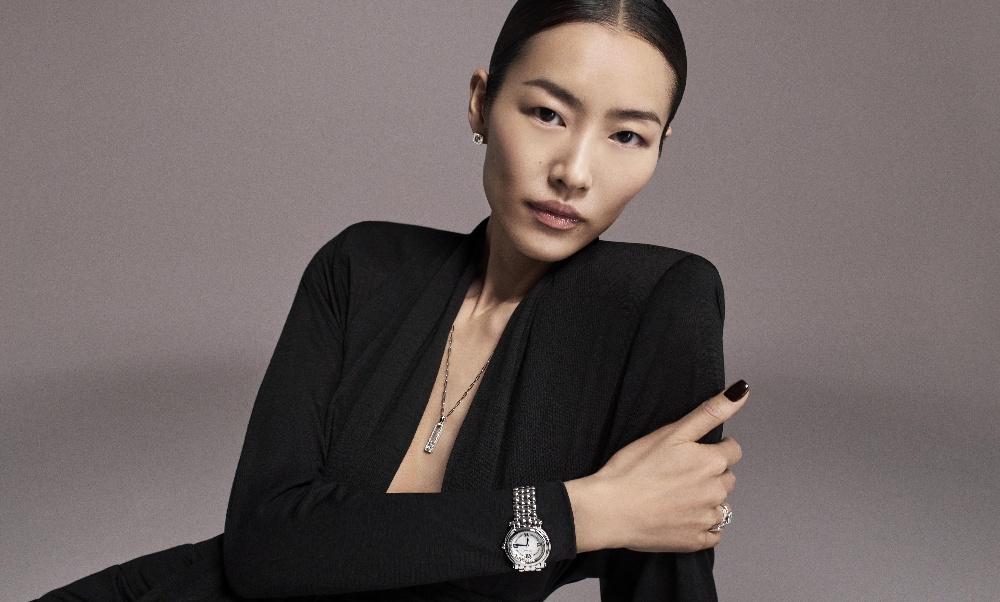
The two models bring contrasting energies to the new campaign. Hadid appears immediate and instinctive, while Wen presents a quieter, more controlled sense of movement. That difference matters because Happy Diamonds has never prescribed a single way of wearing jewellery. The stones respond to whoever is wearing them.
Filmmaker Manu Cossu, choreographer and movement director Stephen Galloway, and photographer Greg Williams shaped the campaign around gesture. The concept is unusually appropriate. Movement is not being added to make the pictures feel dynamic. It already belongs to the jewellery.
The New York event also introduced the one-of-a-kind Happy Sport Joaillerie New York Special Edition. Its bezel is set with 10 carats of Ashoka-cut diamonds, while six pink Happy Diamonds move across the dial alongside a charm inspired by the Big Apple.
At Chopard’s Fifth Avenue boutique, an anniversary exhibition brings historical watches and jewellery together with sketches and archival documents. Placing the new collection beside the originals allows visitors to see how consistently the central idea has been protected.
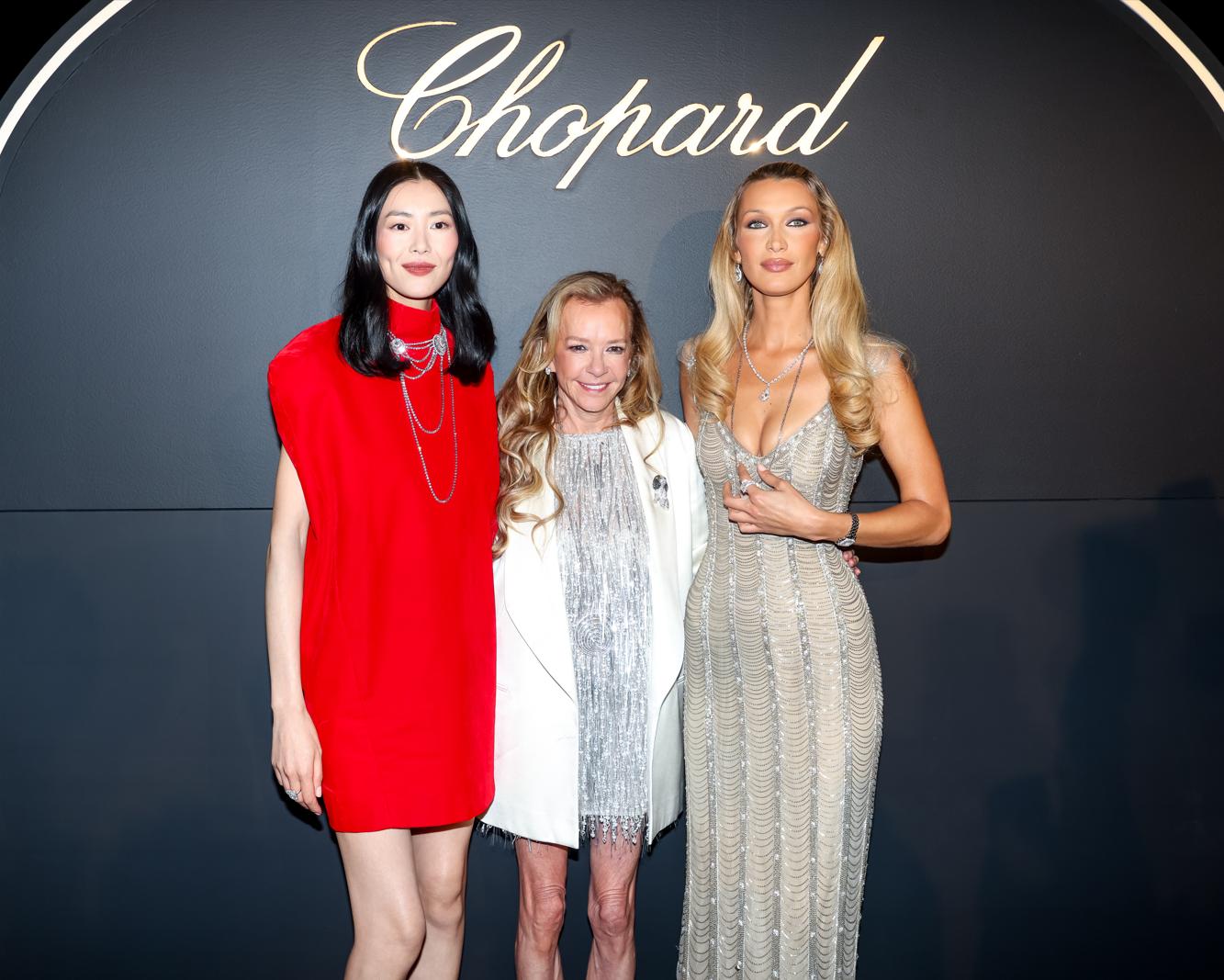
Liu Wen, Chopard Co-President and Artistic Director Caroline Scheufele, and Bella Hadid celebrate 50 years of Happy Diamonds in New York. Photograph by Kevin Czopek/BFA.com, courtesy of Chopard
Happy Diamonds has survived for 50 years because it was never simply a decorative motif. It changed the relationship between a diamond and the person wearing it.
The stones do not perform independently. They need a wrist, a hand, a pulse and a change of direction. The wearer becomes part of the mechanism and part of the final composition.
Chopard understands that jewellery can be technically serious without behaving seriously. Happy Diamonds brings together precise construction, precious materials and an instinct for play that has never been polished away.
A stationary diamond can be admired. A Happy Diamond invites a response.
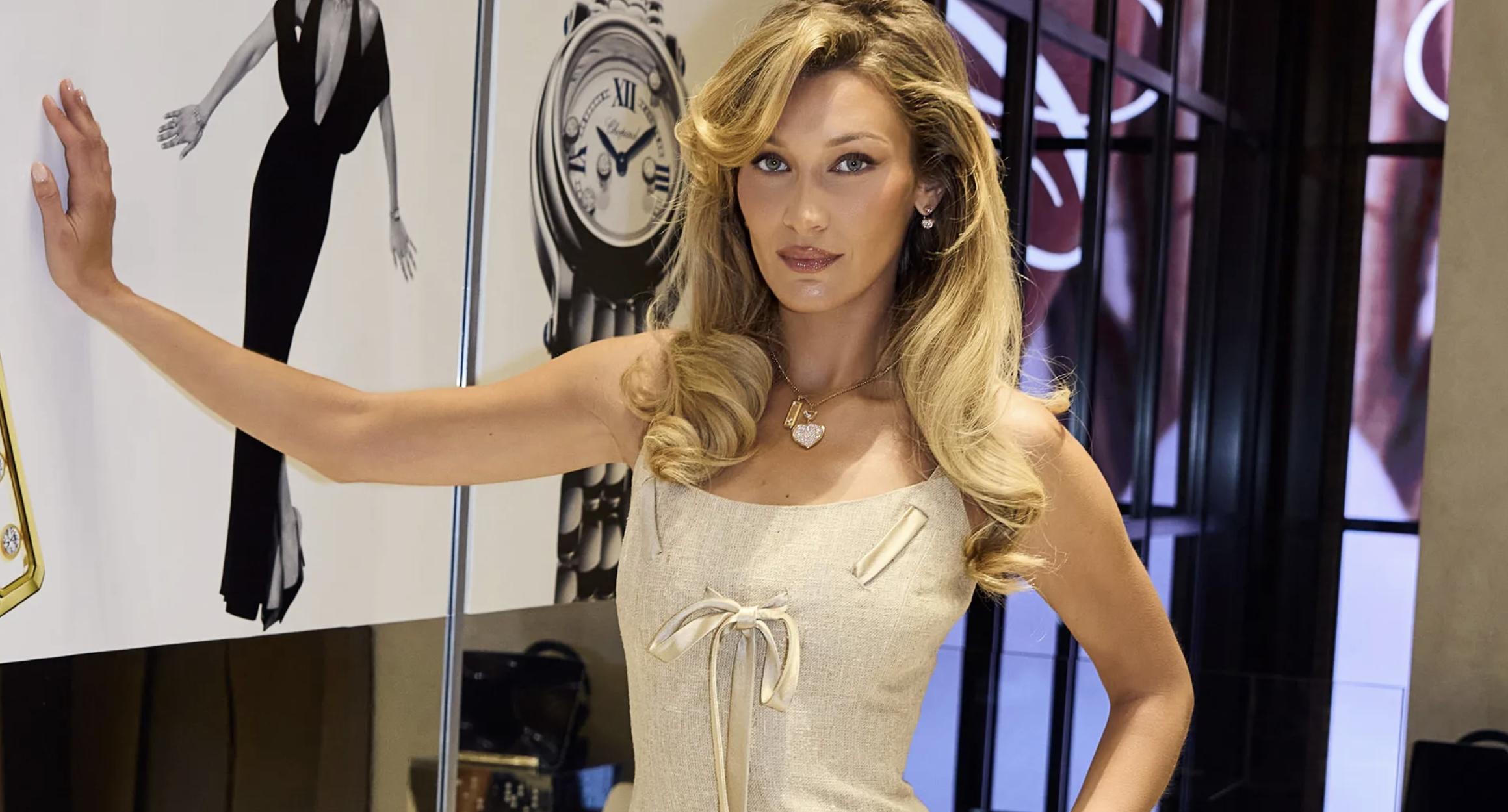
Bella Hadid at Chopard’s Fifth Avenue boutique during the exhibition celebrating 50 years of Happy Diamonds and Happy Sport. Courtesy of Chopard
Explore the Happy Sport story at Chopard and discover more about Chopard’s history and creative milestones.
Shop the collection
Scroll the gallery below to see more
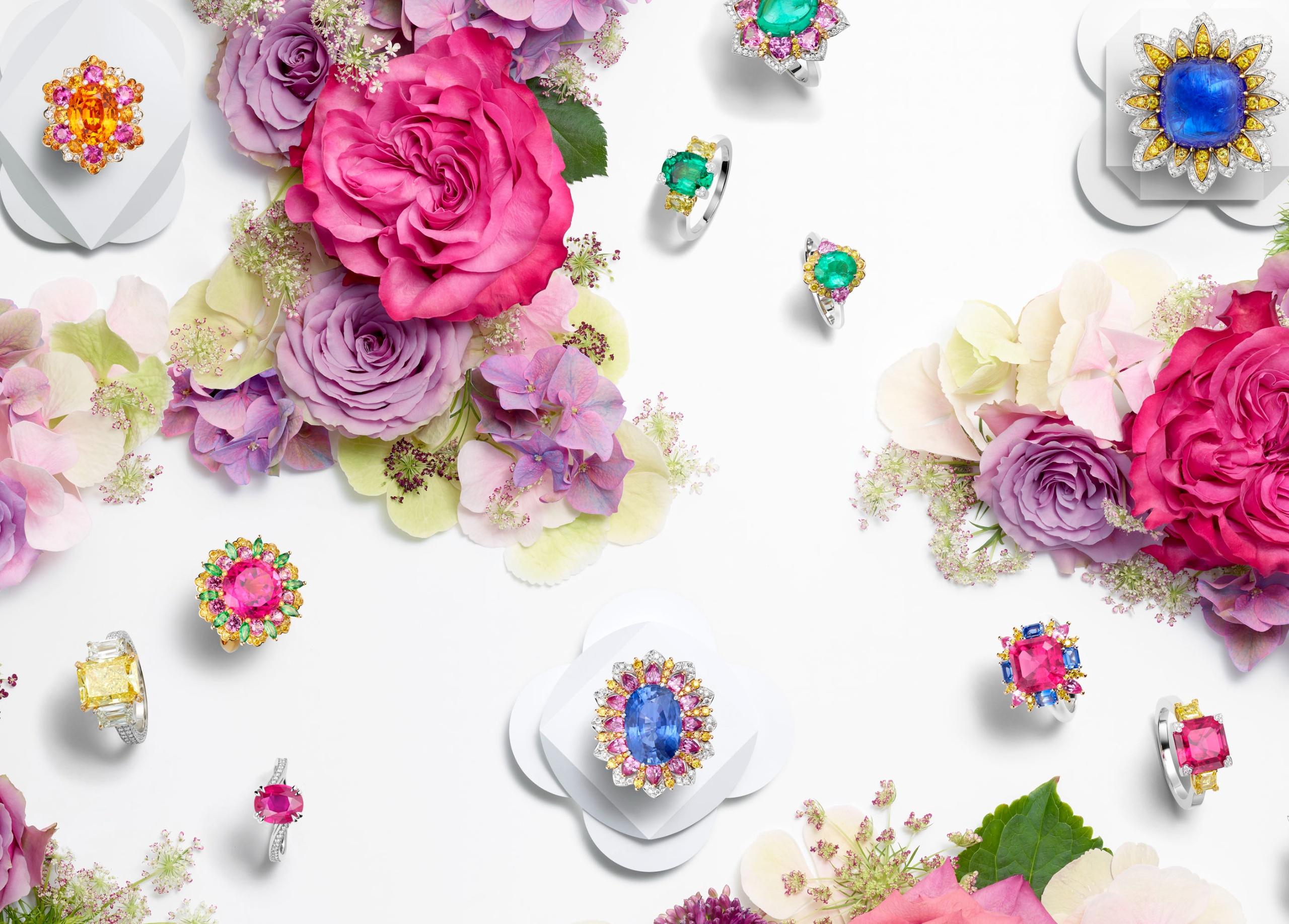
HIGH JEWELLERYAPR 22, 2026
Chopard Caroline’s Garden: A Personal Vision In Full Bloom
Chopard’s Caroline’s Garden transforms nature into high jewellery through bold gemstones, innovative settings and a deeply personal creative vision
READ MORE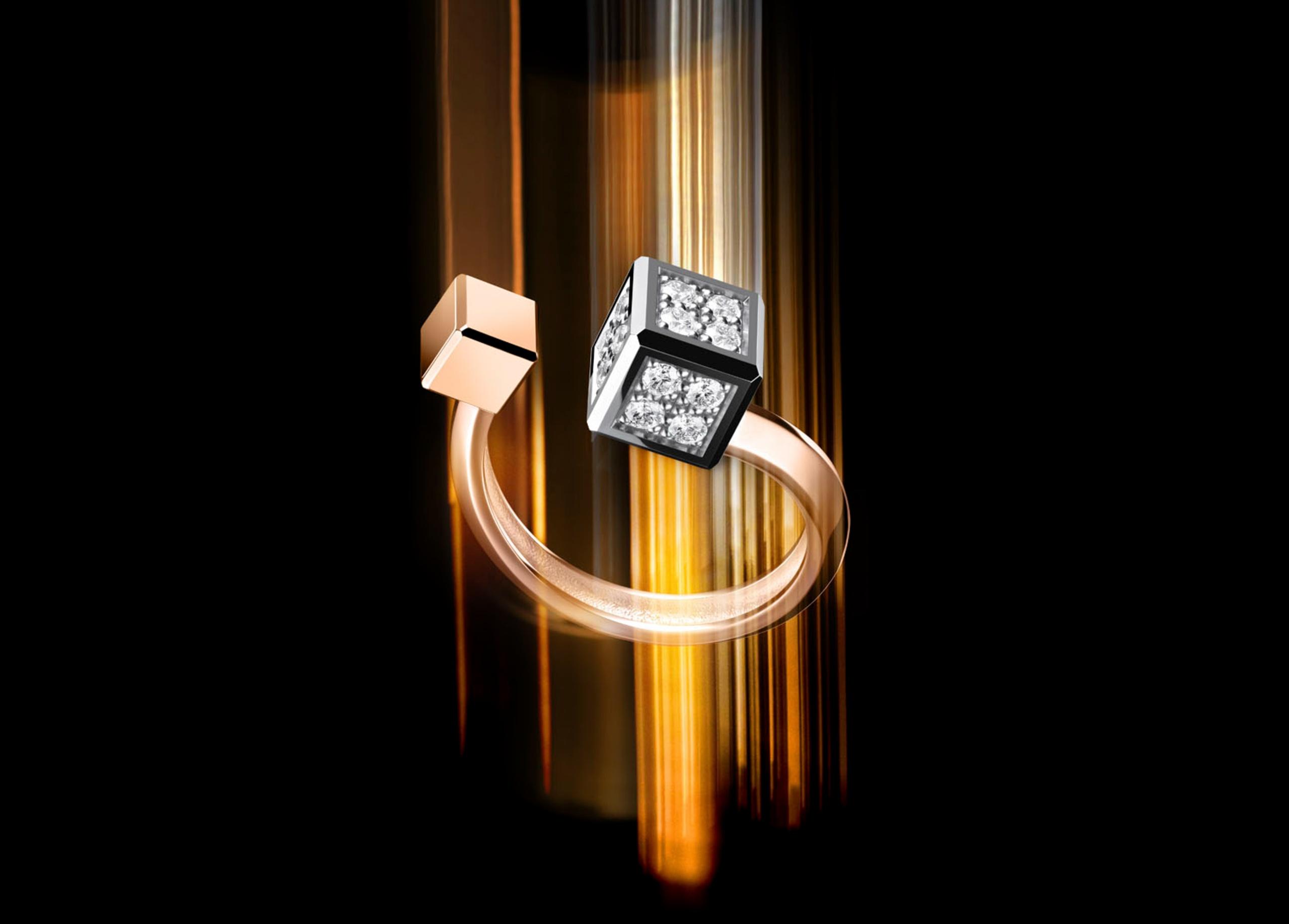
FINE JEWELLERYAPR 23, 2026
Chopard Ice Cube ‘Be Cube’: A Shift in How the Cube Is Seen
Chopard introduces “Be Cube”, a new chapter within its Ice Cube collection, refining the motif into a more sculptural and considered form
READ MORE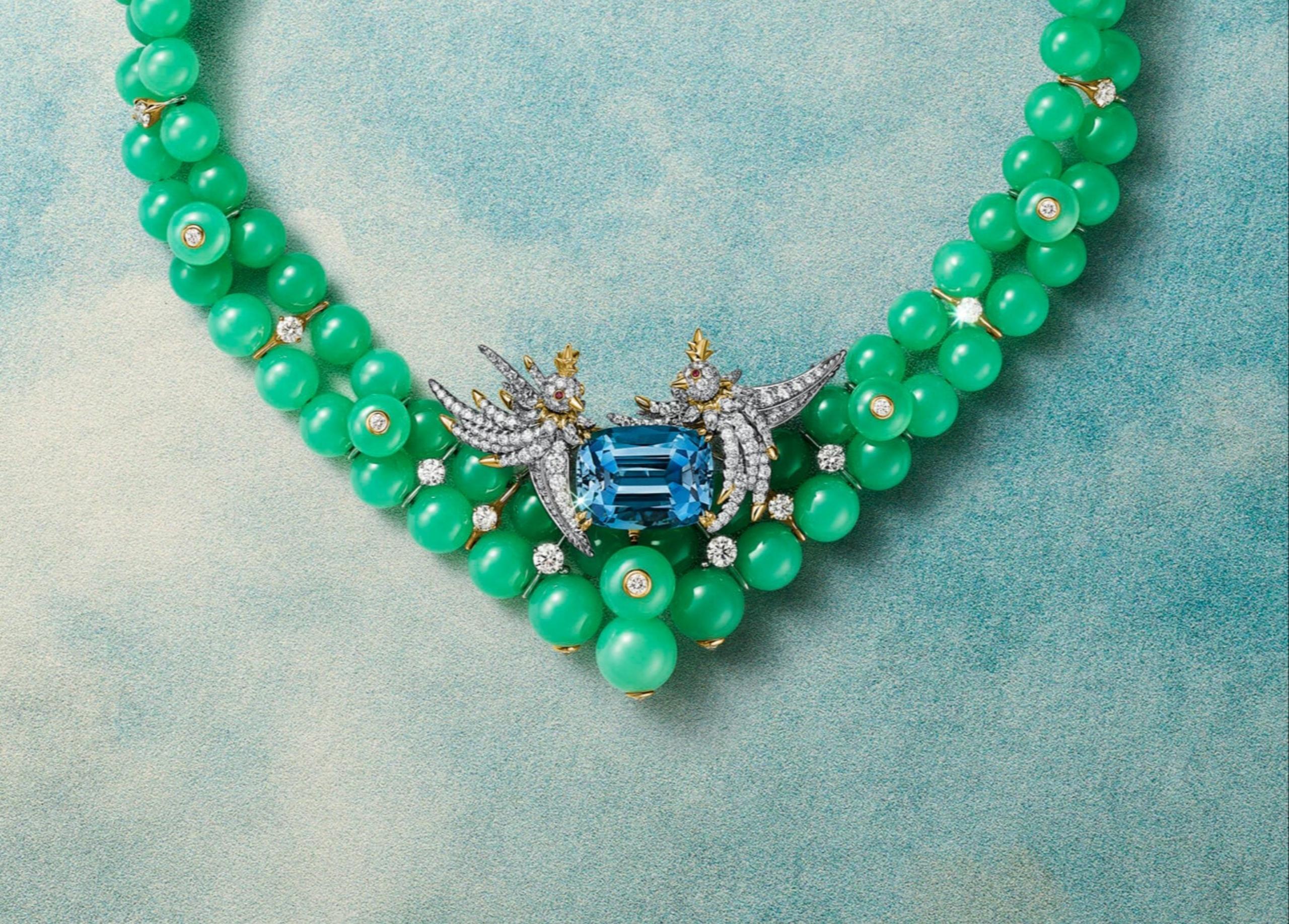
HIGH JEWELLERYAPR 25, 2026
Tiffany & Co. Blue Book 2026: Hidden Garden
Tiffany’s Blue Book 2026 collection, Hidden Garden, explores nature through movement and construction, with a more controlled approach to high jewellery
READ MORE




0 Comments
You must be logged in to comment. Click here to login.